
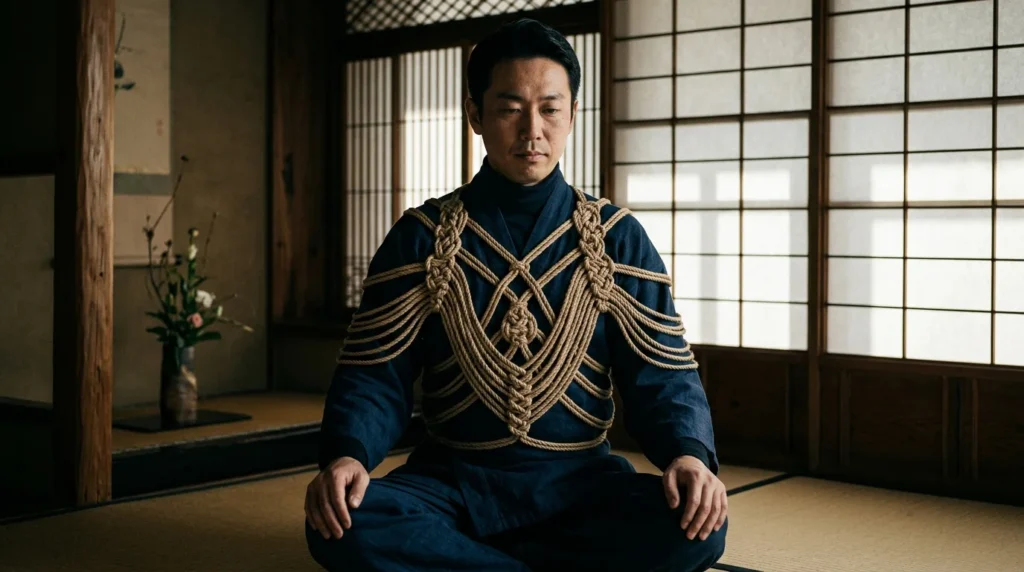

If you have come across the word shibari online, in art, photography, or discussions about Japanese culture, you may wonder what it means. Shibari is a Japanese term commonly associated with rope tying and rope-based artistic practices. In modern usage, it can refer to both an aesthetic form of rope work and an adult practice involving consensual restraint.
The meaning depends on the context. Some people use shibari when discussing Japanese-inspired rope art, while others use it specifically in relation to consensual adult intimacy. Understanding the cultural and historical context helps explain why the word can have several related meanings.
Shibari Meaning & Definition
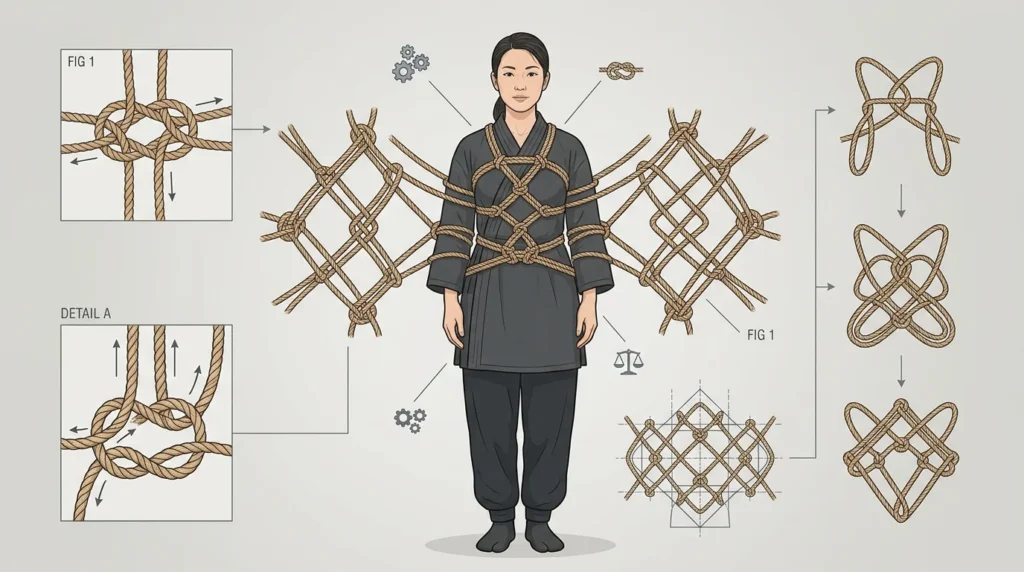
The word shibari comes from the Japanese verb shibaru, meaning “to tie” or “to bind.” In contemporary English, shibari is commonly used to describe Japanese-style rope tying, particularly when the tying has an artistic, aesthetic, or consensual adult context.
In simple terms, shibari can mean Japanese rope tying or binding. The word itself does not automatically indicate a sexual context; its meaning depends on how it is being used.
What Does Shibari Mean?
When someone asks what does shibari mean, the simplest explanation is Japanese rope tying or binding. The practice can involve carefully arranged rope patterns that are appreciated for their visual appearance, craftsmanship, and cultural associations.
In some modern communities, shibari is also associated with consensual adult bondage. In that context, communication, consent, trust, and safety are important parts of the practice.
Shibari Meaning in Japanese
Shibari is written as 縛り in Japanese. It is related to the verb shibaru (縛る), which means to tie, bind, or restrain.
The Japanese word can therefore have a broader meaning than the specialized sense of shibari commonly encountered in English-language discussions. The surrounding context determines whether it refers simply to tying or to a particular rope-based artistic or adult practice.
Is Shibari Japanese?
Yes. Shibari is a Japanese term, and its linguistic roots come from the Japanese verb shibaru. The modern use of shibari as a term for Japanese-style rope practice developed alongside broader interest in Japanese rope arts and bondage traditions.
It is important to distinguish the Japanese word itself from the specialized meaning that it has acquired in some modern international communities.
Shibari vs Kinbaku
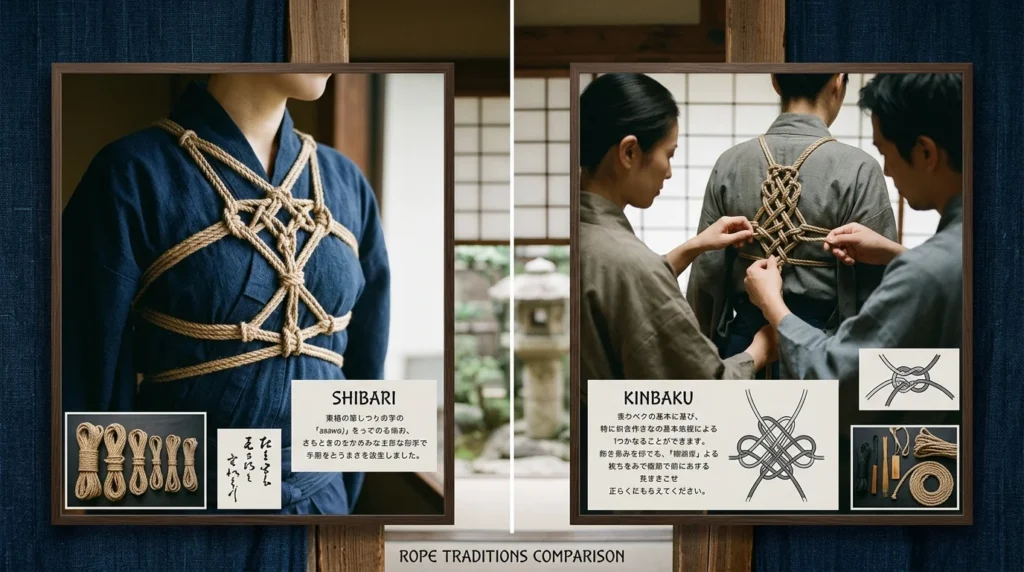
Shibari and kinbaku are related terms, but they are not always used in exactly the same way. Shibari is often used broadly to describe Japanese-style rope tying, especially in Western discussions.
Kinbaku is another Japanese term associated with Japanese bondage and often carries a more specifically intimate or erotic meaning. In everyday English-language use, however, the two terms are sometimes treated as interchangeable.
Shibari Meaning in Art
Shibari can also be discussed as a visual art form because carefully arranged ropes can create geometric patterns, symmetry, and distinctive shapes. Photographers and artists may incorporate rope work into performances, installations, or photography.
In this context, the focus may be on composition, texture, pattern, craftsmanship, and the visual relationship between rope and the human form rather than on sexual activity.
Shibari Meaning in Modern Culture
Today, shibari appears in a variety of contexts, including photography, performance art, fashion, alternative culture, and consensual adult communities. Its popularity outside Japan has contributed to broader interest in Japanese rope traditions.
Because the word is used differently by different communities, it is useful to look at the surrounding context before deciding exactly what someone means by “shibari.”
Shibari Meaning in Different Contexts
Shibari as Rope Art
In an artistic context, shibari refers to the careful arrangement of rope into visually distinctive patterns. Artists and photographers may focus on symmetry, geometry, texture, and composition. The rope itself becomes an important part of the visual design.
This interpretation does not necessarily involve sexual activity. Shibari-inspired rope work can appear in photography, performance, and other creative settings where the visual qualities of the knots and patterns are the main focus.
Shibari in Adult Contexts
In some communities, shibari refers to consensual adult rope bondage. In this context, it may be part of an intimate relationship or an adult BDSM practice.
Because restraint can involve physical risks, responsible practice emphasizes informed consent, communication, trust, and appropriate safety knowledge. The term itself does not imply that every person using shibari is participating in a sexual activity.
Shibari Meaning in Text
The shibari meaning in text depends on the conversation. If someone is discussing Japanese culture, photography, or art, shibari may simply refer to Japanese-style rope tying or rope art.
If the conversation is about BDSM or adult relationships, the same word may refer to consensual rope bondage. Looking at the surrounding words is therefore important when interpreting the term.
Shibari Meaning on Social Media
On social media, shibari may appear in posts about Japanese art, photography, alternative fashion, rope performance, or adult communities. Some posts focus primarily on the visual and artistic side of rope work, while others use the term in an intimate context.
Because social media uses the word in different ways, the presence of the word alone does not always tell you exactly what the poster means.
Shibari vs Japanese Rope Bondage
The phrase Japanese rope bondage is a broader English description, while shibari is the Japanese term commonly used to describe Japanese-style rope tying. In English-language communities, shibari is often used as a convenient name for the practice.
However, terminology can vary between practitioners and communities. Some people prefer shibari for its artistic associations, while others use kinbaku when emphasizing the traditional or intimate aspects of the practice.
Is Shibari Always Sexual?
No, shibari is not always sexual. The term can describe rope tying as an artistic, cultural, or aesthetic practice. Photography and performance art are examples where the visual qualities of rope patterns may be the primary focus.
At the same time, shibari is also used in consensual adult contexts. Therefore, the surrounding context is necessary to understand the intended meaning.
Why Is Shibari Popular?
Interest in shibari has grown internationally because of its distinctive visual style, connection with Japanese rope traditions, and presence in contemporary photography and alternative culture. The geometric patterns and carefully arranged rope can create visually striking compositions.
For some people, the appeal is artistic or cultural, while others are interested in the practice as part of consensual adult relationships. These different motivations explain why shibari can appear in many different settings.
Frequently Asked Questions
What does shibari mean?
Shibari generally means Japanese-style rope tying or binding. In modern usage, it can refer to rope art or consensual adult rope bondage, depending on the context.
Is shibari a Japanese word?
Yes. Shibari is a Japanese term written as 縛り and is related to shibaru, meaning to tie, bind, or restrain.
Is shibari always sexual?
No. Shibari can be discussed as rope art, photography, performance, or a cultural practice. It is also used in consensual adult contexts.
What is the difference between shibari and kinbaku?
The terms overlap, but shibari is often used broadly for Japanese-style rope tying, while kinbaku can carry a more specific association with Japanese bondage and intimate contexts.
What does shibari mean on social media?
On social media, shibari can refer to Japanese rope art, photography, performance, or consensual adult rope bondage. The context of the post usually clarifies the intended meaning.
Conclusion
The shibari meaning is generally connected to Japanese-style rope tying or binding. The term comes from Japanese and is related to the verb shibaru, meaning to tie or bind.
In modern usage, shibari can describe an artistic and aesthetic form of rope work as well as consensual adult bondage. Because the word is used across different communities, its exact meaning should always be understood from the surrounding context.
See Also:
BBW Meaning: Definition, Texting, Dating & Social Media Explained