
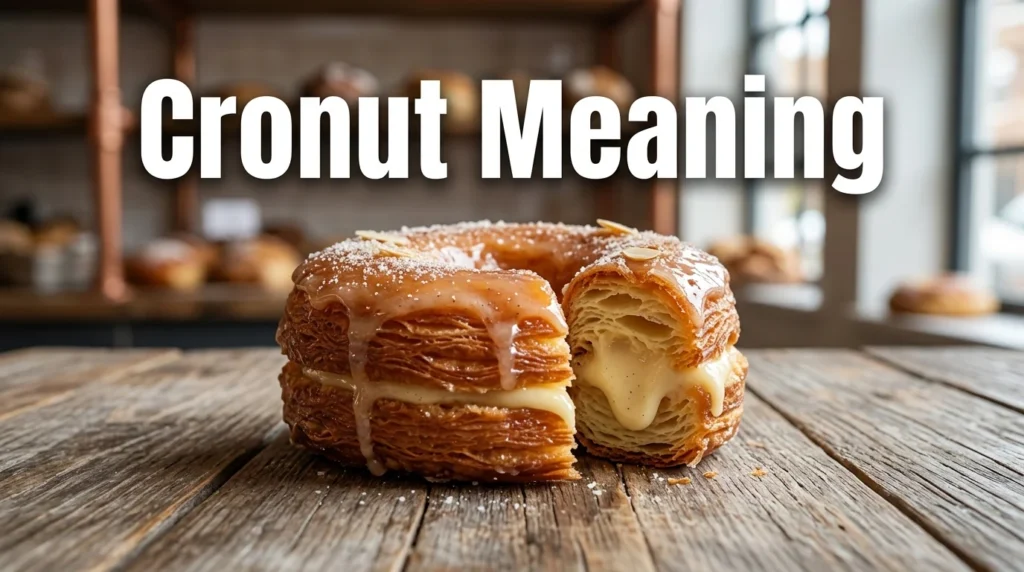

Food trends come and go, but some creations become so popular that people continue searching for their meaning years later. One such term is cronut. If you have ever wondered about the cronut meaning, you are not alone. Thousands of people search for this unique pastry every month to understand what it is, where it came from, and why it became a worldwide sensation. The cronut is more than just a dessert—it is a creative combination of two beloved baked goods that transformed the modern bakery industry.
Today, the word cronut is recognized by food lovers, travelers, chefs, and social media users across the world. From bakery menus to food blogs, the term appears everywhere. Understanding the meaning of cronut helps you appreciate its cultural impact, culinary innovation, and the reason it continues to attract attention years after its creation. In this guide, you will discover everything about the cronut, including its definition, history, ingredients, taste, and much more.
Meaning & Definition
The cronut meaning refers to a hybrid pastry made by combining a croissant and a donut. The name itself is created by blending the words “croissant” and “donut.” A cronut features the flaky, buttery layers of a croissant while also having the round shape and fried preparation associated with a donut. This unique combination creates a dessert that is crispy on the outside, soft on the inside, and filled with rich flavors.
In simple terms, a cronut is a pastry that takes the best qualities of both a croissant and a donut and merges them into one delicious treat. Unlike a traditional donut, a cronut requires a complex laminated dough process that creates multiple layers. This layered structure gives it a texture that is noticeably different from ordinary fried pastries. Because of its unique preparation and taste, the cronut quickly became one of the most talked-about desserts in the world.
Background
The story behind the cronut is one of creativity and innovation. Before the cronut existed, bakeries generally focused on traditional pastries such as croissants, donuts, muffins, and cakes. However, the growing popularity of unique food combinations encouraged pastry chefs to experiment with new ideas. This environment of culinary innovation eventually led to the creation of the cronut.
What makes the cronut especially interesting is how it represents modern food culture. Consumers increasingly seek new experiences, and hybrid foods often capture public attention. The cronut became a symbol of this trend because it successfully combined two familiar favorites into something entirely new. Its popularity demonstrated that even classic recipes can be reinvented in exciting ways.
Usage in Different Contexts
The term cronut is used in several different contexts. In the food industry, it refers specifically to the famous croissant-donut hybrid pastry. Bakeries often use the word to describe specialty pastries inspired by the original creation. Food critics and culinary experts frequently mention cronuts when discussing innovative desserts and modern baking trends.
Outside the bakery world, the word cronut is often used as an example of successful food innovation. Business publications, marketing experts, and social media influencers have referenced the cronut phenomenon when explaining how unique products can generate massive public interest. The term has become associated not only with a pastry but also with creativity, branding, and viral popularity. If you enjoy learning the meanings of trending words and popular terms like cronut, you can explore more detailed explanations on Trendy Meaning.
What Does Cronut Mean
The question “what does cronut mean” is one of the most searched queries related to this pastry. The term cronut is a combination of two words: croissant and donut. It was created to describe a pastry that combines characteristics from both baked goods. The name itself immediately tells people that it is a hybrid creation rather than a completely new category of dessert.
Over time, the meaning of cronut has expanded beyond its literal definition. Many people now associate the word with culinary innovation, food trends, and creative baking. Because of its popularity, the term has become a recognizable part of modern food culture and is often referenced when discussing successful food inventions.
Cronut Meaning in Food
In the food world, the cronut is considered a premium pastry that combines the flaky layers of a croissant with the shape and preparation style of a donut. Unlike ordinary donuts, cronuts require a time-consuming preparation process that involves folding and layering dough multiple times before frying.
Food experts often describe the cronut as a gourmet dessert because of its texture, craftsmanship, and flavor complexity. The pastry is typically filled with cream and finished with a flavored glaze, making it richer and more sophisticated than many traditional bakery products. This unique combination is why the cronut remains popular among pastry enthusiasts around the world.
What Is a Cronut Made Of
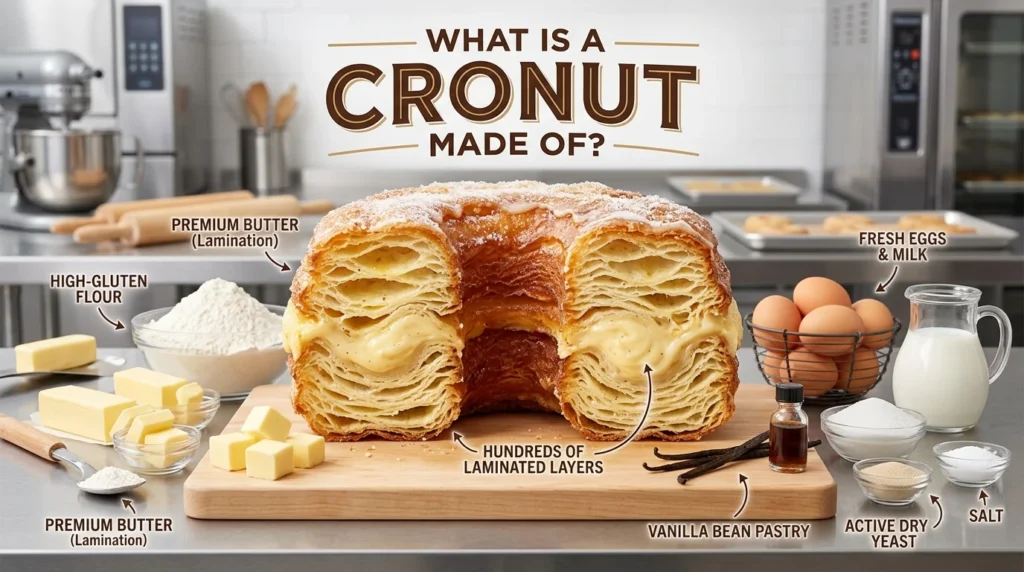
Many people searching for the cronut meaning also want to know what a cronut is made of. The pastry starts with laminated dough, which is the same type of dough used for croissants. Layers of butter are repeatedly folded into the dough to create its signature flaky texture.
After the dough has been prepared, it is cut into shapes, proofed, and fried instead of baked. Most cronuts are then filled with flavored creams such as vanilla, chocolate, caramel, or fruit fillings. A sweet glaze is often added on top to enhance the flavor. The result is a pastry that combines richness, crispness, and softness in every bite.
Difference Between Cronut and Donut
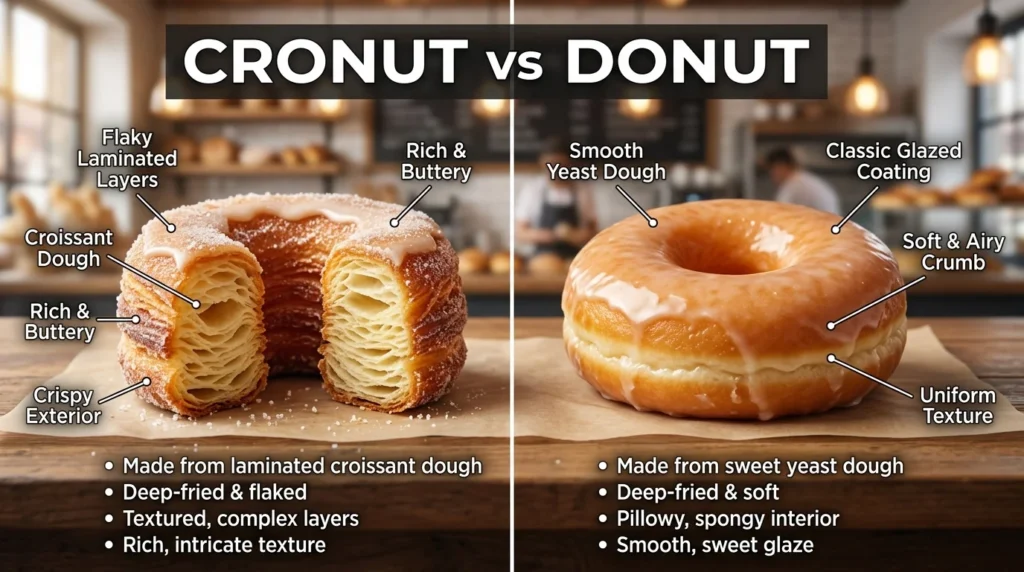
Although cronuts and donuts may appear similar at first glance, there are several important differences. Traditional donuts are usually made from a simpler dough that creates a soft and cake-like or bread-like texture. Cronuts, on the other hand, use laminated dough with many buttery layers.
The preparation process is also much more complex for a cronut. While most donuts can be made relatively quickly, a cronut requires significant time and precision. This extra effort results in a pastry that is lighter, flakier, and more layered than a standard donut. Many people find the texture to be the biggest difference between the two desserts.
Difference Between Croissant and Cronut
The difference between a croissant and a cronut lies primarily in their preparation and final texture. A croissant is baked and typically shaped into a crescent. It has delicate layers and a buttery flavor but is generally less sweet than a cronut.
A cronut uses similar laminated dough but is fried instead of baked. This creates a crisp outer layer while maintaining the flaky interior. Additionally, cronuts are often filled with creams and topped with glazes, making them more dessert-like than traditional croissants. As a result, the cronut offers a richer and sweeter experience.
Who Invented the Cronut
The cronut was invented by Dominique Ansel, a French pastry chef known for his creativity and innovation. He introduced the pastry at his bakery in New York City and quickly attracted widespread attention from food lovers and media outlets.
The invention became an instant success, with customers lining up for hours to purchase the pastry. News coverage, social media discussions, and word-of-mouth recommendations helped transform the cronut into an international phenomenon. Today, Dominique Ansel is widely recognized as the creator of one of the most famous pastries of the modern era.
Why Is a Cronut Called a Cronut
The name cronut is a blend of the words croissant and donut. This naming approach immediately communicates the pastry’s hybrid nature. Instead of creating a completely unrelated name, the inventor chose a term that reflects the dessert’s two primary inspirations.
The simplicity and memorability of the name played a significant role in its success. People could easily understand what the product was, even before trying it. This effective branding helped the cronut gain recognition quickly and contributed to its popularity across different countries and cultures.
Cronut Origin and History
The origin of the cronut dates back to 2013 when it was first introduced to the public. At a time when unique food combinations were becoming increasingly popular, the cronut stood out because of its originality and exceptional taste.
Its history is closely connected to the rise of social media food culture. Photos of the pastry spread rapidly online, attracting attention from food bloggers, journalists, and travelers. Long lines outside bakeries became common, and the cronut soon evolved from a local specialty into a global food trend. Its success inspired countless other hybrid desserts and demonstrated the power of innovation in the food industry.
How Does a Cronut Taste
People often wonder how a cronut tastes because it combines two very different pastries. The flavor is rich, buttery, and slightly sweet, with a texture that balances crispness and softness. Each bite delivers flaky layers similar to a croissant along with the satisfying indulgence of a donut.
The filling and glaze can significantly influence the overall taste. Some cronuts feature vanilla cream, while others include chocolate, fruit, caramel, or seasonal flavors. This variety allows bakeries to create unique versions that appeal to different preferences while maintaining the signature cronut experience.
Is a Cronut a Croissant or Donut
A cronut is neither a pure croissant nor a traditional donut. Instead, it is a hybrid pastry that combines elements of both. It uses croissant-style laminated dough but is prepared and shaped in a way that resembles a donut.
This combination is what makes the cronut unique. It captures the buttery layers associated with croissants while delivering the indulgent appeal of a donut. Rather than choosing one category, the cronut successfully blends the best characteristics of both pastries into a single dessert.
Frequently Asked Questions
What is the meaning of cronut?
A cronut is a hybrid pastry made by combining a croissant and a donut. The name comes from merging the words croissant and donut.
Why is it called a cronut?
It is called a cronut because it combines characteristics of both a croissant and a donut into one pastry.
Who created the cronut?
The cronut was invented by French pastry chef Dominique Ansel in New York City.
What is a cronut made from?
A cronut is made from laminated croissant dough, butter, fillings, and sweet glaze.
Is a cronut a donut or a croissant?
It is neither exclusively a donut nor a croissant. It is a hybrid pastry that combines features of both.
How does a cronut taste?
A cronut tastes buttery, flaky, rich, and slightly sweet, with a crispy exterior and soft layered interior.
When was the cronut invented?
The cronut was first introduced in 2013 and quickly became a global food sensation.
Why did cronuts become so popular?
Their unique texture, creative concept, limited availability, and social media exposure contributed to their popularity.
Are cronuts baked or fried?
Cronuts are typically fried, which helps create their distinctive crispy outer layer.
Why are cronuts considered special?
Cronuts require a complex preparation process and offer a unique combination of croissant layers and donut-style indulgence.
Conclusion
Understanding the cronut meaning reveals much more than the definition of a popular pastry. The cronut represents creativity, innovation, and the evolution of modern food culture. By combining the flaky layers of a croissant with the indulgent appeal of a donut, it created an entirely new dessert experience that captured global attention.
Whether you were searching for what a cronut means, who invented it, how it tastes, or how it differs from a croissant and donut, the answer highlights why this pastry remains famous years after its introduction. For more detailed explanations of trending words, food terms, internet slang, and modern expressions, visit Trendy Meaning, where you can discover the meanings behind today’s most searched terms.