
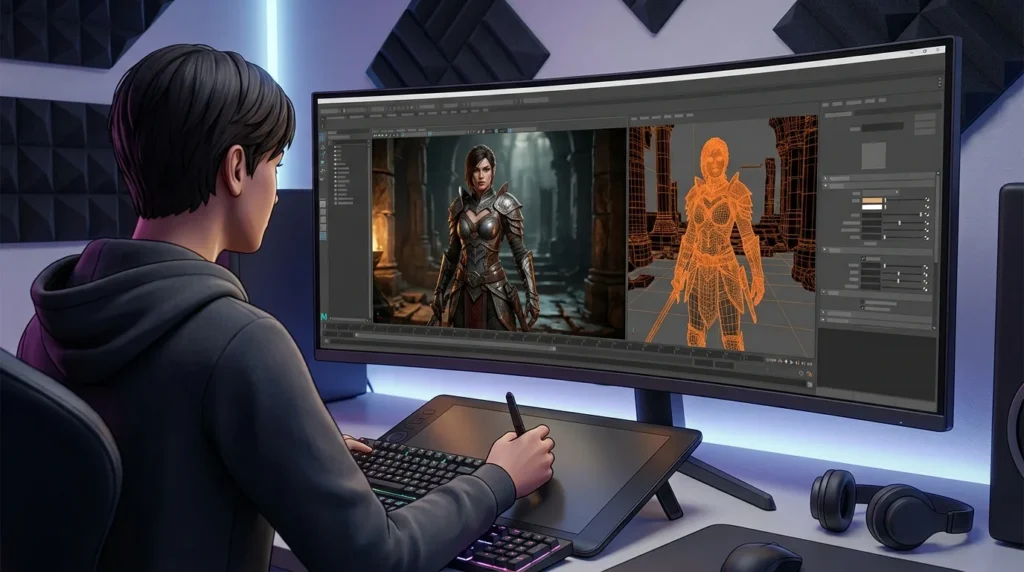

If you have seen CGI in movies, videos, gaming, technology, or online conversations, you may wonder what it means. CGI most commonly stands for Computer-Generated Imagery. It refers to images, visual effects, environments, characters, objects, and animations created or modified using computers.
CGI is widely used in films and television to create scenes that would be difficult, expensive, dangerous, or impossible to capture with a camera. It is also used in video games, advertising, architecture, product design, simulations, and other digital media.
CGI Meaning & Definition
The CGI meaning is Computer-Generated Imagery. It describes visual content produced with computer software rather than captured entirely through traditional photography or video recording.
CGI can be used to create realistic objects, digital characters, imaginary creatures, entire environments, special effects, and animated scenes. Sometimes CGI creates an entire image, while in other cases it is combined with live-action footage.
What Does CGI Mean?
When someone asks what does CGI mean, the simplest answer is Computer-Generated Imagery. It is a technology used to create or manipulate visual elements with computers.
For example, a movie might film an actor in front of a green screen and later add a digitally created city, spaceship, creature, or landscape. The computer-generated elements become part of the finished scene.
CGI Meaning in Text
The CGI meaning in text usually refers to Computer-Generated Imagery. The exact meaning can depend on the subject being discussed, but movies, animation, gaming, and visual effects are the most common contexts.
For example:
“The CGI in that movie looks amazing.”
This means the speaker is praising the computer-generated visual effects or imagery used in the movie.
What Does CGI Stand For?
CGI stands for Computer-Generated Imagery. The term describes visual elements created with computer graphics techniques.
Although CGI is often associated with spectacular movie effects, it does not necessarily mean something is completely computer-generated. Digital imagery can be combined with footage recorded using real cameras to create a seamless final scene.
CGI Meaning in Movies
In movies, CGI is used to create visual effects that may be difficult to produce practically. Filmmakers can use computer graphics to create creatures, buildings, vehicles, landscapes, explosions, futuristic worlds, and other elements.
For example, a fantasy movie may use CGI to create a fictional creature that interacts with live actors. A science-fiction film might use CGI to create spaceships, alien planets, or futuristic cities.
CGI Meaning in Animation
CGI is also an important part of modern 3D animation. Instead of drawing every frame by hand, artists can create digital characters and environments inside specialized computer software.
They can then create movement, lighting, textures, shadows, and camera angles to produce animated scenes. Many modern animated movies use computer-generated techniques to create detailed three-dimensional worlds.
CGI Meaning in Gaming
In video games, CGI and computer graphics are used to create characters, environments, objects, effects, and cinematic sequences. Game developers use digital models, textures, lighting, animation, and rendering to build interactive worlds.
CGI may also refer specifically to highly detailed pre-rendered scenes or cinematic sequences rather than the real-time graphics displayed during normal gameplay.
How Does CGI Work?
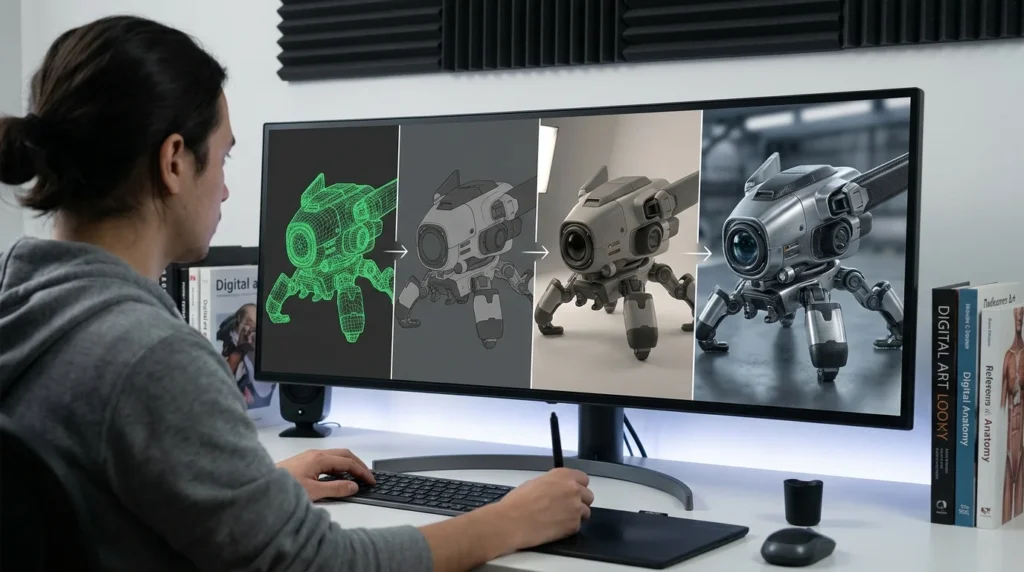
Creating CGI usually involves several stages. Artists and technical specialists first create or prepare digital objects and environments. These objects are often built as 3D models that can be shaped, textured, animated, and positioned within a digital scene.
After the models are created, artists can add materials, lighting, cameras, movement, and visual effects. The computer then renders the scene, calculating how the digital elements should appear in the final image or video.
Main Elements of CGI
3D Modeling
3D modeling involves creating digital representations of objects, characters, buildings, creatures, and environments. Artists shape these models using specialized computer software.
Texturing
Texturing adds surface details to a digital model. It can make an object appear metallic, wooden, rough, smooth, colorful, aged, or realistic.
Lighting
Digital lighting determines how light interacts with CGI objects and environments. Proper lighting helps computer-generated elements match the appearance and mood of a real scene.
Animation
Animation gives digital characters and objects movement. Artists can create realistic or stylized movements by setting poses, motion paths, and timing.
Rendering
Rendering is the process of turning a digital scene into a finished image or sequence of images. The computer calculates details such as lighting, shadows, reflections, textures, and camera perspective.
CGI vs VFX
CGI and VFX are related but not identical. CGI refers specifically to computer-generated visual imagery, while VFX, or visual effects, is a broader term for techniques used to create or modify visuals for film, television, games, and other media.
| Term | Meaning |
|---|---|
| CGI | Computer-Generated Imagery created with computer graphics |
| VFX | Visual effects used to create or alter imagery, including CGI and other techniques |
CGI vs Practical Effects
CGI creates or modifies visuals digitally, while practical effects are physical effects created during filming. Practical effects can include physical props, miniatures, makeup, costumes, puppets, and mechanically created effects.
Modern productions often combine both approaches. A physical object may be filmed on set and enhanced digitally afterward, allowing filmmakers to achieve a result that would be difficult using only one technique.
How Is CGI Used?
CGI can be used for much more than creating spectacular movie effects. It allows artists, designers, engineers, and developers to create detailed digital visuals and environments that can be difficult or impossible to produce physically.
Depending on the industry, CGI can be used to create fictional characters, realistic environments, product demonstrations, architectural designs, simulations, advertisements, game worlds, and visual effects. It can also be combined with real photographs or video footage to produce a finished visual that looks realistic.
CGI in Film and Television
Film and television productions commonly use CGI to create or enhance scenes. Digital artists can add elements that were not present when the original footage was recorded, such as distant landscapes, crowds, creatures, vehicles, or damaged buildings.
CGI is particularly useful when creating something physically would be too expensive, dangerous, or impractical. Filmmakers can also use it to subtly improve ordinary footage without viewers necessarily realizing that computer-generated imagery was involved.
CGI in Advertising
Advertising companies use CGI to create attractive product visuals, animated advertisements, and realistic demonstrations. A digital model of a product can be placed in almost any environment without physically building or photographing that environment.
For example, a car advertisement may use CGI to show a vehicle traveling through a completely computer-generated landscape. Product designers can also create highly detailed digital images before a physical product is manufactured.
CGI in Architecture
Architects and designers use CGI to create architectural visualizations. These images can show how a building, house, office, or interior space may look before construction begins.
CGI allows designers to experiment with materials, lighting, furniture, landscaping, colors, and different viewpoints. Clients can therefore get a clearer idea of a proposed design before anything is physically built.
CGI in 3D Design
In 3D design, CGI is used to create digital models and realistic visualizations of objects and environments. Designers can manipulate these models from different angles and modify their appearance without recreating the physical object.
This makes computer-generated imagery useful for product development, engineering presentations, industrial design, marketing, and visualization.
CGI in Social Media
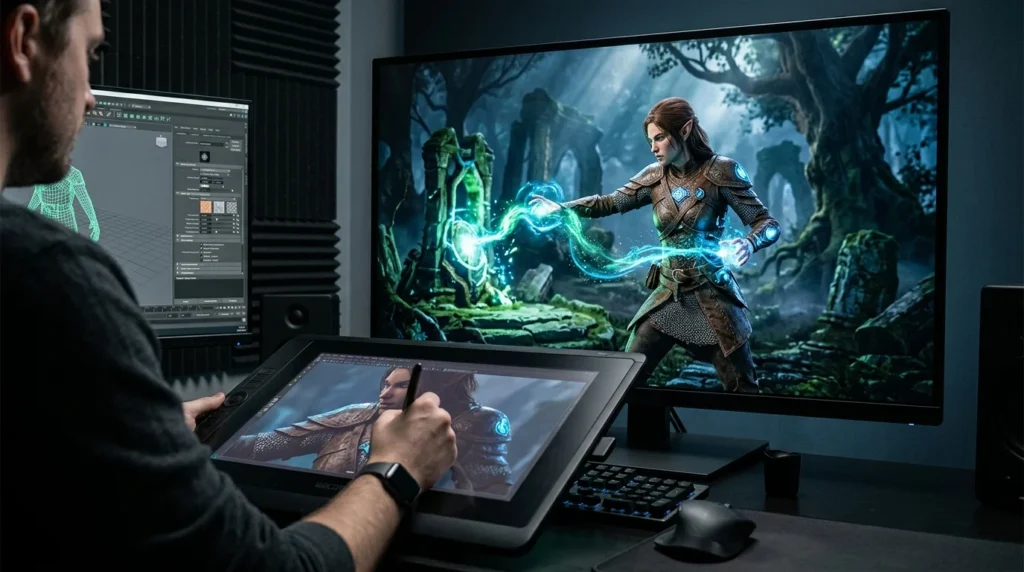
CGI is increasingly visible on social media through digital artwork, virtual influencers, animated advertisements, filters, and realistic computer-generated scenes. Creators can use computer graphics to produce visuals that would be difficult to capture with an ordinary camera.
Some social media content intentionally combines realistic photography with CGI, making it difficult to tell which parts of an image are real and which were digitally created.
Benefits of CGI
CGI offers several advantages to creators and businesses. One major benefit is creative freedom. Artists can create environments, characters, and objects without being limited by what can physically be built or photographed.
- Creates imaginary characters and environments
- Allows detailed digital visualization
- Can reduce the need for expensive physical sets
- Allows scenes to be modified after filming
- Supports realistic animation and simulations
- Makes complex designs easier to visualize
- Can combine digital elements with live-action footage
Why Does CGI Sometimes Look Fake?
CGI can look unrealistic when the digital elements do not perfectly match the real-world footage. Differences in lighting, shadows, textures, movement, reflections, camera perspective, or facial expressions can make computer-generated objects noticeable.
Creating convincing CGI requires careful attention to detail. Modern rendering and animation technologies can produce extremely realistic imagery, but the quality still depends on the artists, software, computing resources, and time available for the project.
CGI vs Animation
CGI and animation are closely connected but are not exactly the same thing. Animation is the broader process of creating the appearance of movement, while CGI refers to imagery generated or manipulated using computers.
| Term | Meaning |
|---|---|
| CGI | Computer-generated or computer-manipulated imagery |
| Animation | Creating the appearance of movement through a sequence of images |
Much modern animation is created with CGI, but CGI can also be used for still images and visual effects that are not animation.
CGI vs Real Footage
Real footage is captured using a physical camera, while CGI is produced or heavily modified using computer graphics. A finished movie scene can contain both.
For example, an actor may be filmed on a real set while a computer-generated background is added later. In other cases, an entirely digital environment may be created around the actor.
Frequently Asked Questions
What does CGI stand for?
CGI stands for Computer-Generated Imagery. It refers to visual content created or manipulated using computers.
What does CGI mean in movies?
In movies, CGI refers to computer-generated visual elements used to create or enhance characters, environments, objects, creatures, effects, and other parts of a scene.
Is CGI the same as VFX?
No. CGI is one technique used within visual effects. VFX is a broader category that includes CGI and other methods of creating or modifying visuals.
What is CGI used for?
CGI is used in movies, television, animation, video games, advertising, architecture, product design, simulations, and many other areas where digital imagery is useful.
Why does CGI look realistic?
Realistic CGI combines detailed 3D models, textures, lighting, shadows, materials, animation, and rendering techniques to imitate how objects and environments appear in the real world.
Conclusion
The CGI meaning is Computer-Generated Imagery, a technology used to create or manipulate visual content with computers. It plays an important role in movies, television, animation, gaming, advertising, architecture, and digital design.
CGI can create completely imaginary worlds or simply enhance real footage. It is also different from VFX, animation, and practical effects, although these techniques are often combined to create the final visual experience.
See Also:
Apt Meaning: Definition, Uses & Examples