
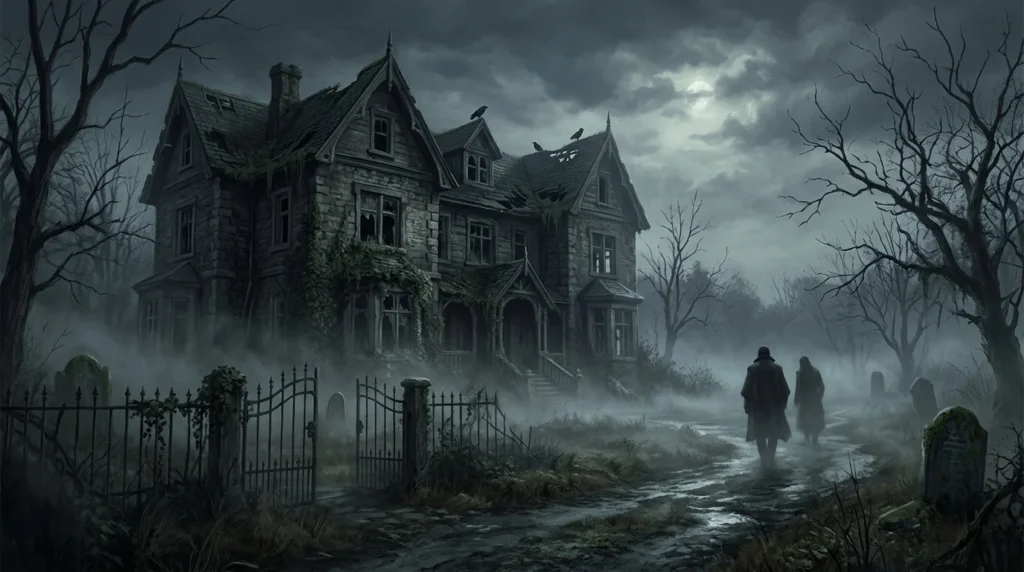

If you’ve searched for macabre meaning, you’re probably wondering what this unique English word means and why it often appears in books, movies, art, and horror stories. The word “macabre” describes things that are disturbing because they involve death, violence, or the supernatural.
In simple terms, macabre means something that is frightening, grim, or related to death in a disturbing or eerie way.
It is commonly used to describe horror films, gothic literature, crime stories, dark artwork, and unusual events that create feelings of fear or discomfort.
In this guide, Trendy Meaning explains what does macabre mean, its definition, origin, examples, and how it is used in modern English.
Meaning & Definition
The macabre meaning refers to something that is disturbing because it involves death, horror, or the gruesome.
Common meanings include:
- Grim
- Horrifying
- Ghoulish
- Morbid
- Eerie
- Death-related
- Frightening
- Dark and disturbing
The word usually describes situations, stories, artwork, or scenes rather than people.
Macabre Meaning in English
The macabre meaning in English is “disturbing because of an association with death or violence.”
Examples:
“The movie had a macabre atmosphere.”
Meaning:
The film created a dark, eerie feeling.
“The novel contains several macabre scenes.”
Meaning:
The story includes disturbing events involving death or horror.
What Does Macabre Mean?
When people ask what does macabre mean, they usually want to understand why it is associated with horror.
Macabre is used to describe things that:
- Focus on death
- Include gruesome details
- Create an eerie mood
- Feel dark or unsettling
- Evoke fear or discomfort
It is especially common in horror fiction and gothic literature.
Simple Explanation
Think of macabre as meaning:
- Dark
- Creepy
- Death-related
- Horrifying
- Morbid
- Eerie
It describes something that makes people uncomfortable because of its connection to death or horror.
Macabre Definition With Examples
The macabre definition is something disturbing or frightening because it involves death, violence, or the supernatural.
Examples of Macabre in Sentences
“The abandoned house had a macabre appearance.”
Meaning:
It looked eerie and frightening.
“The museum displayed macabre artwork.”
Meaning:
The artwork focused on dark or death-related themes.
“The detective discovered a macabre crime scene.”
Meaning:
The scene was disturbing because of its gruesome nature.
Background
Macabre has long been associated with horror, mystery, and gothic storytelling. Writers, filmmakers, and artists use macabre imagery to create suspense, fear, or emotional impact.
The word frequently appears in crime novels, supernatural stories, Halloween themes, and psychological thrillers.
Origin and History of Macabre
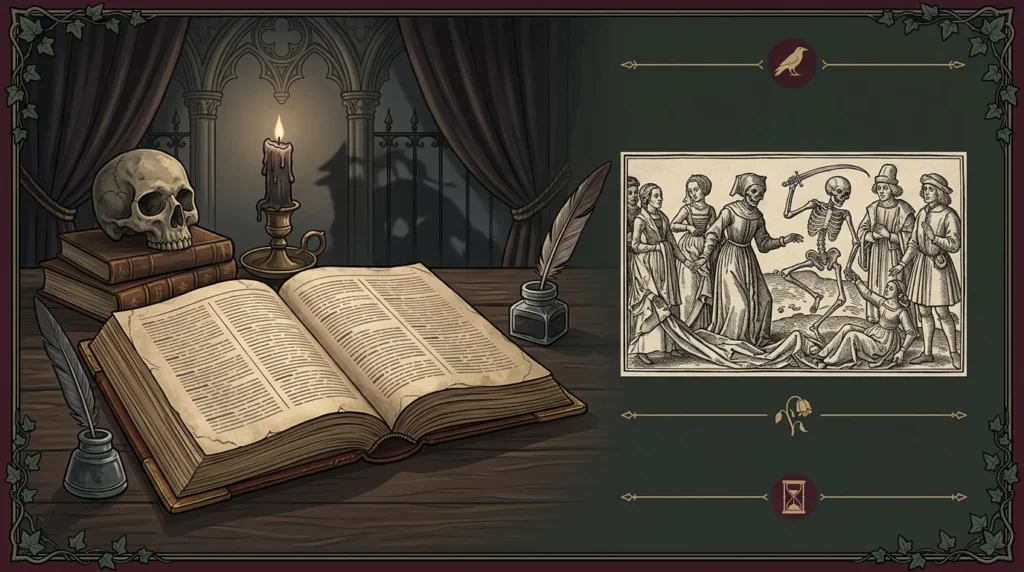
The word macabre entered English from French, where it appeared in the phrase danse macabre, meaning “dance of death.”
The expression referred to medieval artistic representations showing death affecting people from every social class, reminding viewers that death comes to everyone.
Over time, the word evolved into its modern meaning of something dark, gruesome, or death-related.
Usage in Different Contexts
Macabre appears in many different situations.
Macabre in Literature
Authors use the word to describe dark themes and frightening scenes.
Example:
“The novel is famous for its macabre storytelling.”
Macabre in Movies
Horror and thriller films often contain macabre imagery.
Example:
“The director created a macabre atmosphere throughout the film.”
Macabre in Art
Artists sometimes explore themes of death, fear, and mortality.
Example:
“The exhibition featured several macabre paintings.”
Macabre in Everyday English
People may use the word to describe disturbing news or unusual events.
Example:
“The story took a macabre turn.”
Macabre vs Morbid Difference
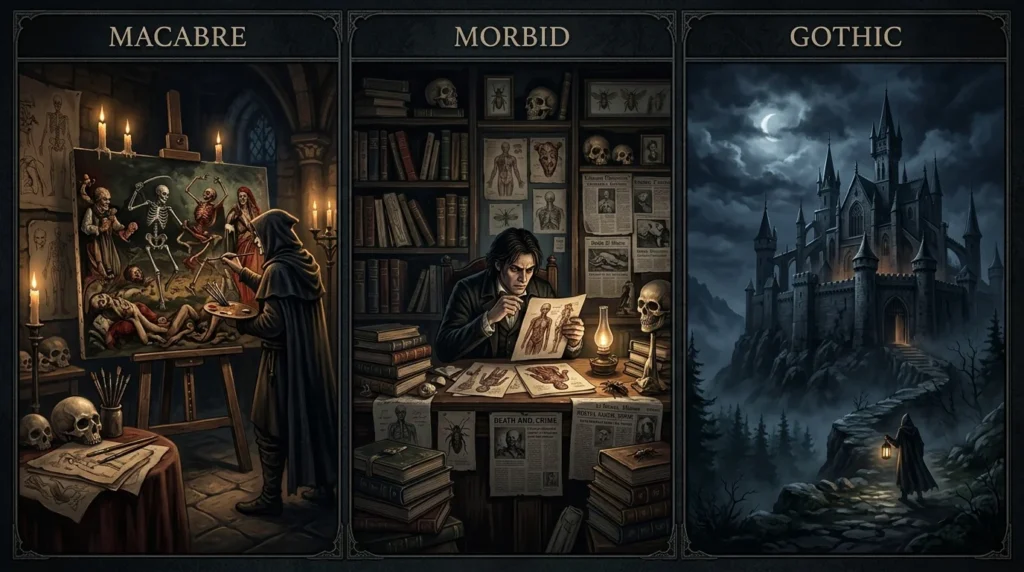
These words are similar but have different meanings.
Macabre
Macabre describes something disturbing, frightening, or eerie because it involves death, horror, or violence.
Example:
“The horror movie had a macabre atmosphere.”
Morbid
Morbid describes an unhealthy interest in death, disease, or unpleasant subjects.
Example:
“He had a morbid fascination with crime stories.”
Simple difference:
Macabre = Dark and frightening.
Morbid = Excessive interest in dark subjects.
Macabre vs Gothic Difference
People also confuse macabre with gothic.
Macabre
Macabre focuses on death, horror, violence, and disturbing imagery.
Gothic
Gothic refers to a style of literature, architecture, or art that often combines mystery, romance, darkness, and supernatural elements.
Example:
“The castle had a gothic design.”
Simple difference:
Macabre = Death-related horror.
Gothic = A broader artistic and literary style that may include macabre elements.
Common Synonyms of Macabre
Depending on the context, similar words include:
- Grim
- Morbid
- Ghoulish
- Horrifying
- Creepy
- Eerie
- Sinister
- Chilling
- Frightening
- Deathly
Choose the synonym that best matches the intended meaning.
How to Use Macabre Correctly
Use macabre when describing something disturbing because of its connection to death, horror, or violence.
Examples:
“The documentary included macabre details.”
“The haunted house created a macabre mood.”
“The novel explored macabre themes.”
“The painting had a macabre style.”
Frequently Asked Questions
What does macabre mean?
Macabre means disturbing, frightening, or eerie because of an association with death, horror, violence, or the supernatural.
Is macabre the same as horror?
Not exactly. Horror is a broader genre, while macabre specifically refers to dark themes involving death or gruesome subjects.
Can macabre describe people?
It usually describes scenes, stories, artwork, or events rather than people.
Where is the word macabre commonly used?
It is commonly used in literature, movies, art, journalism, crime reporting, and discussions about horror.
Is macabre a negative word?
Not always. It is often neutral when describing artistic style, but it generally refers to disturbing or dark subjects.
Conclusion
The macabre meaning refers to something disturbing, eerie, or frightening because of its association with death, horror, or violence. It is commonly used in literature, films, art, and everyday English to describe dark or gruesome themes. Understanding what does macabre mean helps you recognize how the word is used to create suspense, mystery, and emotional impact.
At Trendy Meaning, we explain English words, internet slang, abbreviations, names, symbols, grammar terms, and modern vocabulary with simple definitions, examples, and real-world meanings to make learning easier.
See Also:
TMI Meaning: What It Means in Text, Snapchat & TikTok