


If you’ve searched for Holocaust meaning, you’re probably looking to understand what this important historical term means and why it is remembered around the world. The Holocaust is one of the most significant and tragic events in modern history, making it essential to understand its meaning with accuracy and respect.
In simple terms, the Holocaust refers to the systematic persecution and murder of approximately six million Jewish people by Nazi Germany and its collaborators between 1933 and 1945 during World War II. Millions of other victims, including Romani people, people with disabilities, political prisoners, Jehovah’s Witnesses, LGBTQ+ individuals, and others, were also persecuted and killed.
In this guide, Trendy Meaning explains what does Holocaust mean, its definition, history, origin, and significance.
Meaning & Definition
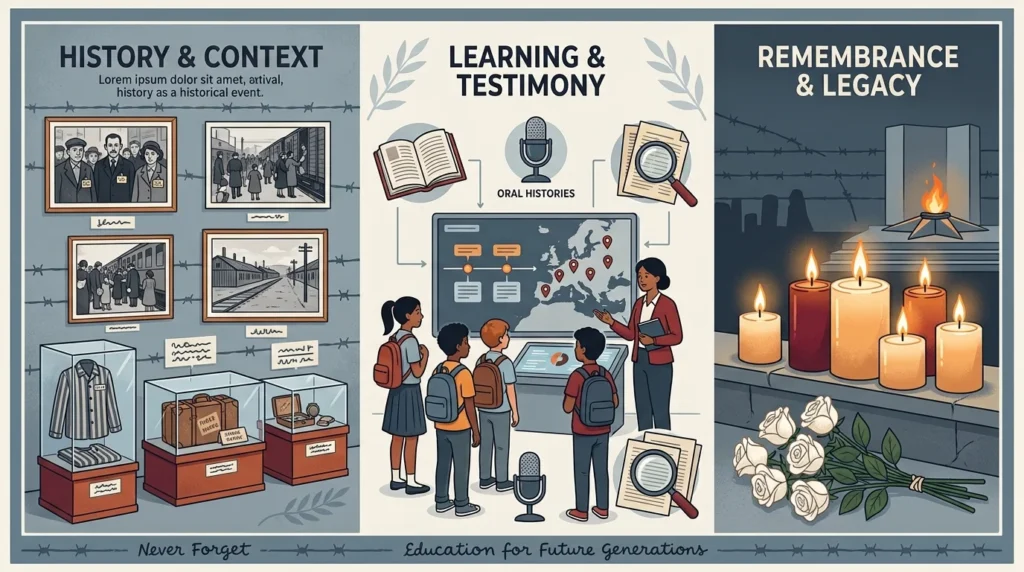
The Holocaust meaning refers to the genocide carried out by Nazi Germany against Jewish people and other targeted groups during World War II.
Common meanings include:
- Genocide of European Jews
- Mass persecution
- Systematic murder
- Historical tragedy
- Nazi genocide
- Human rights catastrophe
- State-sponsored persecution
- World War II atrocity
The term is primarily used to describe this specific historical event.
Holocaust Meaning in English
The Holocaust meaning in English is the systematic persecution and mass murder of Jews and other targeted groups by Nazi Germany between 1933 and 1945.
Example:
“The Holocaust is studied in schools to teach the importance of human rights and the dangers of hatred.”
Meaning:
It refers to one of the darkest chapters in human history.
What Does Holocaust Mean?
When people ask what does Holocaust mean, they are usually referring to the historical genocide committed during World War II.
The Holocaust was organized by the Nazi regime under Adolf Hitler. Jews were stripped of their rights, forced into ghettos, deported to concentration and extermination camps, and systematically murdered. Alongside Jewish victims, millions of others suffered persecution because of their ethnicity, beliefs, political views, disabilities, or identity.
Today, the Holocaust is remembered to honor the victims and to educate future generations about the consequences of hatred, discrimination, and intolerance.
Simple Explanation
Think of the Holocaust as:
- A historical genocide
- Mass persecution
- Systematic murder
- A major event of World War II
- A tragedy remembered worldwide
- A lesson about protecting human rights
It is one of the most studied events in modern history.
Holocaust Definition With Examples
The Holocaust definition is the organized genocide carried out by Nazi Germany against Jews and other targeted groups during World War II.
Examples of Holocaust in Sentences
“The museum preserves the history of the Holocaust.”
“Students learn about the Holocaust to better understand the importance of tolerance and human rights.”
“The Holocaust claimed millions of innocent lives.”
“Many survivors have shared their experiences to educate future generations.”
These examples show how the term is used in historical and educational contexts.
Background
The Holocaust took place during World War II and remains one of the most devastating examples of genocide in history. It has become a symbol of the dangers of antisemitism, racism, prejudice, and authoritarian rule.
Many countries observe Holocaust remembrance events to honor victims, support survivors, and promote education about preventing future atrocities.
Origin and History of the Holocaust
The word Holocaust comes from the Greek word holokauston, meaning “completely burned.” Historically, it referred to a type of religious offering. After World War II, the word came to be used specifically for the genocide committed by Nazi Germany.
Between 1933 and 1945, Nazi policies gradually escalated from discrimination and exclusion to forced deportations, concentration camps, extermination camps, and mass murder. Historians estimate that about six million Jewish people were killed, along with millions of other victims from persecuted groups.
Usage in Different Contexts
The word Holocaust is mainly used in historical, educational, and memorial settings.
Holocaust in History
Historians use the term to describe the genocide committed during Nazi rule.
Example:
“The Holocaust changed the course of modern history.”
Holocaust in Education
Schools and universities teach about the Holocaust to promote historical understanding and awareness of human rights.
Example:
“The class studied Holocaust history as part of World War II.”
Holocaust Museums and Memorials
Museums and memorials preserve survivor testimonies, historical records, and artifacts to educate visitors and honor those who were killed.
Example:
“The family visited a Holocaust memorial during their trip.”
Holocaust Remembrance
Many countries hold remembrance ceremonies each year to honor the victims and encourage future generations to reject hatred and discrimination.
Example:
“People gathered to observe Holocaust Remembrance Day.”
Holocaust vs Genocide Difference
These terms are related but are not identical.
Holocaust
The Holocaust refers specifically to the genocide carried out by Nazi Germany against approximately six million Jewish people and the persecution of millions of other victims between 1933 and 1945.
Example:
“The Holocaust is one of the most studied events in modern history.”
Genocide
Genocide is a broader legal and historical term that refers to the intentional destruction of a national, ethnic, racial, or religious group, regardless of where or when it occurs.
Example:
“International law defines genocide as a serious crime against humanity.”
Simple difference:
Holocaust = A specific historical genocide during World War II.
Genocide = A general term for the deliberate destruction of a protected group.
Holocaust vs Concentration Camp Difference
These terms are often confused but have different meanings.
Holocaust
The Holocaust refers to the overall campaign of persecution and genocide carried out by Nazi Germany.
Concentration Camp
A concentration camp was a place where people were imprisoned under harsh conditions. Some camps were forced labor camps, while others were extermination camps designed for mass murder.
Example:
“Many Holocaust victims were imprisoned in concentration camps.”
Simple difference:
Holocaust = The historical genocide.
Concentration camp = One type of facility used during that genocide.
Why Is the Holocaust Remembered?
The Holocaust is remembered to:
- Honor the victims and survivors.
- Preserve historical truth.
- Educate future generations.
- Promote human rights.
- Combat antisemitism, racism, and discrimination.
- Encourage tolerance and respect for all people.
- Help prevent future atrocities.
Remembering history helps societies recognize the consequences of hatred and prejudice.
How to Use Holocaust Correctly
Use Holocaust when referring to the historical genocide carried out by Nazi Germany during World War II.
Examples:
“The Holocaust is an important topic in world history.”
“The documentary explains the causes and consequences of the Holocaust.”
“Researchers continue to study Holocaust survivor testimonies.”
“The memorial honors Holocaust victims.”
Frequently Asked Questions
What does Holocaust mean?
The Holocaust refers to the systematic persecution and murder of approximately six million Jewish people by Nazi Germany and its collaborators during World War II, along with the persecution of millions of other victims.
When did the Holocaust happen?
The Holocaust took place between 1933 and 1945 during the rule of Nazi Germany.
Who were the victims of the Holocaust?
The primary victims were Jewish people. Other persecuted groups included Romani people, people with disabilities, political prisoners, Jehovah’s Witnesses, LGBTQ+ individuals, and others targeted by the Nazi regime.
Why is Holocaust education important?
Learning about the Holocaust helps preserve historical truth, honor victims, promote human rights, and teach the dangers of hatred, prejudice, and discrimination.
How do you use Holocaust in a sentence?
Example: “The museum’s exhibits help visitors understand the history of the Holocaust.”
Conclusion
The Holocaust meaning refers to the genocide committed by Nazi Germany against approximately six million Jewish people and the persecution of millions of other victims during World War II. It remains one of the most tragic events in human history and serves as a lasting reminder of the consequences of hatred, discrimination, and intolerance. Understanding what does Holocaust mean helps preserve historical memory and encourages respect for human rights and human dignity.
At Trendy Meaning, we explain historical terms, English words, internet slang, symbols, names, and modern vocabulary with simple definitions, practical examples, and factual context to make learning easier.
See Also:
Collate Meaning: Simple Definition, Printing & Uses