

Suing is the correct spelling. Sueing is generally an incorrect spelling when you mean the -ing form of the verb sue. The correct form is formed by dropping the final silent e before adding -ing: sue → suing.
For example, “She is suing the company” is correct, while “She is sueing the company” is incorrect in standard modern English.
Quick Answer
Suing is the standard correct spelling of the present participle and gerund of sue. The spelling sueing is normally considered incorrect. When a verb ends in a silent e, that final e is usually removed before -ing is added. Therefore, sue + ing = suing, not sueing. The word suing means taking legal action against someone or an organization by bringing a lawsuit. For example, “The customer is suing the company for damages.”
What Does Suing Mean?
Suing is the -ing form of the verb sue. To sue someone means to bring a legal case against that person, company, organization, or other party in court.
The form suing can function as a present participle or as a gerund, depending on how it is used in a sentence.
Examples of Suing
- She is suing the company for damages.
- The customer threatened to sue the manufacturer.
- They are suing their former landlord.
- He is considering suing the contractor.
- The family is suing the hospital.
What Does Sue Mean?
Sue is a verb meaning to bring a legal action against someone. It is commonly used when one person or organization takes another person or organization to court to seek a legal remedy, such as compensation.
Examples include:
- I may sue if the contract is breached.
- The company sued its former partner.
- She decided to sue for damages.
When sue changes to its -ing form, the final silent e is removed:
sue → suing
Why Is Suing Correct but Sueing Incorrect?
The spelling follows a common English word-formation rule. Many verbs ending in a silent e drop that final e before -ing is added.
| Base Verb | + -ing | Correct Form |
|---|---|---|
| sue | sue + ing | suing |
| make | make + ing | making |
| write | write + ing | writing |
| drive | drive + ing | driving |
| take | take + ing | taking |
However, English spelling rules have exceptions and special cases, so it is better to learn the standard form of each verb rather than assuming every spelling follows exactly the same pattern.
The Core Rule
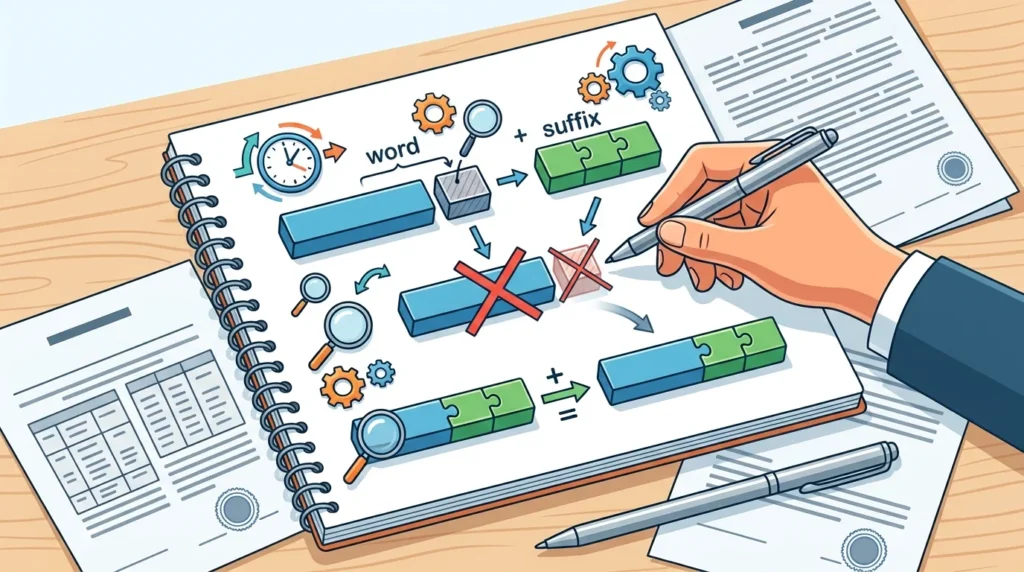
For the verb sue, remove the final silent e before adding -ing.
Sue + ing → suing
Do not keep the final e in the standard spelling:
❌ sueing
✅ suing
The pronunciation also helps explain why the spelling can be confusing. The word sue ends with a vowel sound, but the spelling rule determines how its -ing form is written.
How to Use Suing Correctly
Use suing when describing an ongoing, planned, or contemplated legal action involving the verb sue.
Present Continuous
Use suing after a form of be to describe an action happening or developing now.
Example: The customer is suing the company.
After Certain Verbs
Suing can also follow verbs such as “consider,” “avoid,” or “discuss” when the sentence requires a gerund.
Example: She is considering suing the company.
See Also:
After Prepositions
Because -ing forms can function as nouns, suing can also appear after a preposition.
Example: They talked about suing the contractor.
Correct Examples of Suing
In Conversation
“He says he is suing the company over the dispute.”
In an Email
“The client is considering suing the supplier for breach of contract.”
At Work
“The company is facing a lawsuit and may be sued by the former employee.”
See Also:
In Academic Writing
“The case examines the circumstances surrounding the decision to sue.”
In News Writing
“The family is suing the manufacturer over the alleged defect.”
In Everyday English
“If they refuse to pay, he says he will consider suing.”
Suing vs Sueing: Incorrect vs Correct
| ❌ Incorrect | ✅ Correct | Why |
|---|---|---|
| She is sueing the company. | She is suing the company. | The final silent e is removed before -ing. |
| He is sueing his former employer. | He is suing his former employer. | The standard -ing form of sue is suing. |
| They are sueing for damages. | They are suing for damages. | Suing is the correct present participle. |
| She considered sueing the contractor. | She considered suing the contractor. | The gerund form is suing. |
| He talked about sueing the company. | He talked about suing the company. | The final e is dropped before -ing. |
| The family is sueing the hospital. | The family is suing the hospital. | Suing is the standard spelling. |
| They threatened to start sueing. | They threatened to start suing. | Suing is the correct -ing form. |
| The lawyer discussed sueing the defendant. | The lawyer discussed suing the defendant. | The word follows the normal spelling pattern for this verb. |
| He is thinking about sueing them. | He is thinking about suing them. | Suing is used after the preposition about. |
| She regrets sueing her former partner. | She regrets suing her former partner. | The standard gerund spelling is suing. |
Why Do People Spell It as Sueing?
The spelling sueing is easy to produce because people may simply attach -ing to the complete spelling of the base verb: sue + ing. This creates the visually intuitive but nonstandard form sueing.
The unusual appearance of suing can also cause confusion. When the final e disappears, the resulting word looks very different from sue. Nevertheless, suing is the standard spelling.
See Also:
Common Mistakes Checklist
- ❌ Writing sueing instead of suing.
- ❌ Keeping the final silent e before -ing.
- ❌ Assuming the base word must remain unchanged before adding -ing.
- ❌ Confusing the spelling with the pronunciation.
- ❌ Using “suing” when the sentence actually needs the base verb “sue.”
Suing in Real English
Suing is a normal and widely used English word, especially in legal, business, news, and everyday contexts. It is neither unusually formal nor informal by itself.
However, legal writing may use more specific expressions such as filing a lawsuit, bringing an action, or commencing legal proceedings, depending on the legal system and context. In everyday conversation, suing is often the simplest choice.
American vs British English
There is no significant American-versus-British spelling difference between suing and sueing. Suing is the standard spelling in both American and British English.
The underlying legal terminology can vary between legal systems, but that does not change the spelling of the -ing form of sue.
See Also:
Formal vs Informal Usage
Suing can be used in both formal and informal English. In a legal document, more technical terminology may be preferred depending on the context, while “suing” is perfectly natural in ordinary conversation.
For example:
- Informal: “They are suing the company.”
- General professional: “The customer is suing the manufacturer for damages.”
- More technical legal wording: “The claimant commenced legal proceedings against the manufacturer.”
Related Forms of Sue

Understanding the other forms of sue can make the spelling of suing easier to remember.
| Form | Word | Example |
|---|---|---|
| Base form | sue | They may sue the company. |
| Third-person singular | sues | She sues the company. |
| Past tense | sued | They sued the manufacturer. |
| Past participle | sued | The company was sued. |
| Present participle | suing | They are suing the company. |
Sue + ING: Why Does the E Disappear?
One of the most useful spelling rules here is the treatment of a final silent e. In many common English verbs, the final silent e is removed before -ing is added.
Compare:
- make → making
- write → writing
- take → taking
- drive → driving
- use → using
- sue → suing
This is why sueing is not the standard form.
Real-Life Situations
Legal Consultation
“The attorney is discussing whether the client should sue.”
Business Meeting
“The company is considering suing the supplier over the dispute.”
News Report
“The family is suing the manufacturer following the incident.”
Everyday Conversation
“He says he is suing because the agreement was broken.”
Academic Discussion
“The study examines why individuals decide to sue organizations.”
Frequently Asked Questions
Is suing or sueing correct?
Suing is correct. Sueing is normally considered an incorrect spelling in standard modern English.
Why is suing spelled without an e?
The final silent e in sue is removed before -ing is added. Therefore, sue + ing becomes suing.
Is sueing ever correct?
In standard modern English, suing is the expected spelling for the -ing form of sue. The form sueing should normally be treated as a misspelling.
What is the present participle of sue?
The present participle of sue is suing.
What is the gerund form of sue?
The gerund form is also suing. For example: “Suing the company could take a long time.”
What is the past tense of sue?
The past tense and past participle are both sued. For example: “The customer sued the company last year.”
Is suing a formal word?
No. Suing is a standard word that can be used in both everyday and formal contexts. Legal documents may sometimes use more specialized terminology.
Is suing the same in American and British English?
Yes. The standard spelling suing is used in both American and British English.
What does suing someone mean?
It means bringing a legal case or lawsuit against that person or organization, generally through a court or legal process.
How do you remember the spelling of suing?
Remember the basic pattern: sue → suing. The final silent e disappears before -ing. Think of other examples such as use → using and make → making.
Quick Summary
Suing is the correct standard spelling, while sueing is normally a misspelling. Suing is the present participle and gerund form of sue, a verb meaning to bring legal action against someone or an organization. The spelling follows the common pattern in which a final silent e is dropped before -ing is added: sue → suing. For example, “She is suing the company” is correct. The same spelling is used in American and British English. If you are unsure, remember that the final e in sue does not remain when forming the -ing word. Therefore, always write suing in standard modern English.
See Also:
Holocaust Meaning: Definition, History & Facts