
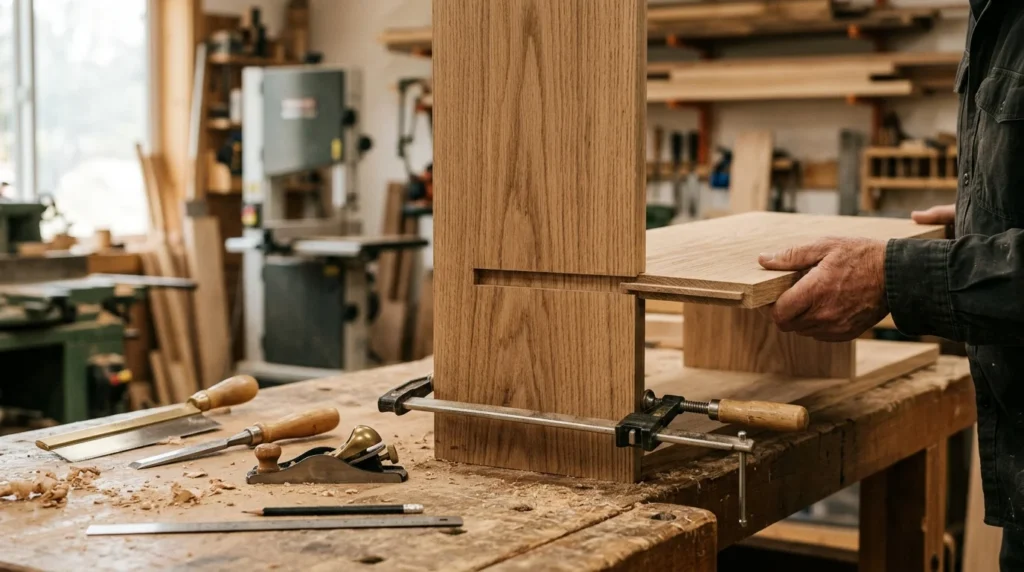

If you have come across the word dado, you may wonder what it means. “Dado” can have several meanings depending on the language, subject, and context in which it is used. In English, it is commonly associated with woodworking and architecture, while in Spanish and Italian it can have different meanings.
The word may also appear in names, games, dictionaries, or conversations where its meaning depends entirely on the surrounding words. Understanding the context is therefore important before deciding what “dado” means.
Dado Meaning & Definition
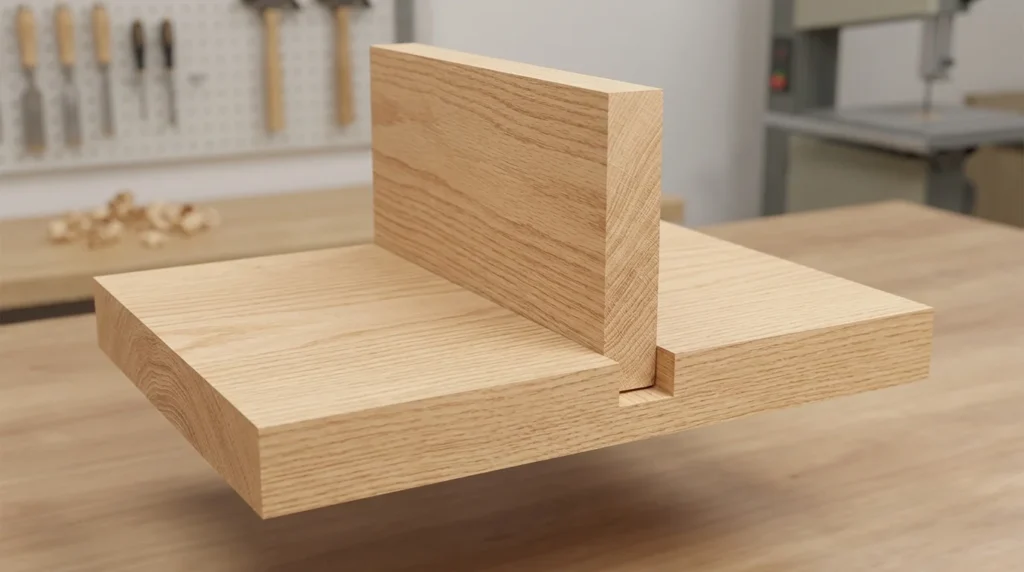
The most common English dado meaning is a groove or rectangular channel cut into a piece of wood, usually to allow another piece of material to fit into it. Dado joints are widely used in furniture making, cabinetry, shelving, and woodworking.
In architecture, dado can also refer to the lower part of an interior wall, especially the section below a decorative molding or a particular height. This architectural meaning is related to the idea of a lower wall section rather than a groove in wood.
What Does Dado Mean?
When someone asks what does dado mean, the answer depends on the context. In woodworking, a dado is a flat-bottomed groove cut across the grain of wood. It is commonly used to create strong connections between boards.
In architecture and interior design, the word can describe the lower portion of a wall. In other languages, however, “dado” may have completely different meanings, so the surrounding context is important.
Dado Meaning in Simple Words
In simple words, a dado is usually a groove cut into wood so another piece can fit into it. Imagine cutting a wide, straight channel across a wooden board and sliding another board into that channel. That channel is a dado.
The word can also mean the lower section of a wall in architecture. Therefore, the simplest definition depends on whether you are reading about woodworking, construction, or interior design.
Dado Meaning in Woodworking
In woodworking, a dado is a groove cut across the width of a board. Unlike a simple saw kerf, a dado is generally wider and is designed to receive another board or panel. It is a common feature in cabinets, bookcases, drawers, and other furniture.
A dado can be made using tools such as a table saw with a dado blade, router, or other specialized woodworking equipment. The groove provides a larger surface for the joining piece, which can create a strong and stable joint.
What Is a Dado Joint?
A dado joint is a woodworking joint created when one board fits into a groove cut across another board. The groove holds the second board in position and provides additional surface area for glue.
Dado joints are commonly used when building shelves and cabinets because they can provide strong mechanical support. The joint can be reinforced with glue, screws, nails, or other fasteners depending on the project.
Dado Joint Meaning
The dado joint meaning refers to a connection between two pieces of wood where one piece fits into a groove cut into the other. The groove is called the dado, while the board inserted into it is the mating piece.
This type of joint is especially useful for shelving because the groove helps prevent the shelf from shifting sideways. Proper sizing and accurate cutting are important for creating a clean and secure dado joint.
Dado vs Groove
A dado is a type of groove, but not every groove is necessarily a dado. In woodworking terminology, a dado usually refers to a groove cut across the grain of a board and designed to receive another piece.
A generic groove can have many purposes and may run with or across the grain. The distinction is mainly based on the direction, shape, and intended use of the cut.
Dado vs Rabbet
Dado and rabbet are common woodworking cuts, but they are made differently. A dado is typically a groove cut into the middle of a board, while a rabbet is an L-shaped cut made along the edge of a board.
For example, a cabinet shelf may fit into a dado cut across a side panel, while the back of a cabinet may sit inside a rabbet cut along the rear edge of the frame.
Dado vs Mortise
A mortise is generally a rectangular hole or recess designed to receive a tenon, while a dado is usually an open-ended groove across a board. Both are used to join pieces of wood, but their shapes and applications differ.
Mortise-and-tenon joints are especially common in traditional furniture and structural woodworking. Dado joints are frequently used for shelving and cabinetry because they can be cut efficiently across a panel.
Dado Meaning in Architecture
In architecture, a dado can refer to the lower portion of an interior wall. Historically, this section could be decorated differently from the upper wall using paneling, molding, paint, or other finishes.
The architectural dado may extend from the floor to a particular height and can help create a decorative transition between the lower and upper sections of a wall. This meaning is different from the woodworking groove.
Dado Meaning in Interior Design
In interior design, the term dado can describe a decorative lower section of a wall. It may be finished with wood paneling, tiles, paint, wallpaper, or other materials.
A dado can add visual structure to a room and protect the lower part of a wall from everyday wear. The term is more common in traditional architectural and interior-design descriptions than in casual conversation.
Dado Meaning in Construction
In construction and building discussions, dado may refer either to the lower section of a wall or to a groove in a building material, depending on the context. Construction professionals may use specialized terminology that differs between regions and trades.
If the word appears alongside terms such as shelves, cabinets, timber, or joints, the woodworking meaning is likely intended. If it appears with wall finishes, molding, paneling, or interior decoration, the architectural meaning is more likely.
Dado Meaning in Spanish
In Spanish, “dado” has meanings that are different from the common English woodworking definition. It can be related to the verb dar, meaning “to give,” and can function as a form of the past participle in certain grammatical contexts.
“Dado” can also mean a die or small cube used in games, depending on the Spanish sentence and regional usage. Therefore, translating “dado” requires looking at the complete phrase rather than relying on one definition.
Dado Meaning in Spanish Slang
The meaning of dado in Spanish slang can vary depending on the country and the surrounding expression. Spanish-speaking countries use regional vocabulary differently, so a word that has one informal meaning in one location may not carry exactly the same meaning elsewhere.
If you encountered “dado” in a Spanish message, the words before and after it are important for identifying the intended meaning. The standard Spanish meanings should be considered before assuming it is slang.
Dado Meaning in Italian
In Italian, “dado” commonly means a die, such as the small cube used in board games. It can also have other meanings depending on the sentence and grammatical context.
This is another example of why the word “dado” cannot be assigned one universal definition. The language and topic surrounding the word determine what it means.
Dado Meaning in Portuguese
In Portuguese, “dado” can also have several meanings depending on context. It may be related to the verb “dar,” meaning “to give,” and can function as a grammatical form in Portuguese.
It may also appear as a noun or adjective in particular expressions. If you encounter “dado” in Portuguese, reading the full sentence is the best way to determine its intended meaning.
Dado Meaning in Text
The dado meaning in text depends on the language and conversation. In an English woodworking discussion, it usually refers to a groove cut into wood. In Spanish, Italian, or Portuguese, it can have different meanings.
For example, someone discussing furniture might say, “Cut a dado for the shelf.” Here, dado clearly refers to a woodworking groove. If the word appears in a foreign-language message, translation should be based on the full sentence.
Dado Meaning in a Sentence
Woodworking Example
“The carpenter cut a dado into the cabinet side for the shelf.”
Here, dado means a groove designed to hold the shelf.
Architecture Example
“The room had decorative paneling around the dado of the walls.”
Here, dado refers to the lower section of the wall.
General Example
“Make sure the dado is wide enough for the panel.”
In this example, dado refers to the groove into which the panel will fit.
Types of Dado Cuts
Woodworkers can create different types of dado cuts depending on the project. A through dado extends completely across the width of a board, so the groove is visible at both edges. A stopped dado ends before reaching one or both edges and can create a cleaner appearance.
The choice depends on both function and appearance. Through dadoes are often useful when the joint will be hidden or when ease of cutting is important, while stopped dadoes are preferred when the finished furniture should have a more seamless look.
What Is a Through Dado?
A through dado is a groove that runs all the way across a board from one edge to the opposite edge. Because it reaches both edges, the ends of the groove are visible from the side of the workpiece.
This type of dado is commonly used in shelving and cabinet construction. It is relatively straightforward to cut and can provide a strong connection between boards when the dimensions are accurate.
What Is a Stopped Dado?
A stopped dado is a groove that does not extend all the way to the edge of the board. Instead, it stops at a predetermined point. This allows the joint to remain hidden when the furniture is assembled.
Stopped dadoes are often selected when appearance is important. They can make a shelf or panel look as though it enters the side of a cabinet without creating a visible groove on the outside surface.
How Is a Dado Made?
A dado can be made using several woodworking tools, including a router, table saw, or specialized dado blade. The appropriate method depends on the material, required width, depth, and accuracy of the cut.
The woodworker first marks the location and dimensions of the groove. The cutting tool then removes material to create the channel. Accurate measurements are important because a dado that is too wide can make the joint loose, while one that is too narrow may prevent the mating piece from fitting properly.
Dado Blade Meaning
A dado blade is a specialized cutting setup used with certain table saws to create wider grooves than a standard saw blade can make. Instead of producing only a narrow kerf, the setup can remove a wider section of material in one operation.
Dado blade systems may use multiple cutting components to achieve different groove widths. Their availability and permitted use can vary depending on the particular table saw and local safety requirements, so manufacturers’ instructions should always be followed.
Dado Router Bit Meaning
A dado router bit is a router bit used to cut a groove suitable for a dado joint. Router-based dado cuts can provide clean and accurate results when the tool is properly set up and guided.
The width of the router bit determines the basic width of the groove. If the required dado is wider than the available bit, multiple controlled passes may be needed to achieve the desired size.
Dado Depth
Dado depth refers to how deeply the groove is cut into the board. The correct depth depends on the thickness of the material, the design of the joint, and the amount of support required.
A deeper dado can provide more surface area for a joint, but removing too much material can weaken the board. Woodworkers therefore balance joint strength with the structural strength of the surrounding material.
Dado Width
Dado width is the distance across the groove from one side to the other. Ideally, it should match the thickness of the board or panel that will fit inside it.
Material thickness can vary slightly from its stated size, especially with plywood and manufactured boards. For this reason, experienced woodworkers often measure the actual material before cutting the dado rather than relying only on the nominal thickness.
Dado Joint Uses
Dado joints are commonly used in bookcases, cabinets, shelving units, drawers, desks, and other furniture. They are particularly useful when one panel needs to connect securely to another panel.
The groove provides mechanical support as well as a larger bonding surface when glue is used. This makes dado joints practical for furniture that needs to remain stable under everyday loads.
Advantages of a Dado Joint
One major advantage of a dado joint is its ability to provide strong support without relying entirely on screws or nails. The groove physically helps hold the mating board in place.
Dado joints can also make furniture assembly more precise because the groove helps position the connected panel. They are especially useful for repetitive cabinet and shelving projects where consistent joints are required.
Disadvantages of a Dado Joint
Although dado joints are useful, they also have limitations. Cutting a precise groove requires accurate measurements and appropriate tools. A poorly cut dado can result in a loose joint, an overly tight fit, or a weakened board.
Another consideration is that removing material from a board reduces its thickness at the joint location. For this reason, the groove depth should be carefully planned according to the project’s structural requirements.
Dado Joint Strength
A properly designed dado joint can be strong because the mating board is supported by the sides and bottom of the groove. Glue can also increase the strength of the connection by bonding the contacting surfaces.
The actual strength depends on factors such as wood species, material thickness, groove depth, joint fit, adhesive, loading direction, and workmanship. A dado joint is therefore not automatically strong simply because it is a dado; design and construction quality matter.
Dado in Cabinet Making
Dadoes are especially common in cabinet making. Cabinet sides can contain grooves that receive shelves, dividers, or other panels. These grooves help keep the components correctly positioned during assembly.
For cabinet work, consistency is important because several shelves may need to fit into matching dadoes. A properly planned setup can help ensure that each groove has the same width, depth, and position.
Dado in Furniture Making

In furniture making, dadoes can be used to connect panels while maintaining a clean appearance. They are useful in projects where boards need to intersect at right angles or where a shelf needs additional support.
Because the joint can help align the pieces during assembly, dadoes are popular in both traditional woodworking and modern furniture construction. Their usefulness depends on the design and material being used.
Dado in Plywood
Dado joints are frequently used with plywood because plywood panels are commonly used for cabinets, bookcases, and other furniture. The groove can be sized to match the actual thickness of the plywood.
It is important to measure plywood before cutting because its actual thickness may differ from its nominal measurement. Matching the dado to the real panel thickness helps produce a better-fitting joint.
Dado Meaning in Carpentry
In carpentry, a dado generally refers to a groove cut across the grain of wood to receive another piece. It is a basic woodworking concept and an important type of joint used in furniture and cabinetry.
The term can also appear in architectural carpentry, where “dado” may refer to the lower portion of a wall. Therefore, carpentry context should be considered when interpreting the word.
Dado Meaning in Architecture vs Woodworking
| Context | Dado Meaning |
|---|---|
| Woodworking | A groove cut into wood to receive another piece |
| Cabinet making | A groove used to support shelves or panels |
| Architecture | The lower section of an interior wall |
| Interior design | A decorative lower wall section |
| Spanish | Can have meanings related to “dar” or a die, depending on context |
| Italian | Commonly means a die used in games |
Frequently Asked Questions
What does dado mean?
Dado commonly means a groove cut across a piece of wood to receive another board. In architecture, it can also mean the lower portion of an interior wall.
What is a dado joint?
A dado joint is a woodworking connection in which one piece of wood fits into a groove cut into another piece. It is commonly used in shelving and cabinets.
What is the difference between a dado and a rabbet?
A dado is generally a groove cut across the board, while a rabbet is an L-shaped cut made along the edge of a board.
What does dado mean in architecture?
In architecture, dado can refer to the lower section of an interior wall, often separated or decorated differently from the upper part.
What does dado mean in Spanish?
In Spanish, “dado” has several possible meanings depending on context. It can be related to the verb “dar,” and it can also mean a die used in games.
Conclusion
The dado meaning depends on the context. In woodworking, a dado is most commonly a groove cut into a board to receive another piece, and a dado joint is widely used in cabinets, shelving, and furniture. In architecture, dado can describe the lower portion of an interior wall.
The word also appears in languages such as Spanish, Italian, and Portuguese, where its meaning can be different. Therefore, whenever you encounter dado, consider the subject and surrounding words first. In a woodworking discussion, think “groove”; in architecture, think “lower wall section”; and in another language, check the full sentence for the intended meaning.
See Also:
Conundrum Meaning: Definition, Examples & Synonyms