
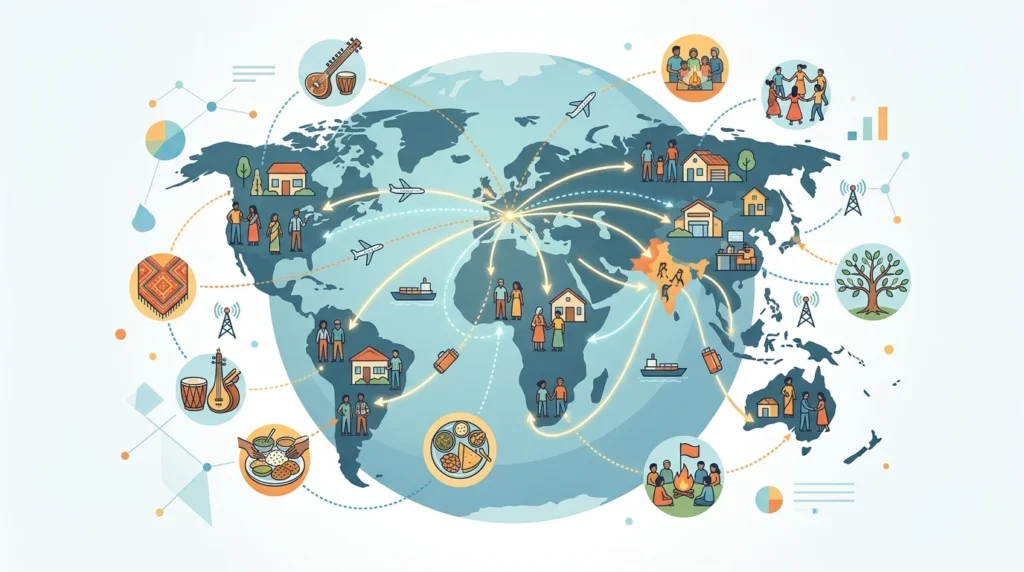

The word diaspora is commonly used in history, culture, geography, sociology, and everyday discussions. If you have searched for diaspora meaning, you are likely trying to understand what this term means and why it is used to describe communities living outside their original homeland.
In simple terms, diaspora refers to a group of people who have moved from their original homeland and now live in different parts of the world while maintaining connections with their culture, traditions, language, or identity.
In this guide, Trendy Meaning explains what does diaspora mean, its definition, origin, examples, history, and how the term is used in different contexts.
Meaning & Definition
The diaspora meaning refers to the movement or spread of people from their original homeland to different countries or regions.
A diaspora community usually maintains some connection with its place of origin through:
- Culture
- Language
- Traditions
- Religion
- Family connections
- Shared history
The common meanings include:
- A community living outside its homeland
- Migration of people across countries
- A scattered population with shared origins
- Cultural communities formed through migration
Diaspora Meaning in English
The diaspora meaning in English can be explained as:
- A group of people who live away from their homeland
- The spreading of a population from its original country
- A community formed by migration
For example:
“The Indian diaspora lives in many countries around the world.”
This means people of Indian origin live in different countries while maintaining connections with Indian culture.
Another example:
“The African diaspora has influenced cultures worldwide.”
This refers to communities of African descent living outside Africa.
What Does Diaspora Mean?
When people ask what does diaspora mean, they usually want to understand how a group of people becomes a diaspora.
In simple words, diaspora means people leaving their homeland and forming communities elsewhere while keeping parts of their original identity.
For example:
A group of people moves from one country to another for work, safety, education, or other reasons and continues celebrating their traditional festivals and speaking their native language.
Simple Explanation
Think of diaspora as:
- People living outside their homeland
- A community connected by shared origins
- Migration across countries
- Maintaining cultural identity abroad
The term focuses not only on movement but also on the relationship people maintain with their roots.
Diaspora Definition With Examples
The diaspora definition describes a population that has been dispersed from its original homeland and continues to share cultural or historical connections.
Examples of Diaspora
Indian Diaspora:
People of Indian origin living in countries such as the United States, Canada, the United Kingdom, and other regions.
African Diaspora:
Communities of African descent living outside Africa due to historical migration and movement.
Jewish Diaspora:
Jewish communities that spread across different regions outside their historical homeland.
These examples show how diaspora communities exist around the world.
Background
The concept of diaspora has existed for thousands of years. Throughout history, people have moved due to trade, wars, economic opportunities, political changes, education, and other circumstances.
Diaspora communities have played important roles in spreading languages, traditions, foods, ideas, and cultural practices across different regions.
Today, diaspora is widely used to describe global communities that maintain connections with their ancestral or original homeland.
Origin and History of Diaspora
The word diaspora comes from the ancient Greek word diaspeirein, meaning “to scatter” or “to spread.” It was originally used to describe the dispersion of certain communities but later became a broader term for populations living outside their homeland.
Over time, the meaning expanded to include many migrant communities around the world.
Usage in Different Contexts
The meaning of diaspora changes slightly depending on the context.
Diaspora in Culture
In cultural discussions, diaspora refers to communities that preserve their traditions, language, and customs while living in another country.
Example:
“The diaspora community organized a cultural festival.”
Diaspora in History
Historians use diaspora to describe major population movements caused by events such as migration, conflict, or social changes.
Example:
“Researchers studied the history of the Jewish diaspora.”
Diaspora in Politics
In politics, diaspora may refer to citizens or communities living abroad who maintain connections with their home country.
Example:
“The government engaged with its overseas diaspora.”
Diaspora in Everyday English
In everyday conversations, diaspora simply describes people from a shared background who live outside their original homeland.
Example:
“The Pakistani diaspora contributes to communities worldwide.”
Diaspora Meaning in Modern Society
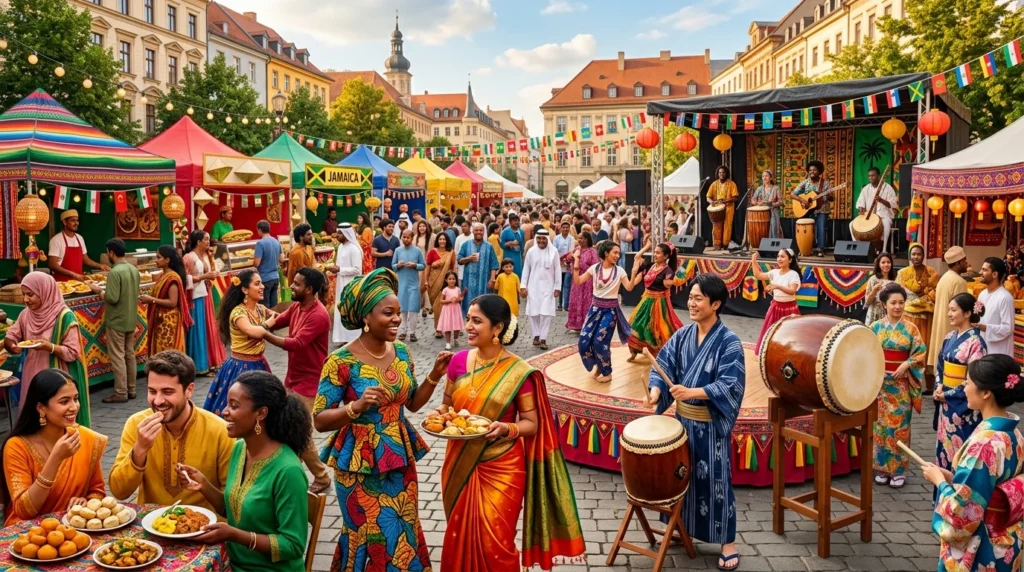
In modern society, the diaspora meaning has expanded beyond simple migration. Today, diaspora communities represent people who maintain cultural, emotional, and social connections with their homeland while building new lives in other countries.
Many diaspora communities contribute to:
- Global business
- Education
- Technology
- Arts and culture
- International relationships
For example:
“The global diaspora helps connect different cultures and economies.”
Types of Diaspora
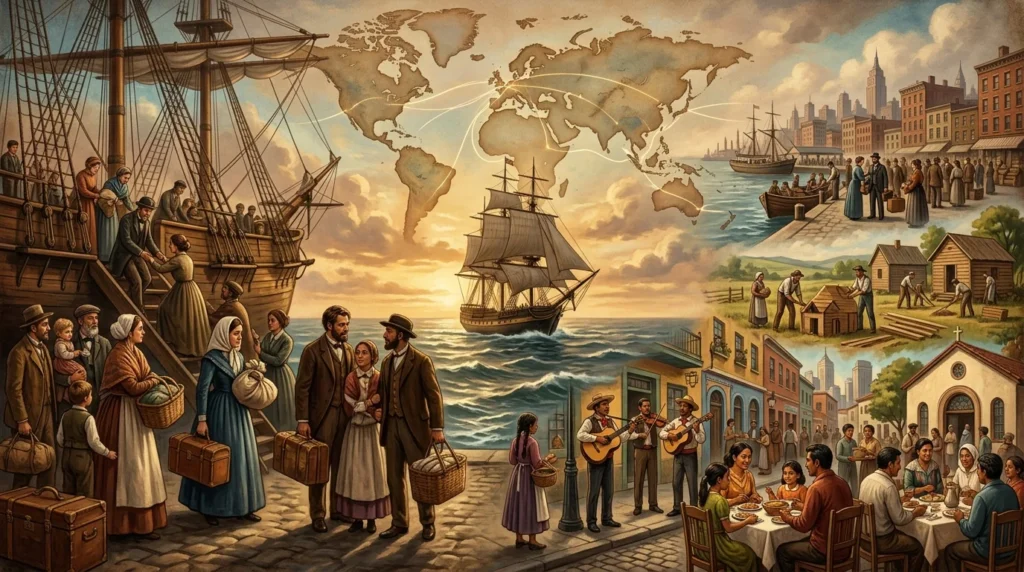
Diaspora can be divided into different types depending on the reasons and circumstances behind migration.
Voluntary Diaspora
This occurs when people move to another country by choice for reasons such as:
- Better job opportunities
- Education
- Business
- Improved living conditions
Example:
“Many students become part of a diaspora community after studying abroad.”
Forced Diaspora
This happens when people are forced to leave their homeland because of:
- War
- Conflict
- Political problems
- Natural disasters
Example:
“Historical events created many forced diaspora communities.”
Historical Diaspora
These are communities that formed through major movements of people over long periods.
Example:
“The Jewish diaspora has a long historical background.”
Diaspora vs Immigration Difference
Although these words are related, they have different meanings.
Diaspora
Refers to a community of people who live outside their homeland and maintain connections with their original culture or identity.
Example:
“The Indian diaspora celebrates cultural festivals worldwide.”
Immigration
Refers to the process of moving from one country to another.
Example:
“She immigrated to Canada for work.”
Simple difference:
Immigration = the act of moving.
Diaspora = the community formed after migration.
Diaspora vs Migration Difference
These terms are often confused.
Migration
A general term for people moving from one place to another.
Diaspora
A specific term for a scattered community that shares a common origin and identity.
Simple difference:
Migration = movement.
Diaspora = a connected community after movement.
Synonyms of Diaspora
Depending on the context, similar words include:
Dispersed community
Migrant community
Expatriate community
Overseas community
Scattered population
Global community
The best alternative depends on the situation.
Antonyms of Diaspora
Words with opposite meanings include:
Local community
Native population
Homogeneous population
Resident community
Home population
These describe people living together in their original homeland or local area.
How to Use Diaspora Correctly
The word diaspora is commonly used in discussions about culture, history, migration, and global communities.
Examples:
“The Indian diaspora has a strong presence in many countries.”
“The diaspora community supports cultural traditions abroad.”
“Researchers studied the effects of migration on diaspora groups.”
“The country’s diaspora contributes to international trade.”
The word is usually used in formal discussions, academic writing, and news reports.
Frequently Asked Questions
What is diaspora meaning?
Diaspora refers to a group of people who live outside their original homeland while maintaining connections with their shared culture, traditions, or identity.
What does diaspora mean in history?
In history, diaspora describes the movement and spread of communities due to migration, conflict, trade, or other major events.
What is an example of diaspora?
Examples include the Indian diaspora, African diaspora, and Jewish diaspora communities living around the world.
What is the difference between diaspora and immigration?
Immigration refers to the act of moving to another country, while diaspora refers to the community formed by people living outside their homeland.
Why are diaspora communities important?
Diaspora communities help spread culture, traditions, knowledge, economic connections, and ideas across different parts of the world.
Conclusion
The diaspora meaning refers to communities of people who live outside their original homeland while maintaining cultural, historical, or social connections with their roots. From ancient migrations to modern global communities, diaspora plays an important role in shaping cultures, economies, and societies worldwide.
Understanding what does diaspora mean, its history, examples, and differences from migration helps explain how people and cultures connect across borders.
At Trendy Meaning, we explain English words, cultural terms, internet expressions, and modern vocabulary with simple definitions, practical examples, and real-world usage to make learning easier.
See Also:
WLW Meaning: Full Form, LGBTQ+, Text & Social Media
Poirot Meaning: Definition, Origin, Character & Literary Significance