
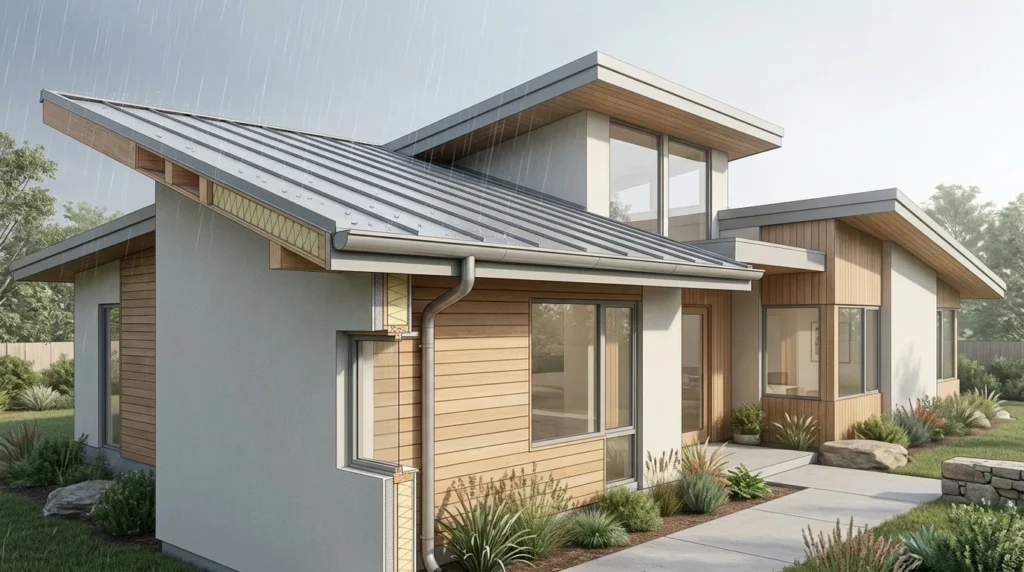

If you’ve searched for eave meaning, you’re probably wondering what this architectural term means and where it is used. The word “eave” commonly appears in construction, home improvement, roofing, and architecture. It refers to a specific part of a building’s roof.
In simple terms, an eave is the lower edge of a roof that extends beyond the outside wall of a building. Eaves help protect walls, windows, and foundations from rainwater while also improving a building’s appearance.
In this guide, Trendy Meaning explains what does eave mean, its definition, origin, examples, and how it is used in construction and everyday English.
Meaning & Definition
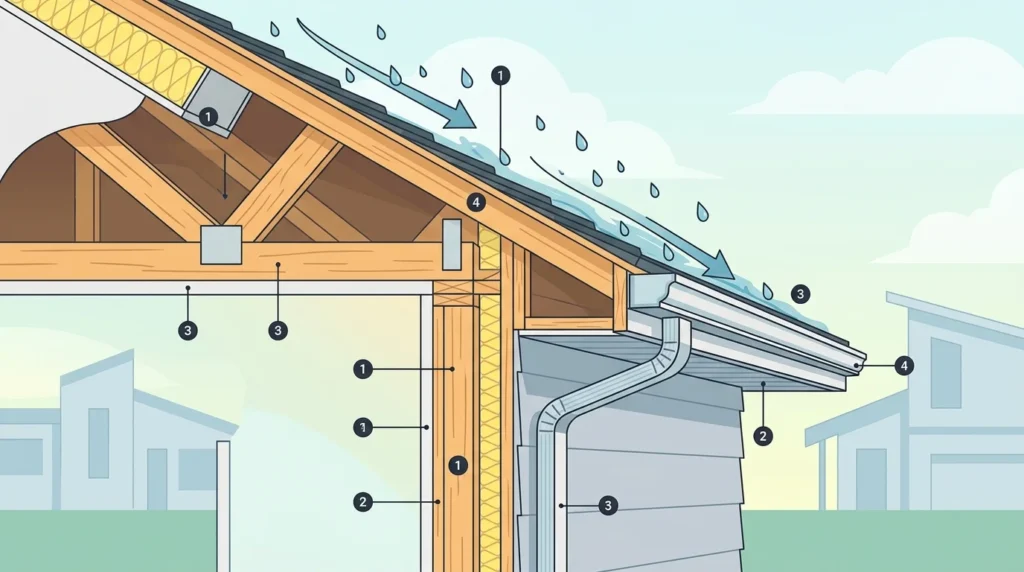
The eave meaning is the lower projecting edge of a roof.
Common meanings include:
- Roof edge
- Overhanging roof
- Roof extension
- Lower part of a roof
- Protective roof overhang
Most houses and buildings have eaves that extend beyond the walls.
Eave Meaning in English
The eave meaning in English is “the lower edge of a roof that projects beyond the wall.”
Example:
“Rainwater dripped from the eaves.”
Meaning:
The water fell from the edge of the roof.
What Does Eave Mean?
When people ask what does eave mean, they are referring to the part of the roof that sticks out beyond the building’s walls.
The eave serves several purposes:
- Protects walls from rain
- Directs water away from the building
- Provides shade
- Improves ventilation
- Adds architectural style
Many modern homes include gutters attached to the eaves.
Simple Explanation
Think of an eave as:
- The roof edge
- The roof overhang
- The part of the roof beyond the wall
- The section where gutters are often installed
It is an important part of most building designs.
Eave Definition With Examples
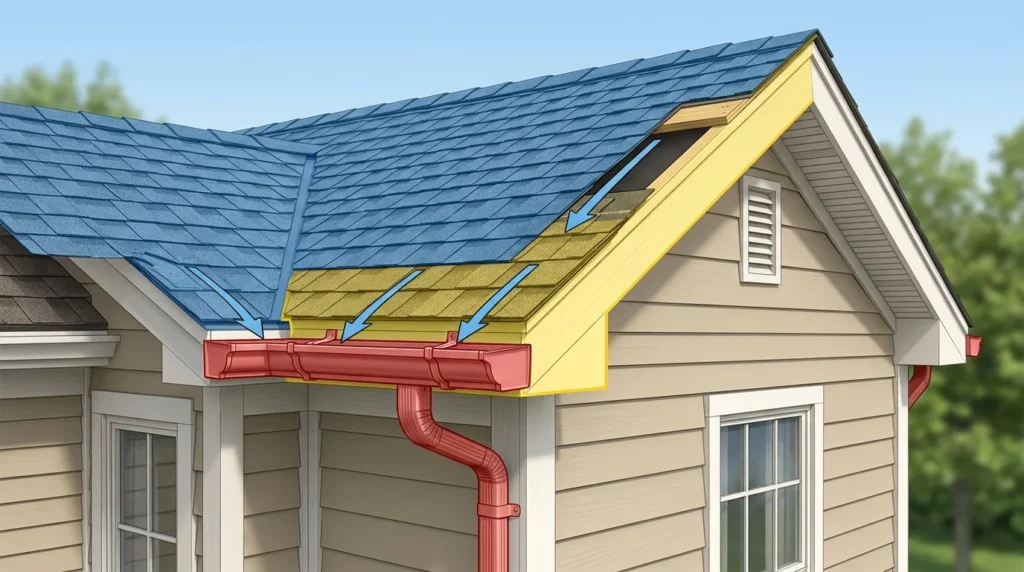
The eave definition is the lower edge of a roof that extends beyond the outer wall.
Examples of Eave in Sentences
“Birds built a nest beneath the eaves.”
Meaning:
The nest was under the roof edge.
“The carpenter repaired the damaged eaves.”
Meaning:
The roof overhang needed repairs.
“Water flowed from the eaves after the storm.”
Meaning:
Rainwater drained from the roof edge.
Background
Eaves have been part of building design for thousands of years. Ancient builders used roof overhangs to protect homes from rain and harsh sunlight.
Today, eaves remain an essential architectural feature in homes, offices, schools, and commercial buildings around the world.
Origin and History of Eave
The word eave comes from the Old English word efes, meaning “edge” or “border of a roof.”
Over time, the spelling changed to “eave,” while the meaning remained largely the same. Modern architects and builders continue using the term in construction and roofing.
Usage in Different Contexts
The word eave appears in several situations.
Eave in Construction
Builders use the term to describe the roof overhang.
Example:
“The eaves were extended to improve rain protection.”
Eave in Architecture
Architects design eaves to improve both function and appearance.
Example:
“The traditional home featured wide decorative eaves.”
Eave in Home Maintenance
Homeowners often inspect eaves for leaks, rot, or gutter damage.
Example:
“The gutters attached to the eaves needed cleaning.”
Eave in Everyday English
People may simply refer to the roof edge when describing weather or buildings.
Example:
“Snow collected along the eaves during winter.”
Eave vs Roof Difference
These terms are related but not the same.
Eave
An eave is the lower edge of a roof that extends beyond the exterior wall.
Example:
“The birds nested beneath the eaves.”
Roof
A roof is the complete upper covering of a building that protects it from weather.
Example:
“The roof was replaced after the storm.”
Simple difference:
Eave = The projecting edge of the roof.
Roof = The entire top covering of the building.
Eave vs Gutter Difference
People often confuse these two terms.
Eave
The eave is the edge of the roof itself.
Gutter
A gutter is a channel attached to the eave that collects and carries rainwater away from the building.
Example:
“The gutter along the eaves needed cleaning.”
Simple difference:
Eave = Roof edge.
Gutter = Water drainage system attached to the eave.
Common Synonyms of Eave
Depending on the context, similar words include:
- Roof edge
- Roof overhang
- Overhang
- Roof projection
- Cornice (in some architectural contexts)
- Roof extension
While these terms are related, “eave” is the most accurate word for the lower projecting edge of a roof.
How to Use Eave Correctly
Use eave when referring to the lower edge of a roof that extends beyond the wall.
Examples:
“The contractor repaired the damaged eaves.”
“Rainwater flowed off the eaves.”
“The new house has wide decorative eaves.”
“The gutters are attached beneath the eaves.”
Frequently Asked Questions
What does eave mean?
An eave is the lower edge of a roof that extends beyond the outside wall of a building.
What is the purpose of an eave?
Eaves protect walls from rain, provide shade, improve ventilation, and help direct water toward gutters.
Is an eave part of the roof?
Yes. The eave is a section of the roof that projects beyond the building’s walls.
What is the difference between an eave and a gutter?
The eave is the roof edge, while the gutter is the channel attached to the eave that carries rainwater away.
Where is the word eave commonly used?
It is commonly used in construction, roofing, architecture, home maintenance, and property descriptions.
Conclusion
The eave meaning refers to the lower projecting edge of a roof that extends beyond the exterior wall of a building. Eaves are an important architectural feature because they protect buildings from rain, provide shade, and improve the overall appearance of a structure. Understanding what does eave mean helps you better understand construction, roofing, and home design terminology.
At Trendy Meaning, we explain English words, internet slang, names, symbols, grammar terms, and modern vocabulary with simple definitions, examples, and real-world meanings to make learning easier.
See Also:
Soliciting Meaning: Definition, Uses & Examples