
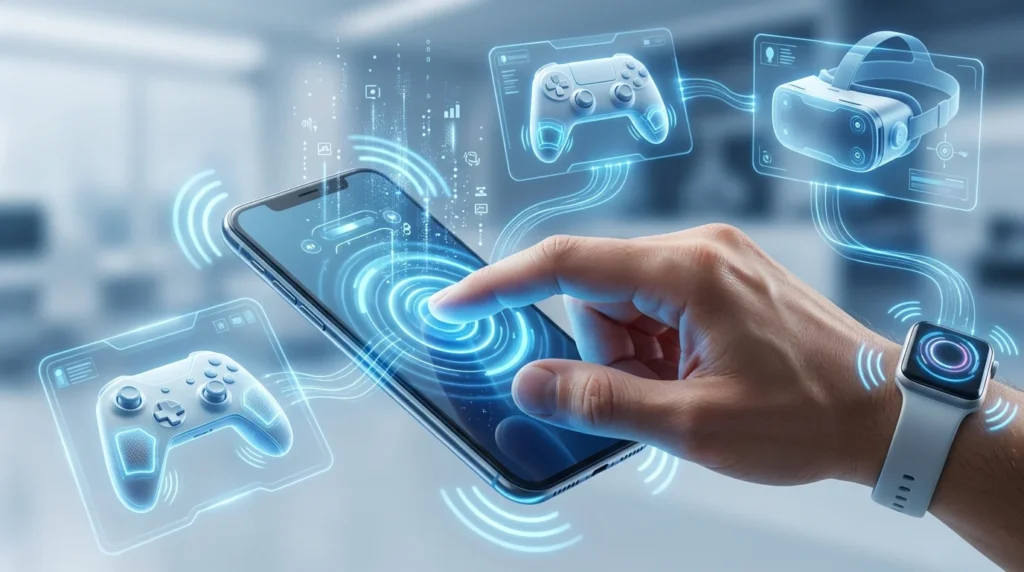

Haptics is the technology of creating touch-based sensations that allow users to feel digital interactions through vibrations, pressure, motion, or tactile feedback generated by electronic devices.
Technology has evolved far beyond screens, sounds, and visual interfaces. Today, digital devices can communicate through the sense of touch, creating a more natural and immersive experience for users. This technology is known as haptics, a term that has become increasingly important in smartphones, gaming controllers, wearable devices, virtual reality systems, and modern automotive interfaces. Whenever your phone vibrates after receiving a notification, your smartwatch taps your wrist, or a gaming controller reacts to in-game actions, you are experiencing haptic technology in action.
As digital experiences become more interactive, haptics plays a critical role in helping users feel connected to their devices. Instead of relying solely on visual or audio cues, haptic feedback provides physical sensations that improve usability, accessibility, and engagement. Understanding the meaning of haptics can help users better appreciate how modern technology creates realistic and responsive interactions. Whether you are using an iPhone, Android smartphone, gaming console, or VR headset, haptics has likely become a part of your everyday digital experience without you even realizing it.
Meaning & Definition
Haptics refers to technology that uses the sense of touch to communicate information, provide feedback, or simulate physical interactions. The word “haptics” originates from the Greek word haptikos, which means relating to touch or capable of touching. In simple terms, haptics allows users to feel digital actions through vibrations, motions, pressure responses, or tactile sensations generated by electronic devices.
In technology, haptic feedback is commonly used to confirm actions, improve user interaction, and create realistic experiences. For example, when you type on a smartphone keyboard and feel a slight vibration after pressing a key, that sensation is a form of haptic feedback. Similarly, gaming controllers can generate different vibrations depending on in-game events, helping players feel explosions, impacts, or environmental changes. The primary goal of haptics is to bridge the gap between the digital and physical worlds by adding the element of touch to human-computer interaction.
Background
The concept of haptics is not entirely new. Humans have always relied on touch as one of their most important senses for understanding and interacting with the environment. Scientists and engineers began exploring ways to replicate this sensory experience in machines during the mid-20th century. Early research focused on developing systems that could simulate touch for industrial, military, and medical applications.
As computing technology advanced, haptics became more practical and affordable. The introduction of vibration motors in mobile phones marked one of the first widespread uses of consumer haptic technology. Over time, manufacturers developed more sophisticated haptic engines capable of producing precise and customizable feedback. Companies such as Apple, Samsung, Sony, and Microsoft have invested heavily in improving haptic systems to enhance user experiences across their devices. Today, haptics is a key component of smartphones, wearables, gaming systems, automotive controls, robotic systems, and virtual reality environments.
Usage in Different Contexts
The meaning of haptics can vary slightly depending on the context in which it is used. In smartphones, haptics typically refers to vibration-based feedback that confirms user actions, such as typing, unlocking a device, or receiving notifications. This feedback helps users interact with their devices more confidently and accurately without constantly looking at the screen.
In gaming, haptics creates immersive experiences by allowing players to physically feel in-game actions through controllers equipped with advanced vibration systems. In virtual reality, haptic technology adds realism by simulating textures, impacts, and environmental interactions. Medical professionals use haptic systems in robotic surgery and training simulations to recreate the sensation of handling real instruments. Automotive manufacturers incorporate haptics into touchscreens and control panels to provide tactile confirmation while reducing driver distraction. These diverse applications demonstrate how haptics has evolved from simple vibrations into a sophisticated technology that enhances interaction across numerous industries.
What Does Haptics Mean in Technology?
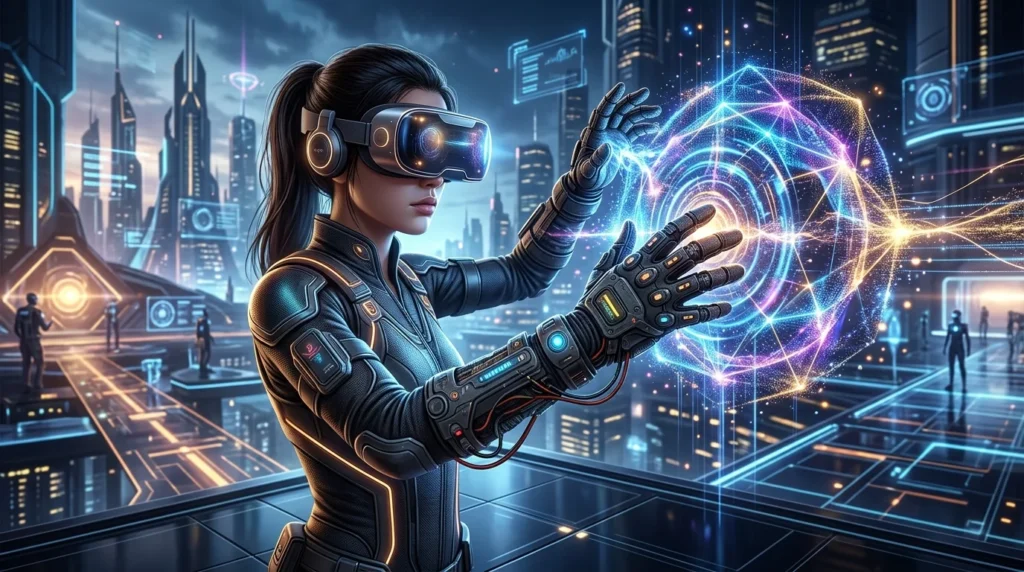
In technology, haptics refers to systems and mechanisms that communicate information through the sense of touch. While traditional digital interfaces rely on visual elements such as screens and icons or audio signals like alerts and notifications, haptic technology introduces a physical dimension to user interaction. It enables devices to produce sensations that users can feel, making digital experiences more intuitive, responsive, and engaging.
The importance of haptics in modern technology continues to grow as devices become smarter and more interactive. Smartphones, tablets, smartwatches, gaming consoles, automotive touchscreens, and virtual reality systems all use haptic technology to improve usability. Instead of merely seeing or hearing a response, users receive tactile confirmation that an action has been completed.
Haptic technology is technology that uses touch-related sensations, such as vibrations, movements, pressure, or force, to give a user physical feedback when interacting with a digital device or virtual environment. Instead of relying only on what you see or hear, haptic technology allows you to physically feel an action or response.
It is commonly found in smartphones, smartwatches, gaming controllers, touchscreens, VR devices, and other interactive systems. For example, when a phone gives a small vibration after you tap a button, that physical sensation is a simple form of haptic feedback. More advanced haptic systems can create different patterns and strengths to make digital interactions feel more realistic and informative. In simple terms, haptic technology connects digital actions with the sense of touch.
This enhances confidence, reduces errors, and creates a stronger connection between humans and technology. As emerging technologies such as augmented reality, robotics, and wearable devices continue to advance, haptics is expected to become an even more essential component of human-computer interaction.
Also Read: Collate Meaning: Simple Definition, Printing & Uses
What Is Haptic Feedback and How Does It Work?
Haptic feedback is the physical response generated by a device when a user interacts with it. This response is usually delivered through vibrations, motions, pressure changes, or tactile sensations that mimic real-world touch experiences. The primary purpose of haptic feedback is to provide immediate confirmation that an action has been recognized by the system.
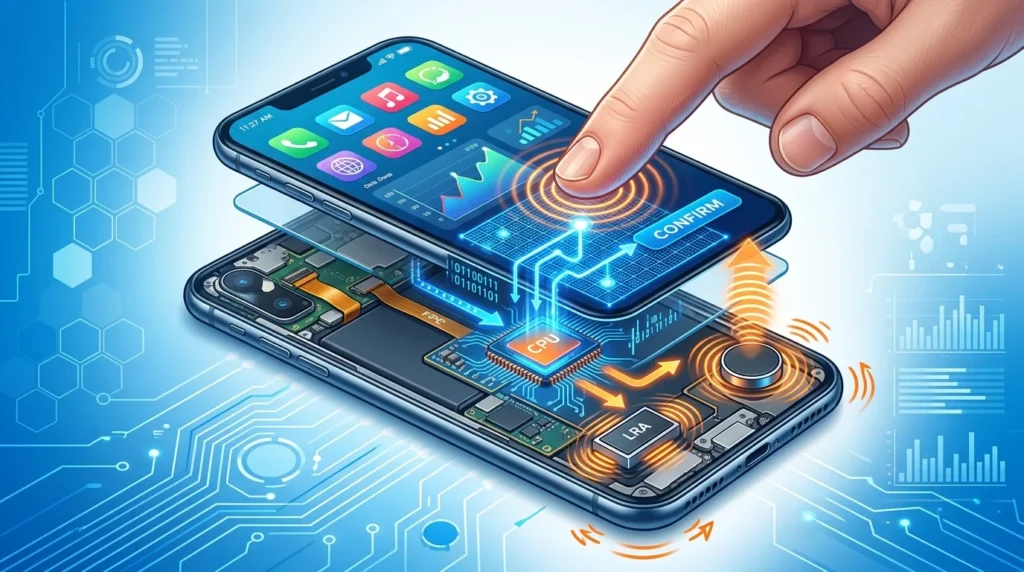
The process behind haptic feedback involves specialized components known as actuators. These small mechanical devices create vibrations or movements when triggered by software commands. For example, when a user presses a virtual button on a touchscreen, the device sends a signal to the actuator, which then generates a brief vibration. More advanced haptic systems can produce varying intensities, patterns, and frequencies to simulate different sensations. Modern devices use sophisticated haptic engines that deliver highly precise feedback, making interactions feel more realistic and natural. This technology helps users navigate interfaces more efficiently while enhancing overall user satisfaction.
Haptics Meaning on iPhone Explained
For iPhone users, haptics refers to the touch-based feedback generated by Apple’s advanced vibration system known as the Taptic Engine. Introduced to provide more refined and accurate feedback than traditional vibration motors, the Taptic Engine creates subtle sensations that respond to user actions throughout the operating system. These tactile responses make the device feel more interactive and responsive.
When using an iPhone, haptic feedback can be experienced in various situations, including typing on the keyboard, activating silent mode, using Face ID, receiving notifications, selecting options from menus, or interacting with widgets. Unlike ordinary vibrations, iPhone haptics are designed to feel intentional and precise rather than simply shaking the device. This approach improves usability while creating a premium user experience. Apple has integrated haptics deeply into iOS to help users receive feedback without constantly relying on visual cues, making navigation smoother and more intuitive.
What Is Haptics in Smartphones?
In smartphones, haptics refers to touch-based responses that provide users with physical feedback during interactions. Modern smartphones use haptic technology to enhance communication between the user and the device by creating subtle vibrations whenever specific actions occur. This feedback helps users understand that a command has been registered successfully.
Smartphone haptics can be found in many everyday functions. When typing a message, unlocking the phone, receiving notifications, interacting with apps, adjusting settings, or navigating menus, users often encounter haptic feedback. Both Android and iPhone devices utilize haptic systems, although the quality and precision can vary depending on the manufacturer. Advanced smartphones employ sophisticated vibration motors capable of producing different tactile sensations based on context. These improvements contribute to a more responsive and satisfying user experience while reducing reliance on visual confirmation.
Also Read: Petite Meaning: Definition, Height, Body Type & Fashion
Difference Between Haptics and Vibration
Although the terms haptics and vibration are often used interchangeably, they are not exactly the same. Vibration is a simple mechanical movement that creates a shaking sensation. Traditional mobile phones primarily relied on basic vibration motors that generated uniform movements regardless of the situation. Their main purpose was to alert users to incoming calls or notifications.
Haptics, on the other hand, represents a more advanced and intelligent form of tactile communication. Instead of producing a generic vibration, modern haptic systems generate carefully designed feedback patterns that correspond to specific actions. For example, tapping a button, dragging an item, unlocking a device, or completing a transaction may each produce a unique sensation. This level of precision allows haptics to communicate information more effectively and create a richer user experience. In simple terms, all haptics involve some form of vibration, but not all vibrations qualify as true haptic feedback.
Why Is Haptic Feedback Important?
Haptic feedback plays a significant role in improving the usability and effectiveness of digital devices. By providing tactile confirmation, it reassures users that their actions have been successfully recognized. This instant response reduces uncertainty and helps create smoother interactions, especially when visual attention is limited.
Beyond usability, haptic feedback enhances accessibility and engagement. Users with visual impairments can benefit from touch-based cues that help them navigate interfaces more easily. In gaming and virtual reality environments, haptics increases immersion by allowing users to physically experience digital events.
In automotive systems, tactile feedback helps drivers interact with controls while keeping their eyes focused on the road. As technology continues to evolve, haptic feedback is becoming a crucial element in designing intuitive, efficient, and user-friendly digital experiences that feel more natural and human-centered.
What Are Examples of Haptic Technology?
Haptic technology has become an essential part of many modern devices and systems, often working behind the scenes to make interactions feel more natural and responsive. One of the most common examples is the smartphone. Every time a user receives a notification, types on a virtual keyboard, unlocks the device, or interacts with certain apps, haptic feedback provides a tactile response that confirms the action. Smartwatches also use haptics to deliver silent alerts, fitness reminders, navigation directions, and health notifications directly to the wearer through subtle vibrations.
Beyond mobile devices, haptic technology is widely used in gaming controllers, virtual reality equipment, automotive touchscreens, medical simulators, industrial machinery, and wearable technology. Modern gaming controllers can produce different vibration patterns depending on in-game actions such as driving on rough terrain, firing a weapon, or experiencing an explosion.
In virtual reality environments, advanced haptic gloves and suits allow users to feel digital objects and interactions. Medical training systems use haptic feedback to simulate surgical procedures, helping students gain realistic hands-on experience. These examples demonstrate how haptics has evolved from simple vibration alerts into a sophisticated technology capable of creating immersive and meaningful user experiences.
What Does Haptic Intensity Mean?
Haptic intensity means the strength or power of a haptic sensation that you feel through a device. A low-intensity haptic may feel like a soft tap or gentle vibration, while a high-intensity haptic can feel stronger and more noticeable. In systems such as Apple’s Core Haptics, intensity controls the strength of a haptic event, allowing developers to create sensations ranging from weak to strong.
This means that when a device lets you adjust its haptic intensity, you are usually changing how powerful the vibration or tactile feedback feels. For example, a low setting might produce a subtle vibration when typing, while a higher setting may make the same interaction feel much more pronounced.
Haptic Intensity vs. Vibration
Haptic intensity describes how strong a particular haptic sensation feels, while haptics itself is the broader technology or system that produces touch-based feedback. A haptic effect can vary not only in intensity but also in timing, duration, and pattern.
Two vibrations can therefore have the same general purpose but feel completely different because one is weaker, shorter, or more precisely timed. This is why modern haptic feedback is more than simply making a device vibrate: it can communicate different types of information through carefully controlled tactile sensations.
How Does Haptic Feedback Improve User Experience?
User experience is one of the primary reasons why manufacturers invest heavily in haptic technology. Haptic feedback improves interactions by providing immediate physical confirmation whenever a user performs an action. This reassurance helps users understand that the system has received their input, reducing uncertainty and making interfaces feel more responsive. For example, when a virtual button produces a slight tactile response, users gain confidence that their command has been successfully executed.
Haptics also enhances efficiency and engagement. Instead of constantly looking at a screen for confirmation, users can rely on touch-based feedback. This reduces cognitive effort and allows interactions to feel more natural. In gaming and virtual reality applications, haptic feedback creates a stronger sense of immersion by enabling users to physically experience digital events. In automotive systems, tactile responses help drivers operate touchscreens and controls more safely. By adding a layer of touch to digital interactions, haptic technology bridges the gap between physical and virtual experiences, ultimately leading to better usability, greater satisfaction, and a more intuitive interface design.
What Is Haptics in Virtual Reality?
Virtual reality aims to create immersive digital environments that feel as realistic as possible. While visual and audio elements are important, the sense of touch plays a crucial role in making virtual experiences believable. Haptics in virtual reality refers to technologies that allow users to feel sensations while interacting with virtual objects, environments, and characters. These tactile responses make digital experiences more engaging and realistic.
Virtual reality haptic systems can include controllers, gloves, suits, vests, and wearable devices equipped with specialized actuators. When users touch, grab, push, or interact with virtual objects, these devices generate corresponding sensations that simulate physical contact. For example, a user may feel resistance when opening a virtual door or experience vibrations when handling tools in a VR simulation. Advanced systems can even recreate textures, pressure, and movement. As virtual reality continues to evolve, haptic technology is expected to play an increasingly important role in education, healthcare, gaming, training, engineering, and remote collaboration by making virtual experiences feel closer to real-life interactions.
Haptics Meaning in Gaming Controllers
In gaming controllers, haptics refers to tactile feedback systems that allow players to physically feel events occurring within a game. Traditional controllers used basic vibration motors that generated simple shaking effects. Modern gaming systems, however, utilize advanced haptic technology capable of delivering detailed and dynamic sensations that correspond to specific gameplay situations.
For example, players may feel the difference between driving on smooth pavement and rough terrain, experience the impact of collisions, or sense environmental changes such as rainfall, explosions, and weapon recoil. These sensations help increase immersion by connecting physical feedback to visual and audio experiences.
Modern controllers can also vary vibration intensity, frequency, and duration to create more realistic responses. This enhanced feedback improves player awareness, emotional engagement, and overall enjoyment. As gaming technology advances, haptics continues to transform the way players interact with virtual worlds, making gameplay feel more authentic and immersive than ever before.
What Is Tactile Feedback in Mobile Devices?
Tactile feedback in mobile devices refers to physical sensations that users feel when interacting with a smartphone or tablet. The term is often used interchangeably with haptic feedback because both involve touch-based responses generated by the device. These responses are designed to improve communication between the user and the interface by providing instant confirmation of actions.
Examples of tactile feedback include vibrations when typing on a touchscreen keyboard, confirming a fingerprint scan, adjusting settings, receiving notifications, or interacting with navigation menus. The purpose of tactile feedback is not merely to create vibrations but to deliver meaningful touch sensations that enhance usability.
By incorporating tactile feedback, mobile devices become easier to operate, more engaging to use, and more accessible for individuals who rely on sensory cues. As mobile technology continues to evolve, tactile feedback remains a critical feature for improving responsiveness and creating a more satisfying user experience.
How Do Haptic Sensors Work?
Haptic sensors are components that detect physical interactions such as touch, pressure, force, movement, or contact and convert them into digital signals. These sensors play a vital role in many haptic systems because they help devices understand how users are interacting with them. Once a sensor detects an action, it sends information to the device’s software, which then determines the appropriate response.
The feedback itself is generated through actuators, which work alongside sensors to create tactile sensations. For example, when a user touches a smartphone screen, sensors detect the contact and communicate with the device’s processor.
The processor then activates the haptic engine or vibration motor, producing a specific feedback pattern. More advanced haptic systems can measure pressure levels, finger movements, and interaction intensity to generate highly customized responses.
This combination of sensors, processors, and actuators allows modern devices to deliver precise, realistic, and context-aware haptic experiences that improve both functionality and user engagement.
What Is the Purpose of Haptics on Android Phones?
Haptics on Android phones serves several important functions that improve usability, accessibility, and overall user satisfaction. One of its primary purposes is to provide confirmation whenever users interact with the device. Whether typing on a keyboard, opening an app, using gesture controls, or selecting options within a menu, haptic feedback assures users that their actions have been recognized successfully.
Another major purpose of Android haptics is to create a more engaging and intuitive experience. Touch-based feedback helps users navigate interfaces more efficiently while reducing dependence on visual confirmation.
Android manufacturers often allow users to customize haptic intensity and vibration settings based on personal preferences. This flexibility enhances comfort and accessibility while ensuring that interactions feel natural and responsive. As Android operating systems continue to evolve, haptic technology remains a key feature that improves communication between users and their devices.
Types of Haptic Feedback Technology
Haptic technology is not limited to simple vibrations. Over the years, engineers have developed multiple types of haptic feedback systems designed to create different touch sensations and user experiences. The most common type is vibration feedback, which uses small motors or actuators to generate tactile responses whenever users interact with a device. This form of haptics is widely used in smartphones, smartwatches, gaming controllers, and wearable devices because it is cost-effective and easy to implement.
Another advanced category is force feedback, which creates resistance or pressure to simulate real-world interactions. Force feedback is commonly found in flight simulators, driving simulators, robotic systems, and industrial training equipment. Surface haptics is another emerging technology that alters the texture or friction of a touchscreen to create the sensation of touching different materials. Ultrasonic haptics uses sound waves to generate touch sensations in mid-air without requiring direct physical contact. Thermal haptics, meanwhile, simulates temperature changes to mimic hot or cold objects. Together, these technologies demonstrate how haptics is evolving beyond simple vibrations into a sophisticated field capable of recreating realistic touch experiences.
Benefits of Haptics in Modern Devices
Haptic technology provides numerous benefits that significantly improve how users interact with digital products. One of the most important advantages is enhanced usability. By providing immediate tactile confirmation, haptic feedback reassures users that their actions have been recognized successfully. This reduces confusion and makes interfaces feel more responsive and reliable.
Another major benefit is improved accessibility. Users with visual impairments or individuals who rely on sensory feedback can navigate devices more effectively when touch-based cues are available. Haptics also increases immersion in gaming, virtual reality, and augmented reality environments by allowing users to physically experience digital events. In professional applications such as healthcare, engineering, and training simulations, haptic systems improve learning outcomes by replicating real-world sensations. As a result, haptics contributes to better user satisfaction, stronger engagement, increased efficiency, and a more natural interaction between humans and technology.
Future of Haptic Technology
The future of haptic technology is expected to be transformative as researchers continue developing more realistic and advanced touch-based systems. Current haptic feedback primarily relies on vibrations and force sensations, but future innovations aim to recreate the full complexity of human touch. This includes simulating texture, weight, temperature, pressure, and even the sensation of interacting with soft or rigid materials.
Emerging technologies such as artificial intelligence, wearable computing, mixed reality, and the metaverse are expected to accelerate the adoption of advanced haptics. Future virtual reality environments may allow users to feel digital objects as if they were physically present. Remote collaboration tools could enable people to experience touch interactions across long distances. Healthcare professionals may perform remote surgeries with highly accurate haptic feedback systems, while education and training platforms may offer realistic hands-on learning experiences. As innovation continues, haptics is likely to become one of the most important technologies shaping the future of human-computer interaction.
Haptics in Healthcare
Healthcare is one of the industries benefiting most from advancements in haptic technology. Medical professionals increasingly use haptic systems in training simulations, robotic-assisted surgeries, rehabilitation programs, and diagnostic tools. By recreating the sensation of touch, haptic technology allows doctors, surgeons, and medical students to practice procedures in a safe virtual environment before working with actual patients.
Surgical simulators equipped with force feedback systems can replicate the feeling of handling tissues, organs, and surgical instruments. This improves training quality while reducing risks associated with traditional learning methods. Haptic technology is also used in rehabilitation programs to help patients recover motor skills after injuries or neurological conditions. As healthcare technology advances, haptics is expected to play an even larger role in improving patient outcomes, enhancing medical education, and supporting remote healthcare services.
Haptics in the Automotive Industry
Modern vehicles increasingly rely on digital interfaces, touchscreens, and electronic controls. While these technologies provide convenience, they can also create distractions if drivers must constantly look at screens. Haptic technology addresses this challenge by adding tactile feedback to automotive interfaces, allowing drivers to receive confirmation without taking their eyes off the road.
Many modern vehicles use haptic touchscreens that provide physical sensations when buttons are pressed. Steering wheels may include haptic alerts to warn drivers about lane departures, potential collisions, or navigation instructions. Advanced driver-assistance systems also use haptic feedback to communicate important information through vibrations in seats, pedals, or steering controls. These innovations improve safety while creating a more intuitive driving experience. As autonomous and connected vehicles continue to evolve, haptics is expected to become a crucial component of automotive user interface design.
Haptics in Wearable Devices
Wearable technology has become a major application area for haptic feedback. Smartwatches, fitness trackers, health monitoring devices, and wearable navigation systems frequently use haptics to communicate information discreetly and effectively. Instead of relying on audible alerts, these devices deliver notifications through subtle vibrations that users can feel instantly.
For example, a smartwatch may provide haptic alerts for incoming messages, phone calls, calendar reminders, fitness goals, or navigation directions. Fitness wearables can use haptic feedback to signal workout milestones, heart rate changes, or activity targets. This form of communication is particularly useful in noisy environments where audio notifications may be difficult to hear. As wearable technology becomes more advanced, haptics will continue to play a vital role in creating seamless, non-intrusive user experiences.
Common Misconceptions About Haptics
Many people assume that haptics simply means vibration, but this is only partially correct. While vibration is one form of haptic feedback, modern haptic technology encompasses a much broader range of touch-based interactions. Advanced systems can simulate pressure, texture, resistance, movement, and other tactile sensations that go far beyond traditional vibration alerts.
Another common misconception is that haptics is only useful for gaming or entertainment. In reality, haptic technology has important applications in healthcare, education, automotive systems, industrial training, robotics, accessibility solutions, and virtual collaboration. Some users also believe haptic feedback drains excessive battery life. Although haptic systems do consume energy, modern devices are designed to optimize power usage while maintaining effective tactile performance. Understanding these misconceptions helps users appreciate the true scope and potential of haptic technology.
Why Haptics Is Becoming Essential in Modern Technology
As digital devices become more sophisticated, users expect interactions to feel natural, intuitive, and responsive. Haptics helps meet these expectations by introducing the sense of touch into digital experiences. Instead of relying solely on visual and audio information, users can physically feel responses that improve communication between themselves and their devices.
The growing popularity of smartphones, wearable devices, virtual reality systems, smart vehicles, and advanced computing platforms has increased demand for meaningful tactile interactions. Haptics enhances accessibility, boosts engagement, improves safety, and supports immersive experiences across multiple industries. As technology continues to evolve, touch-based communication is becoming just as important as sight and sound. This trend explains why haptics is increasingly viewed as an essential component of modern user interface design and future digital innovation.
Conclusion
Haptics is the technology of creating touch-based sensations that allow users to physically experience digital interactions. From smartphones and gaming controllers to virtual reality systems, healthcare applications, wearable devices, and automotive interfaces, haptic technology has transformed the way people interact with modern devices. By providing tactile feedback through vibrations, force responses, pressure simulations, and other touch sensations, haptics bridges the gap between the physical and digital worlds.
Also Read: Culotte Meaning: Definition, Fashion, History & Styling Guide