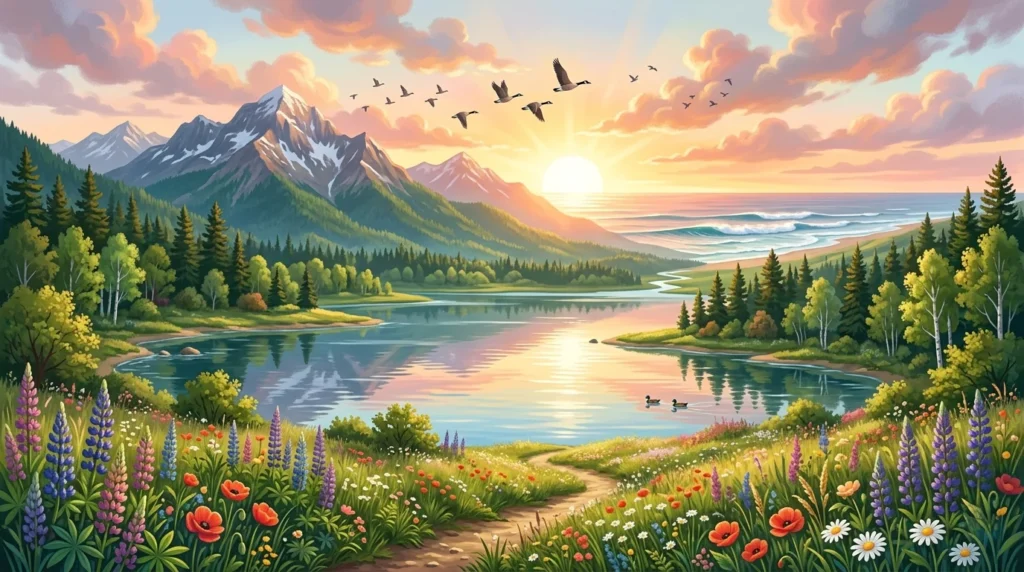

Nature similes are comparisons that use words such as like or as to describe something by comparing it with a natural object, place, animal, weather condition, or landscape. They make writing more vivid by helping readers imagine colors, sounds, feelings, movement, and beauty.
For example, “The lake was as calm as glass” compares the stillness of a lake with the smooth appearance of glass. Nature similes are useful in poems, stories, essays, speeches, captions, and everyday descriptions.
What Are Nature Similes?
A nature simile is a figure of speech that compares one thing to something found in nature. The comparison usually contains like or as.
Nature provides countless images for comparisons. Writers can compare someone’s beauty to a flower, a person’s strength to a mountain, a voice to birdsong, or someone’s mood to changing weather.
For example:
- Her smile was like sunshine after a storm.
- The lake was as peaceful as a sleeping forest.
- His voice was like thunder.
- The flowers were as colorful as a rainbow.
These comparisons make ordinary descriptions more memorable and expressive.
Why Use Nature Similes?
Nature similes help readers create a mental picture. Instead of simply saying that something is beautiful, quiet, powerful, or bright, a writer can connect it with something familiar in the natural world.
They are especially effective because people commonly recognize images such as sunsets, oceans, mountains, flowers, rain, clouds, forests, and birds.
Nature similes can help you:
- Make descriptions more vivid.
- Create strong mental images.
- Add emotion to creative writing.
- Make poems more expressive.
- Describe people and places creatively.
- Make captions more interesting.
- Show rather than simply tell.
Beautiful Nature Similes
1. As Bright as the Sun
This simile describes something extremely bright, cheerful, or radiant. For example, “Her smile was as bright as the sun” suggests that her smile was full of warmth and happiness.
2. As Calm as a Still Lake
This comparison describes someone or something that is extremely peaceful and quiet. It can be used for a person’s personality, a peaceful setting, or a quiet moment.
3. As Gentle as a Summer Breeze
A summer breeze is often associated with softness and comfort. This simile can describe a gentle touch, voice, movement, or personality.
4. As Colorful as a Rainbow
This simile describes something containing many bright and beautiful colors. It works well for flowers, clothing, artwork, gardens, and landscapes.
5. As Tall as a Mountain
This comparison emphasizes great height. It can describe a tall building, tree, wave, or even a fictional giant.
6. As Quiet as a Forest at Dawn
This simile creates an image of peaceful silence. It can describe a quiet room, sleeping town, empty road, or peaceful moment.
7. As Free as a Bird
This is a familiar nature simile used to describe freedom. It suggests that someone can move, live, or make choices without feeling restricted.
8. As Soft as a Cloud
This comparison describes something extremely soft and comfortable. It can be used for pillows, blankets, clothing, or gentle textures.
9. As Powerful as a Raging River
A raging river can move with tremendous force. This simile can describe a powerful person, emotion, speech, or natural force.
10. As Fresh as Morning Dew
Morning dew is associated with freshness and cleanliness. This simile can describe fresh air, flowers, a new beginning, or someone’s appearance.
Nature Similes About the Sky
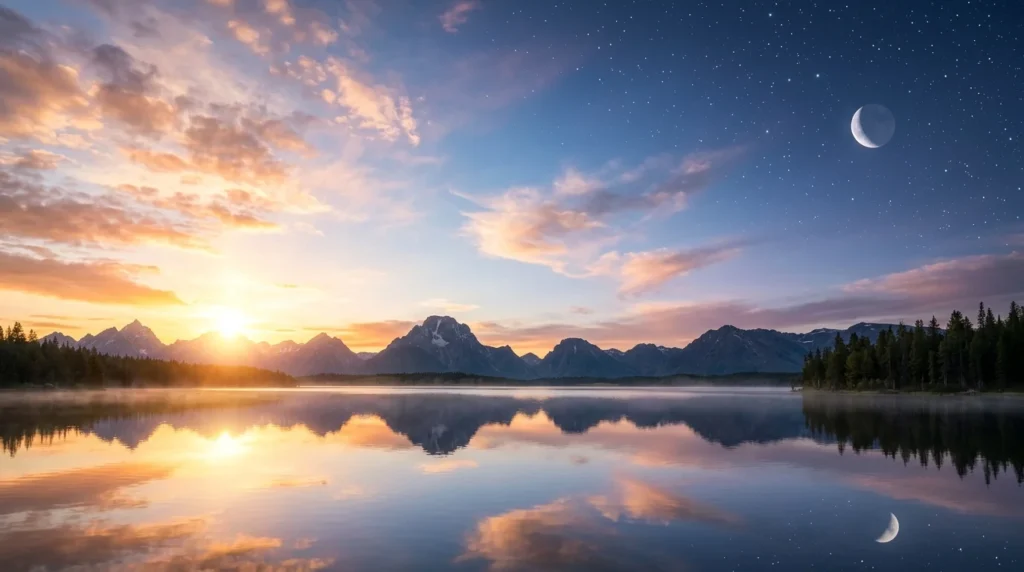
The sky provides many beautiful images for comparisons. Writers can use the sun, moon, stars, clouds, and changing colors of the sky to create vivid descriptions.
- As blue as the summer sky.
- As bright as the morning sun.
- Like stars scattered across velvet.
- As golden as a sunset.
- Like clouds drifting across the sky.
- As pale as the morning moon.
- Like sunlight dancing through the clouds.
- As dark as a storm cloud.
- Like a silver moon hanging above the trees.
- As radiant as a sunrise.
Nature Similes About Flowers and Plants
Flowers and plants are excellent sources of imagery because they represent beauty, growth, color, delicacy, and life.
- As delicate as a rose petal.
- As colorful as a spring garden.
- Like a sunflower reaching toward the sun.
- As graceful as a bending willow tree.
- As fresh as a blooming flower.
- Like vines climbing an ancient wall.
- As fragrant as a field of roses.
- As strong as an ancient oak.
- Like leaves dancing in the wind.
- As delicate as a butterfly resting on a flower.
Nature Similes About Water and the Ocean
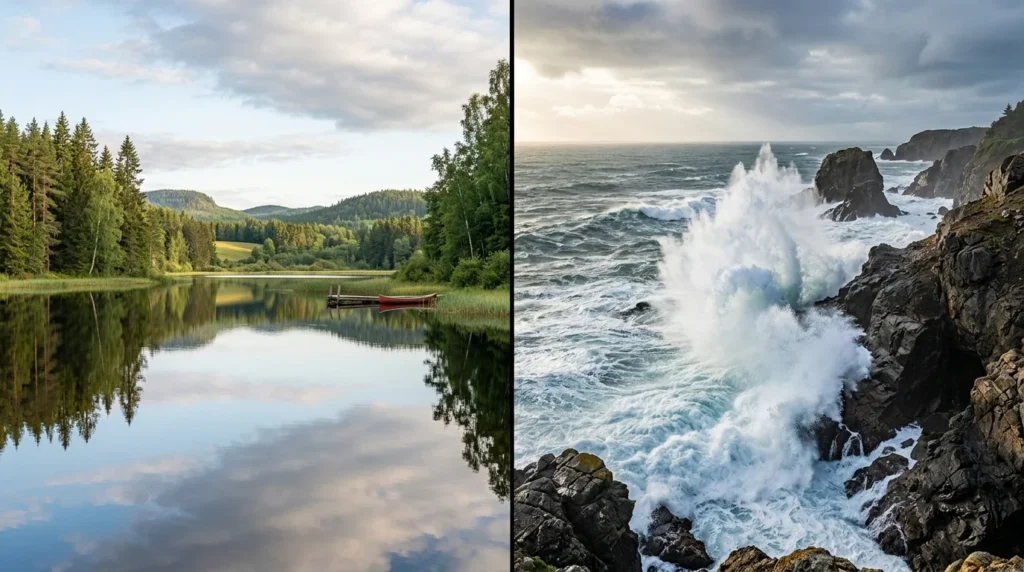
Water can represent peace, movement, power, mystery, and freedom. Ocean and river imagery is especially useful in poetry and descriptive writing.
- As calm as a quiet lake.
- As restless as ocean waves.
- Like a river flowing through the valley.
- As clear as a mountain stream.
- As powerful as a waterfall.
- Like sunlight sparkling on the sea.
- As deep as the ocean.
- As smooth as a peaceful pond.
- Like waves dancing along the shore.
- As cold as mountain water.
Nature Similes About Animals
Animals can make comparisons more vivid because each animal has qualities that readers easily recognize. A lion may represent strength, a butterfly delicacy, and an eagle freedom or vision.
- As brave as a lion.
- As free as an eagle.
- As gentle as a dove.
- As busy as a bee.
- As graceful as a swan.
- As quiet as a sleeping cat.
- As quick as a rabbit.
- As playful as a dolphin.
- As colorful as a tropical bird.
- As delicate as a butterfly’s wings.
Nature Similes About Weather
Weather gives writers powerful ways to describe emotions, sounds, movement, and atmosphere. Sunshine can suggest happiness, while storms can represent intensity or conflict.
- As fierce as a thunderstorm.
- As gentle as spring rain.
- Like lightning across a dark sky.
- As cold as winter frost.
- As warm as summer sunshine.
- Like rain tapping softly against the window.
- As unpredictable as changing weather.
- As loud as thunder.
- Like snow falling from a silent sky.
- As refreshing as rain after a long drought.
Nature Similes for Describing People
Nature similes can describe a person’s appearance, personality, emotions, or behavior. They allow writers to communicate an idea without using a plain adjective.
| Nature Simile | Meaning | Example |
|---|---|---|
| As strong as an oak | Very strong | He was as strong as an oak. |
| As gentle as a breeze | Very gentle | Her voice was as gentle as a breeze. |
| As free as a bird | Independent and unrestricted | After leaving the city, he felt as free as a bird. |
| As bright as sunshine | Cheerful or radiant | Her personality was as bright as sunshine. |
| As graceful as a swan | Elegant and smooth | She moved as gracefully as a swan. |
Nature Similes for Creative Writing
Nature similes are especially useful when writing stories because they can establish the mood of a scene. A peaceful natural comparison can make a setting feel relaxing, while a storm-related comparison can create tension.
For example, instead of writing, “The village was quiet,” you could write, “The village was as quiet as a forest before sunrise.” The second sentence gives readers a stronger sense of atmosphere.
Here are some examples:
- The moon shone like a silver lantern above the trees.
- The children ran as quickly as rabbits through the meadow.
- The old tree stood as strong as a mountain.
- The river moved like a shining ribbon through the valley.
- The sunset was as colorful as a painter’s masterpiece.
- The wind whispered like leaves moving through an empty forest.
- The snow covered the ground like a soft white blanket.
- The stars looked like diamonds scattered across the night sky.
- Her laughter was as refreshing as rain on a hot afternoon.
- The waves crashed against the rocks like angry drums.
Nature Similes for Poems
Poetry often depends on imagery, and nature provides an endless source of poetic comparisons. A short simile can communicate an emotion or image in only a few words.
Examples include:
- My thoughts drift like clouds across the sky.
- Your smile shines like sunlight through the trees.
- Hope grows like a flower after spring rain.
- My heart is as restless as the ocean.
- Dreams rise like birds into the morning sky.
- Her voice was like a gentle stream.
- Memories fall like autumn leaves.
- The night was as quiet as falling snow.
Nature Similes vs. Metaphors
Nature similes and nature metaphors both compare things, but they use different structures. A simile normally uses like or as to make the comparison explicit. A metaphor directly says that one thing is another.
| Type | Example |
|---|---|
| Simile | The lake was as calm as glass. |
| Metaphor | The lake was a mirror. |
| Simile | Her voice was like birdsong. |
| Metaphor | Her voice was birdsong. |
The key difference is simple: a simile openly compares, while a metaphor directly identifies one thing with another.
How to Create Your Own Nature Similes
Creating original nature similes becomes easier when you first decide what quality you want to describe.
- Choose the quality. Decide whether you want to describe beauty, speed, strength, silence, brightness, sadness, or another quality.
- Think of something in nature. Choose an animal, plant, landscape, weather condition, or natural object.
- Find the shared quality. Ask what the two things have in common.
- Use like or as. Connect the two ideas clearly.
- Make the comparison specific. A detailed comparison is often more memorable than a vague one.
For example, if you want to describe someone who is very peaceful, you might think of a quiet lake. You can then create the simile: “She was as peaceful as a still lake.”
Common Mistakes When Using Nature Similes
Nature similes are creative, but the comparison should still make sense. A weak simile can confuse readers if the connection between the two things is unclear.
- Do not force a comparison just because it sounds poetic.
- Make sure the natural image matches the quality you are describing.
- Avoid using too many similes in every sentence.
- Choose familiar natural images when writing for a general audience.
- Keep the comparison clear enough for readers to understand.
Frequently Asked Questions
What is a nature simile?
A nature simile is a comparison between something and an element of nature, such as an animal, flower, tree, river, mountain, cloud, or weather condition. It commonly uses “like” or “as.”
What is an example of a nature simile?
“The lake was as calm as a still mirror” is an example of a nature simile because it compares the calmness of the lake with the stillness of a mirror.
What is a simile about the sun?
One example is “Her smile was as bright as the sun.” It compares the brightness of someone’s smile with the brightness of sunlight.
What is a simile about the ocean?
“His emotions were as restless as the ocean” is a nature simile about the ocean. It compares emotional restlessness with constantly moving ocean waves.
What is a good nature simile for beauty?
“She was as beautiful as a blooming rose” is a simple nature simile for beauty. Other natural images, such as sunsets, flowers, butterflies, and stars, can also be used to describe beauty.
What is a nature simile for strength?
“He was as strong as an ancient oak” is a nature simile for strength. Oak trees are often associated with strength, stability, and endurance.
Can nature similes be used in poems?
Yes. Nature similes are common in poetry because they create strong visual and emotional images while keeping descriptions concise.
What is the difference between a nature simile and a nature metaphor?
A nature simile makes an explicit comparison, usually with “like” or “as,” while a metaphor makes a direct comparison. For example, “The clouds were like cotton” is a simile, while “The clouds were cotton” is a metaphor.
Why are nature similes useful in writing?
They make descriptions more vivid and memorable. Nature similes help readers imagine what something looks, sounds, feels, or behaves like.
Quick Summary
Nature similes compare people, objects, places, emotions, or actions with things found in nature. They commonly use “like” or “as” and can describe qualities such as beauty, strength, speed, peace, brightness, freedom, or mystery. Examples include “as bright as the sun,” “as calm as a still lake,” “as strong as an oak,” and “as free as a bird.” Nature similes are useful in creative writing, poetry, essays, speeches, and captions because they create clear mental images. When creating your own, choose a quality, find a natural object that shares that quality, and make the comparison clear and meaningful.
See Also:
Arrears Meaning: Definition, Uses & Payment Explained