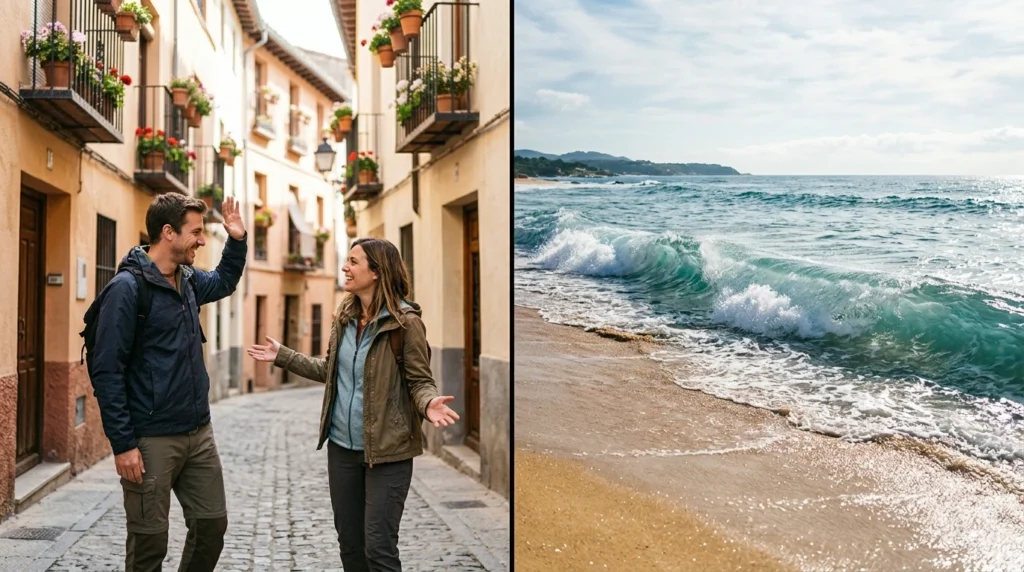

Hola and ola are both valid words, but they have different meanings and uses. Hola is the Spanish word for “hello,” commonly used as a greeting. Ola is an English word that refers to a wave of sound, excitement, or feeling that spreads through a crowd, and it is also a word for “wave” in Spanish and Portuguese. The correct choice depends on the language and context of your sentence.
What Does Hola Mean?

Hola is a Spanish greeting that means “hello” or “hi” in English. It is one of the most common Spanish words and is used to greet friends, family members, colleagues, and strangers in everyday conversations.
The word hola is generally informal but can be used in many different situations. Its suitability depends on the relationship between the speakers and the tone of the conversation.
Examples of Hola in Sentences
- Hola, ¿cómo estás? (Hello, how are you?)
- She greeted her Spanish-speaking friend by saying, “Hola!”
- I learned to say hola before traveling to Spain.
- He sent me a message that simply said, “Hola.”
- Hola, everyone! Welcome to our Spanish class.
- The tourist smiled and said hola to the shopkeeper.
- My teacher taught us how to use hola in everyday conversations.
- She walked into the room and greeted everyone with a cheerful hola.
- “Hola, María!” he called when he saw his friend.
- The children practiced saying hola during their Spanish lesson.
When Should You Use Hola?
Use hola when you want to greet someone in Spanish. It works in spoken conversations, text messages, emails with a friendly tone, and informal social interactions.
For example:
- With friends: Hola, ¿qué tal? (Hi, how’s it going?)
- In a message: ¡Hola! ¿Cómo estuvo tu día? (Hello! How was your day?)
- In a Spanish class: The first word we learned was hola.
- While traveling: I said hola when I entered the small café.
Although hola is widely understood, it is still a Spanish word. In an English sentence, it may be used when quoting Spanish, discussing the language, or intentionally greeting someone in Spanish.
What Does Ola Mean?

Ola has different meanings depending on the language and context.
In English, an ola is a wave of sound, excitement, emotion, or activity that moves through a group of people. It is often used in descriptions of crowds, sporting events, performances, or public reactions.
In Spanish and Portuguese, ola also means “wave,” referring to a wave of water or a similar movement. In Spanish-speaking countries, the expression la ola can also refer to the coordinated crowd wave performed at sporting events.
Examples of Ola in English
- An ola of excitement swept through the stadium.
- A sudden ola of applause followed the performance.
- An ola of laughter spread across the audience.
- The announcement created an ola of enthusiasm among the fans.
- A powerful ola of emotion moved through the crowd.
In English, ola is relatively uncommon compared with words such as wave, surge, and outburst. In many everyday sentences, one of these alternatives will sound more natural.
Examples of Ola in Spanish
- La ola era muy grande. (The wave was very large.)
- Los niños jugaron cerca de la ola. (The children played near the wave.)
- Una ola golpeó la costa. (A wave hit the coast.)
- Vimos una ola enorme desde la playa. (We saw a huge wave from the beach.)
- La ola sorprendió a los nadadores. (The wave surprised the swimmers.)
When Should You Use Ola?
Use ola when referring to a wave in Spanish or Portuguese, or when using the English word in its specific sense of a wave-like movement or reaction among people.
For example:
- In Spanish: La ola llegó a la orilla. (The wave reached the shore.)
- At a sports event: The fans started doing la ola.
- In English writing: An ola of cheers rose from the audience.
If you are writing ordinary English, however, a wave of applause or a surge of excitement will often be clearer than an ola of applause or an ola of excitement.
Hola vs Ola: What Is the Difference?
The main difference between hola and ola is their meaning and language context. Hola is a Spanish greeting that means “hello,” while ola means “wave” in Spanish and Portuguese and has a less common wave-like meaning in English.
| Feature | Hola | Ola |
|---|---|---|
| Main meaning | Hello or hi | Wave |
| Language | Spanish | Spanish, Portuguese, and English |
| Part of speech | Interjection or greeting | Noun |
| Common use | Greeting someone | Describing a wave or wave-like reaction |
| Example | ¡Hola, amigo! | La ola llegó a la playa. |
| English equivalent | Hello | Wave |
Hola or Ola: Incorrect vs Correct Examples
The correct spelling depends on what you want to express. The following examples show how to choose between the two words.
See Also:
| ❌ Incorrect | ✅ Correct | Why |
|---|---|---|
| I said ola to my Spanish teacher. | I said hola to my Spanish teacher. | Hola is the Spanish greeting. |
| Hola golpeó la costa. | La ola golpeó la costa. | In Spanish, ola means a wave. |
| She texted me, “Ola, how are you?” | She texted me, “Hola, how are you?” | The intended greeting is hola. |
| Una hola llegó a la playa. | Una ola llegó a la playa. | The Spanish word for a wave is ola. |
| I learned to say ola in Spanish to mean hello. | I learned to say hola in Spanish to mean hello. | Hola means hello. |
| The hola was very tall. | The ola was very tall. | Ola can mean a wave, though wave is more common in English. |
| He greeted the guests with “Ola!” | He greeted the guests with “Hola!” | The greeting is spelled with an h. |
| La hola era enorme. | La ola era enorme. | Spanish ola means wave and does not have an h. |
| “Hola” means wave in Spanish. | “Ola” means wave in Spanish. | The words have different meanings. |
| “Ola” is the standard Spanish word for hello. | “Hola” is the standard Spanish word for hello. | The greeting requires an h. |
Important: Not every sentence containing ola is incorrect in English. The word exists in English, although it is uncommon. The right choice depends on whether you mean a greeting, a wave, or a wave-like movement among people.
Why Do People Confuse Hola and Ola?
People often confuse hola and ola because they look almost identical and are pronounced the same in standard Spanish.
The Silent H in Spanish
In Spanish, the letter h is generally silent. Therefore, hola and ola are pronounced alike, even though they have different meanings.
This makes the distinction difficult to hear when someone says the words aloud. The spelling and context help identify the intended meaning.
Similar Spelling
The two words contain the same letters except for the initial h. When typing quickly, a learner may accidentally leave out the letter or add it unnecessarily.
Confusion Between Languages
English speakers learning Spanish may know that hola means hello but forget the spelling. Others may recognize ola from Spanish vocabulary about the sea and confuse it with the greeting.
Autocorrect and Typing Errors
Because both forms exist as words, spellcheckers may not always identify a mistake. Proofreading the entire sentence is more reliable than relying only on automatic corrections.
See Also:
How to Remember Hola vs Ola
Use these easy memory tips to remember the correct spelling.
1. Hola has an H for “Hello.”
Although the h is silent in Spanish, remembering the English word hello can help you recall that hola begins with an h.
2. Ola means wave.
Think of ocean waves when you see ola. In Spanish, ola refers to a wave of water.
3. Check the sentence’s purpose.
Ask yourself whether you are greeting someone or talking about a wave.
- Greeting someone: ¡Hola!
- Describing a sea wave: La ola.
- Describing a crowd wave: La ola comenzó en el estadio. (The wave began in the stadium.)
Hola vs Ola in Real-Life Situations
In Text Messages
Correct: Hola, ¿cómo estás?
This means “Hello, how are you?” in Spanish.
Incorrect for the intended greeting: Ola, ¿cómo estás?
The intended Spanish greeting requires an h.
While Traveling
Correct: I greeted the hotel receptionist with “Hola.”
The word is appropriate when greeting someone in Spanish.
At the Beach
Correct: La ola era enorme.
This means “The wave was huge.” In this sentence, ola is the Spanish noun for a wave.
At a Football Match
Correct: Los aficionados hicieron la ola.
This means “The fans did the wave.” The phrase refers to the coordinated movement that travels around a stadium crowd.
In English Writing
Correct: A wave of excitement spread through the crowd.
This is usually more natural than saying “An ola of excitement spread through the crowd.” Although ola has a specialized English use, wave is the more familiar word for most readers.
Frequently Asked Questions
Is hola or ola correct?
Both are correct words, but they mean different things. Hola is the Spanish word for “hello,” while ola means “wave” in Spanish and Portuguese and has a less common meaning in English.
Does hola mean hello?
Yes. Hola is a common Spanish greeting meaning “hello” or “hi.” It is used in everyday conversations, messages, and many informal social situations.
Does ola mean wave?
Yes. In Spanish and Portuguese, ola means “wave.” In English, it can also refer to a wave-like movement or reaction among people, although that use is uncommon.
Why does hola have an H if the H is silent?
Spanish generally does not pronounce the letter h at the beginning of words. The letter remains in the spelling of hola even though it is silent when spoken.
Are hola and ola pronounced the same?
Yes, they are pronounced the same in standard Spanish because the initial h in hola is silent. Their different meanings are indicated by spelling and context.
Can I write ola instead of hola in a text message?
If you intend to say “hello” in Spanish, the standard spelling is hola. Writing ola may be understood as a typo, but it is not the standard spelling of the greeting.
Is ola an English word?
Yes. Ola is an English noun used for a wave-like movement or reaction, especially in a crowd. However, it is relatively uncommon, and wave is usually more natural in everyday English.
What is the plural of ola?
In English, the plural is generally olas. In Spanish, the plural is also olas. For example, Las olas son grandes means “The waves are big.”
Is hola formal or informal?
Hola is a versatile Spanish greeting that is generally friendly and informal. It can be appropriate in many everyday situations, but more formal greetings may be preferred in particularly formal settings.
How do you say “the wave” in Spanish?
You say la ola. The word ola means “wave,” and la is the feminine singular definite article meaning “the.”
Quick Summary
Hola and ola are both valid words, but their meanings are different. Hola is the Spanish greeting that means “hello” or “hi.” Ola means “wave” in Spanish and Portuguese and can also refer to a wave-like movement or reaction in English. Because the letter h is silent in Spanish, the two words sound alike, which often causes spelling mistakes. To choose correctly, consider the context: use hola when greeting someone in Spanish and ola when talking about a wave. In everyday English, use wave instead of ola unless the specialized meaning is intended.
See Also:
Puns or Jokes: What Is the Difference?