

Have you ever heard someone say “mamacita” in a song, movie, social media post, or casual conversation and wondered what it actually means? The word is widely recognized in Spanish-speaking communities, but its meaning can vary depending on the context, the speaker’s tone, and the relationship between the people involved. While many people assume it simply means “beautiful woman,” the mamacita meaning is more nuanced than a direct translation. In some situations, it is used as an affectionate nickname, while in others, it may be considered flirtatious or even inappropriate if used without familiarity or respect.
Understanding the mamacita meaning in English requires more than looking up a dictionary definition. It also involves learning about Spanish culture, regional differences, and everyday usage. This guide explains the word’s definition, origin, pronunciation, cultural significance, and real-life examples. You’ll also discover how the term is used in texting, social media, and casual conversations, when it can be a compliment, and when it should be avoided. Whether you’re learning Spanish or simply curious about popular slang, this article covers everything you need to know in a clear and easy-to-understand way.
Meaning & Definition
The mamacita meaning is generally “little mama,” but its real meaning depends on the situation. In modern Spanish, mamacita is commonly used as an affectionate nickname for an attractive, charming, or beloved woman. Depending on the speaker’s intent, it can express admiration, affection, romance, or playful flirting. In English, it is often translated as “beautiful woman,” “gorgeous lady,” “pretty girl,” or “hot mama,” although none of these translations perfectly capture its cultural meaning.
It is important to understand that mamacita is not always used romantically. Family members, close friends, or partners may use it as a warm and caring term of endearment. However, if spoken to a stranger or in an inappropriate setting, it may sound disrespectful or overly familiar. Because of these differences, understanding the context is essential before using the word in conversation.
Background
The word mamacita comes from the Spanish word “mamá,” meaning “mother” or “mom.” The suffix “-cita” is a diminutive ending that often adds affection, warmth, or tenderness to a word. Rather than literally meaning “little mother,” the expression has evolved over time into a popular nickname used in many Spanish-speaking countries to express admiration or affection toward a woman.
Today, mamacita is widely recognized beyond the Spanish-speaking world because of Latin music, movies, television shows, and social media. Artists frequently use the word in song lyrics to describe an attractive woman or a romantic partner. Although its popularity has grown internationally, the way people interpret the term still depends on cultural background, regional traditions, and personal relationships. This is why learning the context is just as important as learning the translation.
Usage in Different Contexts
The mamacita meaning changes depending on where and how it is used. In romantic relationships, partners may use it as an affectionate nickname similar to “sweetheart,” “baby,” or “beautiful.” Within families, especially in some Latin American cultures, parents or grandparents may lovingly call daughters or younger female relatives mamacita to express affection. In these situations, the word carries warmth and emotional closeness rather than flirtation.
On social media, in music, and in casual conversations, mamacita often refers to a confident, attractive, or stylish woman. However, context remains important. If the term is directed toward someone you do not know well, it can sometimes be interpreted as inappropriate or disrespectful. Understanding the relationship between the speaker and the listener helps determine whether the word sounds friendly, romantic, playful, or offensive.
Mamacita Meaning in English
The mamacita meaning in English is commonly translated as “beautiful woman,” “pretty lady,” “gorgeous girl,” or “little mama.” However, these translations only provide the general idea because the emotional meaning behind the word cannot always be expressed with a single English phrase. Depending on the context, it may also suggest admiration, affection, romance, or playful teasing.
Unlike many English compliments, mamacita carries strong cultural and emotional associations in Spanish-speaking communities. Native speakers often choose the word based on tone of voice, familiarity, and personal connection. Because of this, understanding the cultural context is just as important as knowing the literal translation. This deeper understanding helps English speakers avoid misunderstanding or misusing the expression.
What Does Mamacita Mean?
If you’re asking, what does mamacita mean, the simplest answer is that it is a Spanish term used to express affection or admiration toward a woman. Depending on the situation, it can mean “beautiful,” “attractive,” “sweetheart,” or “darling.” The exact interpretation depends on who is speaking, who is listening, and the relationship between them. Unlike many direct translations, mamacita carries emotional meaning that changes with context.
For example, a husband calling his wife mamacita usually expresses love and affection. In contrast, a stranger using the same word toward someone on the street may be seen as disrespectful or unwanted. This difference explains why understanding the cultural and social context is essential. Rather than memorizing a single definition, it’s more helpful to think of mamacita as a flexible Spanish expression whose meaning changes based on the situation and the speaker’s intention.
Mamacita Meaning in Text
The mamacita meaning in text is usually the same as it is in spoken Spanish, but the tone often becomes more playful or affectionate. In text messages, social media chats, and messaging apps like WhatsApp, Instagram, Snapchat, or Messenger, people use mamacita as a nickname for someone they find attractive or care about. It may express admiration, flirtation, or affection, depending on the relationship between the people involved.
For example, someone might text, “Good morning, mamacita! Hope you have an amazing day.” In this context, the word is used as a loving compliment rather than a literal translation of “little mama.” However, because text messages lack facial expressions and tone of voice, the meaning can sometimes be misunderstood. For this reason, it is best used with someone who is comfortable with the expression and understands your intention.
Mamacita Meaning in Spanish
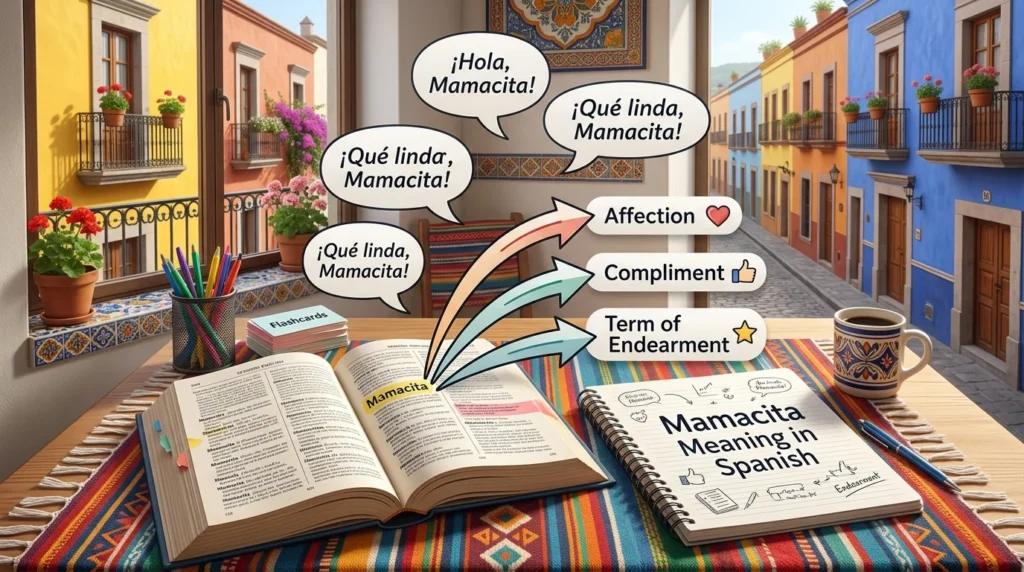
The mamacita meaning in Spanish goes beyond its literal translation. Grammatically, the word comes from “mamá” (mother or mom) combined with the affectionate diminutive ending “-cita.” While it literally means “little mama,” native Spanish speakers rarely use it in that exact sense. Instead, it has evolved into a warm, affectionate expression for a woman who is loved, admired, or considered attractive.
The meaning also varies across Spanish-speaking countries. In some parts of Latin America, mamacita is a common romantic nickname between couples. In other regions, it may simply express affection within a family. However, when used toward strangers, it can sometimes sound flirtatious or even disrespectful. This regional and cultural variation is one reason why learners should understand the context before using the word.
Mamacita Meaning with Examples
Understanding the mamacita meaning with examples makes it much easier to recognize how native speakers use the word naturally. The expression can describe affection, admiration, romance, or playful teasing depending on the situation. Looking at real-life examples helps you understand these subtle differences.
Here are some natural examples:
- Buenos días, mamacita! — Good morning, beautiful!
- You look amazing today, mamacita.
- My husband always calls me mamacita.
- She’s the mamacita everyone admires at the party.
- The singer called his girlfriend mamacita in the song.
- Hey, mamacita, how have you been? (Only appropriate if the relationship is close and friendly.)
These examples show that the word usually expresses affection or admiration rather than serving as a literal translation.
Mamacita Meaning and Pronunciation
Many English learners search for the mamacita meaning and pronunciation because they often encounter the word in music, television, or online conversations before hearing it spoken correctly. Although the spelling looks simple, using the correct pronunciation helps you sound more natural and respectful.
Pronunciation: mah-ma-SEE-tah
IPA: /ˌmɑː.məˈsiː.tə/
Breakdown:
- Ma — sounds like “mah”
- Ma — repeat the same sound
- Ci — pronounced “see”
- Ta — pronounced “tah”
The stress falls on the third syllable (SEE). Listening to native Spanish speakers can also help you understand the natural rhythm and pronunciation of the word.
Mamacita Meaning in a Sentence
Learning the mamacita meaning in a sentence helps you understand when the expression sounds natural and appropriate. Since the meaning depends on context, using complete sentences is the best way to see how native speakers communicate.
Here are several examples:
- My boyfriend lovingly calls me mamacita.
- The actor greeted his wife by saying, “Hello, mamacita!”
- She smiled when her husband called her mamacita.
- The song repeatedly uses the word mamacita as a romantic nickname.
- In some Spanish-speaking cultures, mamacita is used as a warm term of affection.
- Be careful when using mamacita with strangers because it may not always be welcomed.
These examples show that mamacita is most appropriate when there is mutual familiarity, respect, or affection. Understanding the situation is just as important as understanding the translation itself.
Is Mamacita a Compliment?
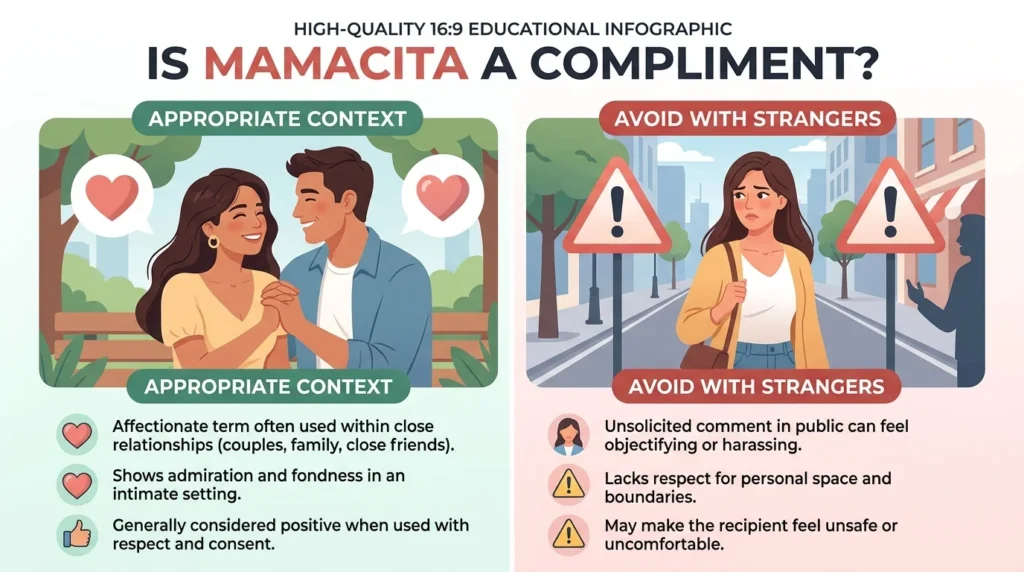
Many people ask, is mamacita a compliment? The answer is yes, in the right context. In Spanish-speaking cultures, mamacita is often used as a compliment to describe a woman who is beautiful, attractive, confident, or deeply admired. Romantic partners frequently use it as a loving nickname, and close friends or family members may also use it affectionately. In these situations, the word expresses warmth, appreciation, and admiration rather than disrespect.
However, context is everything. If mamacita is used toward someone you do not know, especially in public, it may be interpreted as unwanted flirting or even harassment. Cultural norms also vary between countries, so what sounds friendly in one region may feel inappropriate in another. The safest approach is to use the word only when you have a close relationship with the other person and know they are comfortable with it.
Mamacita Meaning in Slang
The mamacita meaning in slang is generally an attractive, confident, or desirable woman. In modern slang, especially in songs, movies, and social media, the term is often used playfully to compliment someone’s appearance or personality. It can mean “gorgeous,” “beautiful,” “hot,” or “stunning,” depending on the tone and situation.
In English-speaking countries, the slang meaning has become popular through Latin music and entertainment. Many people recognize the word even if they do not speak Spanish. However, because it is slang, it should not be used in formal conversations, workplaces, or professional settings. Understanding the cultural background helps you know when the word sounds respectful and when it may be misunderstood.
When to Use Mamacita
Knowing when to use mamacita is just as important as knowing its definition. The word is most appropriate when speaking to a romantic partner, spouse, or someone with whom you share a close and friendly relationship. It is commonly used in private conversations, affectionate text messages, playful social media comments, and romantic situations where both people are comfortable with the expression.
There are also situations where you should avoid using mamacita. Calling a stranger mamacita may sound disrespectful or make the other person uncomfortable. Likewise, it is generally unsuitable in business meetings, classrooms, or formal communication. The best rule is simple: if you would not normally use a romantic nickname with someone, mamacita is probably not the right choice either.
Difference Between Mamacita, Mamita, and Mama
Although these Spanish words are related, they do not always have the same meaning. Mama simply means “mom” or “mother” and is the standard word used by children and adults when referring to their mother. It is neutral and does not usually carry romantic or slang meanings.
Mamita is a softer and more affectionate nickname that often means “sweetheart,” “dear,” or “little mama.” It can be used for children, loved ones, or close friends depending on the culture. Mamacita, on the other hand, usually places more emphasis on admiration, attractiveness, or romance. While both mamita and mamacita express affection, mamacita is more commonly associated with compliments and flirtatious conversations. Understanding these differences helps learners avoid confusing similar Spanish expressions.
Common Misconceptions About Mamacita
One common misconception is that mamacita always means “hot woman.” While it can carry that meaning in certain slang contexts, it is not the only definition. In many Spanish-speaking families and relationships, the word simply expresses affection, warmth, or admiration. Its meaning depends heavily on tone, relationship, and cultural background rather than a single dictionary definition.
Another misunderstanding is that mamacita is appropriate in every situation. This is not true. Although the word is widely used in music and entertainment, it may sound inappropriate if directed toward someone you do not know. Many English speakers also assume it is universally accepted across all Spanish-speaking countries, but regional differences exist. Learning these cultural nuances helps you use the word respectfully and avoid unintended misunderstandings.
Frequently Asked Questions
What does mamacita mean?
Mamacita is a Spanish term of endearment that often means beautiful woman, sweetheart, gorgeous lady, or little mama, depending on the context.
What is the mamacita meaning in English?
In English, mamacita is commonly translated as beautiful woman, pretty lady, or sweetheart, although the exact meaning depends on the situation.
Is mamacita a compliment?
Yes. In most romantic or affectionate situations, mamacita is used as a compliment to express admiration or attraction.
What does mamacita mean in text?
In texting, mamacita is usually a playful or affectionate nickname for someone you like or find attractive.
What does mamacita mean in Spanish?
In Spanish, mamacita literally means little mama, but it is commonly used as a loving or flirtatious expression.
Is mamacita offensive?
Not necessarily. It depends on the relationship, tone, and cultural setting. Between close people it can be affectionate, but toward strangers it may be considered inappropriate.
How do you pronounce mamacita?
It is pronounced mah-ma-SEE-tah.
Can a woman say mamacita?
Yes. Women may use the word affectionately with close friends, family members, or in playful conversations, depending on local customs.
Is mamacita romantic?
It often is. Many couples use mamacita as a romantic nickname, although it can also express general affection.
When should you avoid using mamacita?
Avoid using it with strangers, in professional settings, or in situations where it could be misunderstood or make someone uncomfortable.
Conclusion
Understanding the mamacita meaning requires more than a simple translation. Although it literally comes from the Spanish word for “little mama,” its modern meaning is much broader. Depending on the context, mamacita can express affection, admiration, romance, or playful flirting. The relationship between the speaker and the listener, as well as cultural differences across Spanish-speaking countries, plays a major role in how the word is interpreted.
This guide has explored the mamacita meaning in English, its pronunciation, slang usage, texting meaning, examples, cultural background, and the situations where it is appropriate or inappropriate. By understanding both the language and the culture behind the word, you can use it more naturally and respectfully. If you’re interested in learning more about trending words, internet slang, popular expressions, and English meanings, visit Trendy Meaning for detailed, beginner-friendly guides that make language easier to understand.
See Also:
Vice Versa Meaning: Definition, Examples & Correct Usage