

If you’ve searched for luxor meaning, you’re probably wondering whether Luxor is simply the name of a famous city or if the word has a deeper meaning. The answer is more interesting than most people expect. While many websites only mention that Luxor is a city in Egypt, the term carries historical, cultural, and linguistic significance that stretches back thousands of years. It is closely connected to one of the world’s greatest ancient civilizations and remains an important symbol of history, architecture, and archaeology today.
This comprehensive guide explores luxor meaning from every angle. You’ll discover its English meaning, historical background, pronunciation, biblical connection, name significance, location, and why Luxor is famous worldwide. We’ll also explain how the word is used in different contexts, provide practical examples, and answer the most common questions people ask online. If you’re interested in learning the meanings of famous names, places, modern words, and trending expressions, Trendy Meaning is an excellent resource where you can find detailed yet easy-to-understand explanations.
Meaning & Definition
The luxor meaning is commonly associated with the famous city of Luxor, Egypt, which is known as one of the greatest archaeological and historical destinations in the world. The modern name Luxor comes from the Arabic word Al-Uqsur, meaning “The Palaces.” This name was inspired by the city’s magnificent temples, royal buildings, and ancient monuments that amazed travelers for centuries.
In a broader sense, Luxor represents far more than a geographical location. It symbolizes the rich heritage of Ancient Egypt, remarkable architecture, royal history, and cultural preservation. Today, when people hear the word Luxor, they often think of magnificent temples, the Nile River, pharaohs, the Valley of the Kings, and one of humanity’s greatest historical civilizations.
Background
The history behind Luxor dates back more than 4,000 years. Long before it became known as Luxor, the city was called Thebes, the ancient capital of Egypt during the powerful New Kingdom period. It served as the political, religious, and cultural center of Egyptian civilization and was home to some of the country’s most influential pharaohs.
As civilizations evolved and different languages influenced the region, the city’s name gradually changed. During the Arab period, the impressive ruins of temples and royal structures inspired the name Al-Uqsur, meaning The Palaces, which eventually became Luxor in English. Understanding this historical evolution helps explain why Luxor is not just a city but also a word deeply connected to ancient history and cultural identity.
Usage in Different Contexts
The word Luxor appears in several different contexts depending on the subject being discussed. In geography, it refers to the famous Egyptian city located along the Nile River. In history, it represents the ancient city of Thebes and one of the most powerful capitals of Ancient Egypt. Historians, archaeologists, and educators frequently mention Luxor when discussing Egyptian civilization, temples, pharaohs, and UNESCO World Heritage Sites.
Outside history, Luxor is also used as a personal name, a business name, hotel names, travel brands, casinos, and commercial products. Some parents even choose Luxor as a unique baby name because of its historical elegance and luxurious sound. This wide range of usage is something many competitor articles fail to explain, making it an important aspect of understanding the complete luxor meaning.
Luxor Meaning in English
If you’re searching for luxor meaning in English, the simplest explanation is that Luxor is the English name of one of Egypt’s most famous historical cities. The word originates from the Arabic Al-Uqsur, meaning “The Palaces.” The name reflects the city’s extraordinary collection of ancient temples, royal monuments, and magnificent architectural structures that have survived for thousands of years.
In modern English, the word Luxor usually functions as a proper noun rather than a common vocabulary word. People commonly encounter it in history books, travel guides, documentaries, educational content, and discussions about Ancient Egypt. Although it is primarily recognized as a place name, Luxor has also become associated with luxury, history, archaeology, and timeless cultural heritage because of its global reputation.
What Is the Meaning of Luxor?
Many people ask, what is the meaning of Luxor? The answer depends on the context. Linguistically, the name means “The Palaces,” referring to the impressive royal buildings and temple complexes that once dominated the city. Historically, it represents one of the most important centers of Ancient Egyptian civilization and one of the greatest archaeological locations in the world.
Beyond its literal translation, Luxor symbolizes history, knowledge, culture, and architectural brilliance. It reminds people of powerful pharaohs, monumental temples, ancient religious beliefs, and remarkable engineering achievements. This symbolic meaning explains why Luxor continues to attract millions of visitors and remains one of the world’s most recognized historical destinations.
Luxor Name Meaning
Although Luxor is best known as a city, some people also search for luxor name meaning because they wonder whether it can be used as a personal name. While it is relatively uncommon as a first name, Luxor has become popular among parents looking for unique names inspired by history, travel, and ancient civilizations. The name conveys strength, elegance, mystery, and timeless cultural significance.
As a personal name, Luxor often symbolizes wisdom, leadership, resilience, and historical greatness. Because it is connected to one of the world’s oldest civilizations, many people associate the name with intelligence, ambition, exploration, and creativity. This symbolic interpretation is rarely discussed by competitors but provides valuable context for readers interested in unique names.
Luxor Meaning in the Bible
One of the most frequently searched questions is luxor meaning in the Bible. Strictly speaking, the modern name Luxor does not appear in biblical texts. However, the city occupies a region closely connected to Ancient Egypt, which is mentioned numerous times throughout the Bible. During biblical times, the area was commonly known as Thebes rather than Luxor.
Because Egypt played a major role in many biblical events, some readers naturally associate Luxor with those historical narratives. However, it is important to understand that the name Luxor itself is a later Arabic-derived name and was not used during the biblical period. Explaining this distinction helps clear up one of the most common misconceptions surrounding the term.
Luxor Pronunciation and Meaning
Many English learners search for luxor pronunciation and meaning because they are unsure how to say the word correctly. The standard English pronunciation is LUK-sor (ˈlʌk.sɔːr), with the emphasis placed on the first syllable. Saying the name correctly is especially useful when discussing travel, world history, archaeology, or Ancient Egypt.
The pronunciation becomes easier when you remember that the word refers to the famous Egyptian city known for its temples, royal tombs, and historical monuments. Understanding both the pronunciation and meaning helps students, travelers, and history enthusiasts speak about Luxor with greater confidence while avoiding common pronunciation mistakes.
Why Is Luxor Famous?
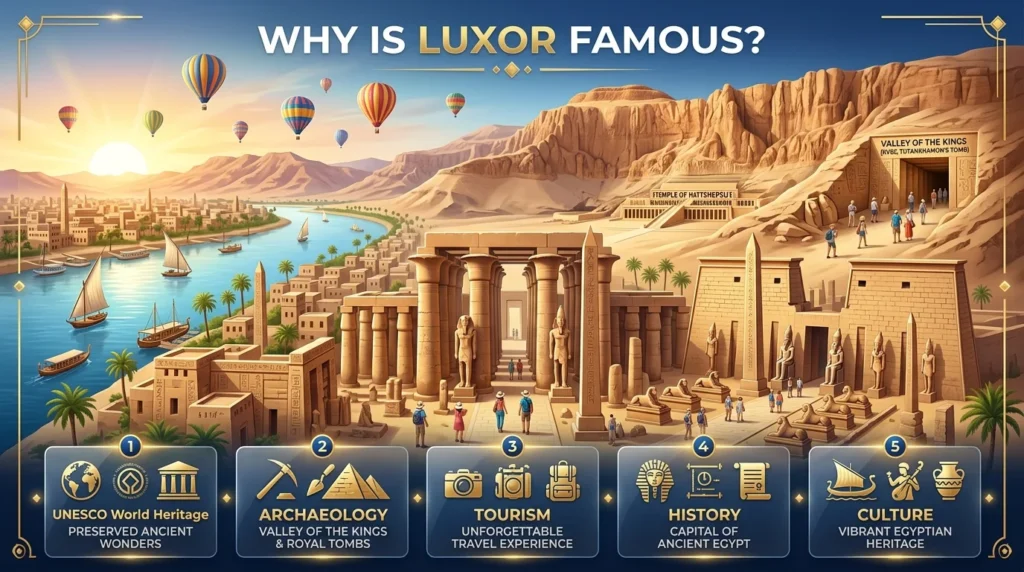
If someone asks why is Luxor famous, the answer goes far beyond tourism. Luxor is often described as the world’s greatest open-air museum because it contains an extraordinary collection of ancient temples, royal tombs, statues, and monuments. Famous landmarks such as the Karnak Temple Complex, Luxor Temple, and the Valley of the Kings attract millions of visitors every year.
The city’s historical importance is equally remarkable. Luxor served as the capital of Ancient Egypt during the New Kingdom and was home to some of history’s most influential pharaohs. Its connection with royal dynasties, archaeological discoveries, and UNESCO World Heritage status has made Luxor one of the most celebrated historical cities on Earth.
See Also: Mogging Meaning: Definition, Slang & TikTok Explained
Where Is Luxor Located?
If you’re wondering where is Luxor located, the city is situated in southern Egypt on the eastern bank of the Nile River. It lies about 650 kilometers (400 miles) south of Cairo and serves as one of the country’s most important historical and tourist destinations. Thanks to its strategic location along the Nile, Luxor became a powerful political, religious, and economic center during Ancient Egyptian civilization.
Today, Luxor is the capital of the Luxor Governorate and welcomes millions of visitors every year. Travelers from around the world come to explore its ancient temples, royal tombs, museums, and archaeological sites. Its location along the Nile not only contributed to its ancient prosperity but also continues to make it one of Egypt’s most iconic cities.
Luxor Meaning in Ancient Egypt
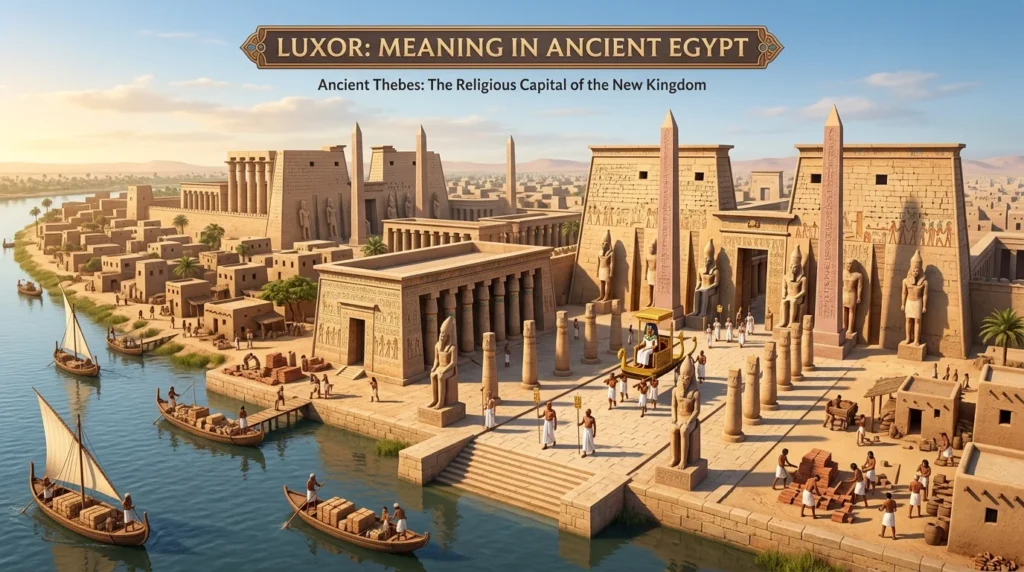
To understand luxor meaning in Ancient Egypt, it’s important to know that the city was originally known as Thebes. During the New Kingdom period, Thebes served as the capital of Egypt and became one of the most influential cities in the ancient world. It was the center of religion, government, military power, and monumental architecture, making it one of the greatest cities of its time.
Although the modern name Luxor did not exist during Ancient Egypt, today’s city preserves the legacy of ancient Thebes. The magnificent temples, statues, obelisks, and royal tombs still standing today reflect thousands of years of Egyptian history. This historical connection explains why Luxor remains one of the most significant archaeological destinations on Earth.
History of Luxor Egypt
The history of Luxor Egypt stretches back more than four millennia, making it one of the oldest continuously inhabited regions in the world. During the height of Ancient Egypt, the city flourished under powerful pharaohs who constructed enormous temples, ceremonial buildings, and elaborate tombs that continue to amaze historians and tourists alike.
Even after the decline of Ancient Egyptian rule, Luxor remained an important cultural and historical center through Greek, Roman, Islamic, and modern Egyptian periods. Archaeologists continue discovering new artifacts and burial sites, proving that the city’s rich history is still being uncovered. This ongoing research adds to Luxor’s reputation as one of the world’s most valuable historical treasures.
What Does Luxor Mean in English?
Many people search what does Luxor mean in English because they assume it has a hidden symbolic definition. The English name Luxor comes from the Arabic word Al-Uqsur, which translates to “The Palaces.” This name was inspired by the city’s remarkable collection of royal temples, monumental buildings, and magnificent ruins that impressed visitors for centuries.
Beyond its literal translation, Luxor has become a symbol of history, architecture, civilization, and cultural heritage. When people hear the name today, they often associate it with Ancient Egypt, archaeological discoveries, and one of humanity’s greatest historical achievements. This broader cultural meaning makes Luxor far more significant than simply being the name of a city.
Is Luxor a City or a Name?
A common question is is Luxor a city or a name? The answer is that it is both. Primarily, Luxor is the name of a famous city in Egypt that is internationally recognized for its historical importance. However, the word has also been adopted as a personal name, hotel name, casino name, luxury brand name, and business name in different parts of the world.
As a personal name, Luxor conveys uniqueness, sophistication, and historical significance. Businesses often choose the name because it evokes ideas of elegance, prestige, luxury, and timeless greatness. This dual usage makes Luxor both a geographical location and a meaningful modern name.
Luxor Meaning with Examples
Understanding luxor meaning with examples makes the concept much clearer. In travel, someone might say, “Luxor is one of Egypt’s most famous historical cities,” referring to its geographical location. In history, a teacher may explain that “Ancient Thebes, now known as Luxor, was once the capital of Egypt.” Both examples describe the city’s historical importance.
The word can also appear in branding or naming. For example, a luxury hotel named “Luxor” may choose the name to represent elegance and grandeur. Likewise, parents selecting Luxor as a unique baby name often appreciate its connection to ancient civilization, strength, and cultural heritage. These examples demonstrate how the word is used in both historical and modern contexts.
See Also: Seles Meaning: Definition, Examples & Business Uses
Why Do People Search for Luxor Meaning?
Many users search for luxor meaning because they encounter the word in documentaries, travel videos, books, museums, social media, or educational content. Others are curious whether Luxor has a symbolic or religious meaning beyond being the name of a city. Since search engines often show mixed results about history, travel, and language, readers want one complete explanation that answers every question in one place.
Another reason is that Luxor appears in hotel names, casinos, travel companies, and commercial brands. This makes people wonder whether the word itself carries a deeper meaning. By understanding its origin, historical background, and modern usage, readers gain a complete picture that many competitor articles fail to provide.
Common Misconceptions About Luxor
One of the biggest misconceptions is that Luxor was the city’s original ancient name. In reality, the city was historically known as Thebes, while the name Luxor developed much later from the Arabic Al-Uqsur. Understanding this distinction is essential for anyone studying Egyptian history or archaeology.
Another misunderstanding is believing that Luxor is mentioned directly in the Bible. While the region was certainly part of Ancient Egypt, the modern name Luxor did not exist during biblical times. Clarifying these points helps readers avoid confusion and better understand the historical evolution of one of Egypt’s most famous cities.
Frequently Asked Questions
What does Luxor mean?
Luxor comes from the Arabic word Al-Uqsur, which means “The Palaces.” It refers to the magnificent temples and royal structures found in the city.
What is Luxor famous for?
Luxor is famous for its ancient temples, the Valley of the Kings, the Karnak Temple Complex, Luxor Temple, and its connection to Ancient Egyptian civilization.
Where is Luxor located?
Luxor is located in southern Egypt on the eastern bank of the Nile River.
Is Luxor a city or a name?
Luxor is primarily a city in Egypt, but it is also used as a personal name and a brand name in different parts of the world.
What was Luxor called in ancient times?
Before it became known as Luxor, the city was called Thebes, one of the greatest capitals of Ancient Egypt.
Is Luxor mentioned in the Bible?
The modern name Luxor is not mentioned in the Bible, although the region was part of Ancient Egypt and closely connected to biblical history.
How do you pronounce Luxor?
Luxor is commonly pronounced LUK-sor with emphasis on the first syllable.
Can Luxor be used as a baby name?
Yes. Although uncommon, some parents choose Luxor as a unique name because of its historical, cultural, and symbolic significance.
Why is Luxor important in history?
Luxor served as the capital of Ancient Egypt during the New Kingdom and remains home to some of the world’s most important archaeological sites.
Where can I learn more word meanings?
If you’re interested in discovering the meanings of names, places, internet slang, abbreviations, and modern English vocabulary, Trendy Meaning offers detailed and beginner-friendly explanations designed to answer every question clearly.
Conclusion
If you searched for luxor meaning, you now know that the word represents much more than a famous Egyptian city. Derived from the Arabic Al-Uqsur, meaning “The Palaces,” Luxor reflects thousands of years of history, architecture, royal heritage, and cultural significance. From its origins as the ancient city of Thebes to its modern reputation as the world’s greatest open-air museum, Luxor continues to inspire historians, travelers, archaeologists, and language learners alike.
We hope this complete guide answered all your questions about luxor meaning in English, luxor name meaning, luxor pronunciation and meaning, history of Luxor Egypt, and its connection to Ancient Egyptian civilization. If you enjoy learning about names, places, historical terms, internet slang, and modern expressions, be sure to visit Trendy Meaning, where you’ll find in-depth, easy-to-read guides covering the meanings behind words from around the world.
See Also: Adversity Meaning: Definition, Examples & Life Lessons