
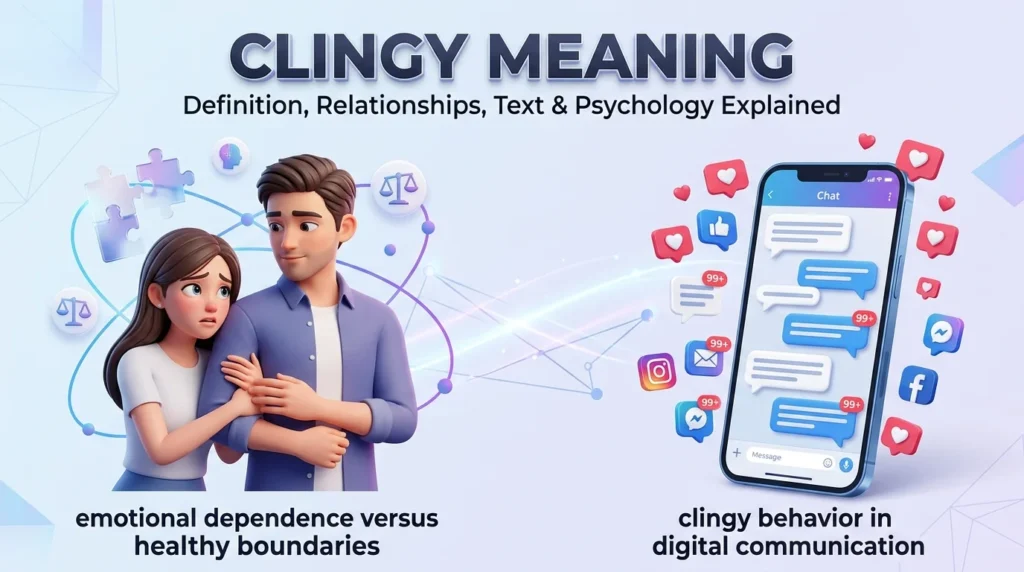

The word clingy is commonly used in conversations about relationships, friendships, and personality, yet many people misunderstand what it truly means. If you’ve searched for clingy meaning, you may be wondering whether it always has a negative meaning, how it is used in everyday English, or why people describe someone as clingy. The truth is that the word has different shades of meaning depending on the situation. In some contexts, it simply describes someone who enjoys spending a lot of time with others, while in other situations it refers to emotional dependence or excessive attachment.
Understanding the clingy meaning in English can help you communicate more naturally and avoid misunderstandings in conversations. In this guide, you’ll learn what does clingy mean, how it is used in relationships, text messages, and slang, along with real-life examples, pronunciation, and practical usage. We’ll also explore the psychology behind clingy behavior and explain the difference between healthy affection and unhealthy dependence. If you enjoy learning the meanings of English words, slang, internet expressions, and trending vocabulary, Trendy Meaning is the perfect place to discover simple, accurate, and easy-to-understand explanations.
Meaning & Definition
The clingy meaning refers to someone who becomes overly attached, emotionally dependent, or constantly seeks another person’s attention, reassurance, or company. A clingy person may struggle with giving others enough personal space and often wants frequent communication or validation. While the word usually describes people, it can also refer to objects or materials that stick closely to something else, such as clingy fabric.
In everyday English, clingy often has a slightly negative tone because it suggests that someone depends too heavily on another person for emotional support or happiness. However, being caring or affectionate is not the same as being clingy. The key difference lies in balance. Healthy relationships include love, trust, and independence, whereas clingy behavior may create emotional pressure or reduce personal space.
Background
The word clingy comes from the verb cling, which means to hold tightly, stick closely, or remain attached to someone or something. Over time, English speakers began using the adjective clingy to describe people who appeared emotionally attached in an excessive or dependent way. Today, the word is commonly used in conversations about dating, friendships, family relationships, and even workplace interactions.
As social media and instant messaging became part of everyday life, the use of clingy expanded even further. People now use it to describe behaviors such as constantly texting, needing immediate replies, seeking continuous attention, or becoming anxious when someone is unavailable. Because relationships and communication styles continue to evolve, clingy has become one of the most frequently searched personality-related words in modern English.
Usage in Different Contexts
The meaning of clingy changes slightly depending on the context, although the central idea of excessive attachment remains the same. In romantic relationships, it often describes a partner who constantly seeks reassurance or attention. In friendships, it may refer to someone who wants to spend nearly all of their time with one person. In psychology, clingy behavior is sometimes associated with anxious attachment or emotional insecurity.
The word also appears in casual conversations, text messages, social media, and internet slang. Someone might jokingly call themselves clingy after sending several messages in a row, while another person may use the word more seriously to describe unhealthy emotional dependence. Understanding the context helps you interpret whether the term is being used humorously, critically, or simply as a personality description.
Clingy Meaning in English
The clingy meaning in English is overly attached, emotionally dependent, or constantly wanting another person’s attention and company. It is an adjective that usually describes a person’s behavior rather than their overall character. Someone can occasionally act clingy without actually being a clingy person all the time. This distinction is important because behavior can change depending on emotions, circumstances, and relationships.
In English, clingy is commonly used when discussing dating, friendships, family dynamics, and emotional connections. For example, a teacher might describe a young child as clingy if they have difficulty separating from their parents. Similarly, friends may use the word to describe someone who becomes upset whenever they are left out of plans. The meaning always centers on attachment that feels stronger than what is considered comfortable or balanced.
What Does Clingy Mean?
If you’re wondering what does clingy mean, the simplest explanation is that it describes someone who becomes too emotionally attached or overly dependent on another person. A clingy individual may frequently seek reassurance, constant communication, or continuous companionship because they feel uncomfortable being alone or fear losing the relationship.
However, it’s important to understand that clingy does not always mean someone is controlling or manipulative. In many cases, clingy behavior develops because of insecurity, fear of rejection, low self-esteem, or past relationship experiences. This is why psychologists often encourage addressing the underlying emotions rather than simply labeling the behavior as negative.
Clingy Meaning in a Relationship
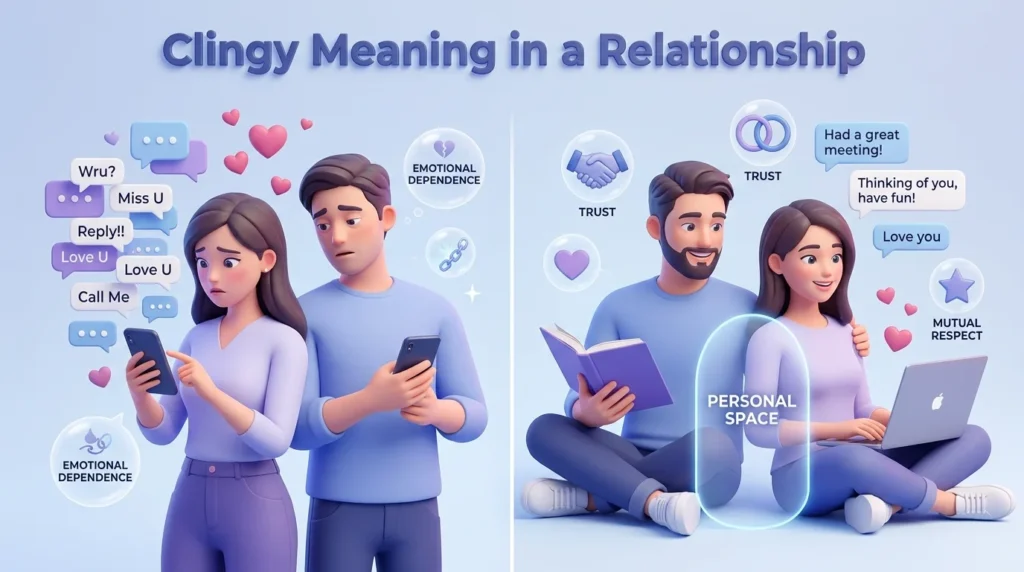
The clingy meaning in a relationship refers to behavior where one partner becomes excessively dependent on the other for emotional support, attention, or reassurance. A clingy partner may constantly seek validation, become anxious when messages are not answered quickly, or want to spend nearly all of their time together. While expressing love and affection is healthy, relationships also need trust, independence, and personal space to remain balanced.
Healthy relationships encourage both closeness and individuality. When one person becomes overly dependent, it can create emotional pressure and misunderstandings. For example, repeatedly checking someone’s location, expecting immediate replies, or feeling upset whenever a partner spends time with friends may be seen as clingy behavior. Recognizing these patterns helps couples communicate more openly and build stronger, healthier relationships based on mutual respect and trust.
Clingy Meaning in Text
The clingy meaning in text usually refers to someone who sends too many messages, expects immediate replies, or becomes anxious when the other person does not respond quickly. In texting conversations, the word is often used to describe communication that feels excessive or emotionally dependent. For example, if someone repeatedly asks, “Why aren’t you replying?” or sends multiple follow-up messages within a short time, others may describe that behavior as clingy.
However, context is important before labeling someone as clingy. Some people simply enjoy frequent communication, while others prefer more personal space. Cultural differences, relationship expectations, and individual personalities also influence how texting habits are perceived. Instead of assuming someone is clingy, it’s better to discuss communication preferences openly and respectfully. Healthy communication creates understanding, while assumptions can lead to unnecessary misunderstandings.
See Also: Purple Heart Meaning: Medal, Emoji & Symbolism Explained
Clingy Meaning in Slang
The clingy meaning in slang is very similar to its standard English definition but is often used in a more casual or humorous way. On social media, dating apps, and among friends, people may jokingly call themselves or someone else clingy after sending several messages, asking to spend extra time together, or showing excitement about a relationship. In these situations, the word may be playful rather than critical.
Despite its humorous use, slang can still carry negative meaning depending on the tone and context. Calling someone clingy during an argument may suggest that they are demanding too much attention or becoming emotionally dependent. Because slang expressions rely heavily on context, it’s important to understand whether the speaker is joking, teasing, or making a genuine observation about someone’s behavior.
Clingy Meaning with Examples
Understanding the clingy meaning with examples makes the word much easier to use correctly in everyday English. Although clingy usually refers to emotional attachment, the surrounding situation determines whether it sounds negative, neutral, or even affectionate. Looking at real-life examples helps you recognize how native English speakers naturally use the word in conversations.
Here are some examples:
- She became clingy after they started dating and wanted to spend every day together.
- He isn’t clingy; he simply enjoys talking with his best friend often.
- My little brother was clingy when he started school because he missed our parents.
- The puppy is very clingy and follows its owner everywhere.
- Don’t mistake kindness for clinginess because healthy relationships require both affection and independence.
These examples show that the word can describe people, children, pets, or even behaviors without always sounding harsh. The context determines its true meaning.
Clingy Meaning in Urdu
The clingy meaning in Urdu can be translated as ضرورت سے زیادہ چمٹنے والا, حد سے زیادہ وابستہ, ضرورت سے زیادہ توجہ چاہنے والا, or جذباتی طور پر بہت زیادہ انحصار کرنے والا. These translations describe a person who depends heavily on another person emotionally or always wants to remain close to them.
In Urdu conversations, people often use the English word clingy directly, especially when discussing modern relationships, friendships, or dating. The meaning remains the same and usually describes someone who needs constant attention, reassurance, or companionship. Whether speaking English or Urdu, the idea behind the word focuses on emotional attachment that becomes stronger than what is generally considered healthy or balanced.
Clingy Pronunciation
The correct clingy pronunciation is:
/ˈklɪŋ.i/
It is pronounced as KLING-ee, with the stress on the first syllable. The word rhymes with “sing” in the first part, followed by the sound “ee.” Practicing the pronunciation aloud helps improve both speaking and listening skills, especially when communicating with native English speakers.
A simple pronunciation tip is to divide the word into two parts: cling + ee. Listening to native speakers, repeating the word in sentences, and using it in everyday conversations are excellent ways to remember the correct pronunciation. Mastering pronunciation also builds confidence when discussing relationships, emotions, or personality traits in English.
Signs of a Clingy Person
Recognizing the signs of a clingy person can help distinguish between healthy affection and excessive emotional dependence. A clingy person often seeks constant reassurance, becomes uncomfortable when left alone, frequently checks messages, or expects immediate responses. They may rely heavily on one person for emotional support and find it difficult to enjoy activities independently.
Other common signs include becoming jealous when a partner spends time with friends, struggling to respect personal boundaries, frequently asking for validation, or feeling anxious whenever communication decreases. These behaviors do not necessarily mean someone is a bad person. In many cases, clingy behavior develops because of insecurity, fear of rejection, anxious attachment, or low self-esteem. With self-awareness, healthy communication, and stronger emotional confidence, these habits can often improve over time.
How to Stop Being Clingy
If you’ve ever wondered how to stop being clingy, the first step is recognizing that healthy relationships need both closeness and independence. Being affectionate is completely normal, but constantly seeking reassurance or attention can create unnecessary pressure. Start by developing hobbies, spending time with friends, setting personal goals, and building confidence outside the relationship. The more fulfilled you feel as an individual, the less likely you are to depend entirely on someone else for happiness.
Open communication also plays an important role. Instead of assuming the worst when someone is busy, discuss expectations honestly and respectfully. Practice giving others personal space, avoid overthinking delayed replies, and focus on building trust. If clingy behavior is connected to anxiety or past experiences, self-reflection or professional guidance may also help. Learning emotional independence strengthens relationships rather than weakening them.
Difference Between Clingy and Caring
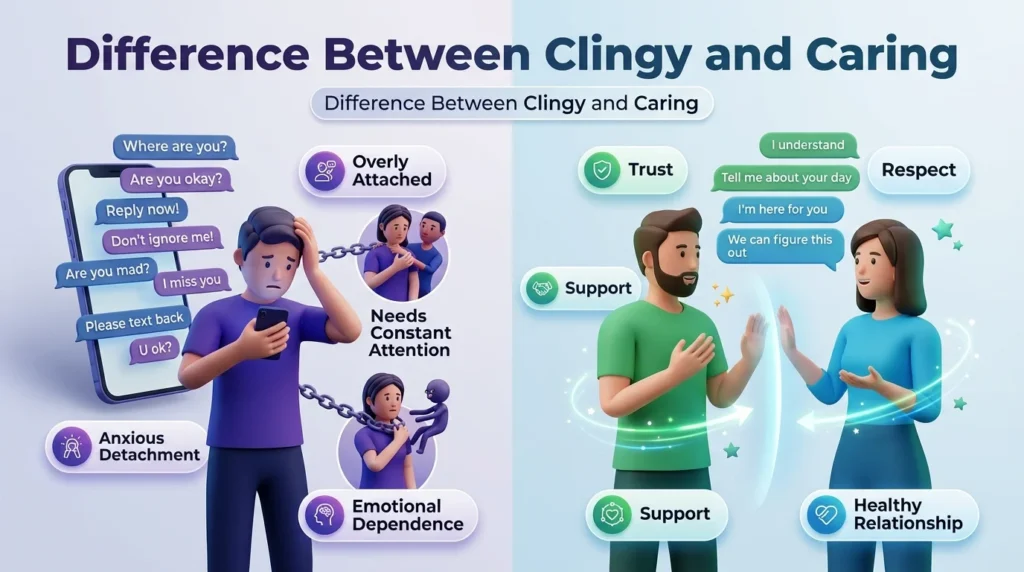
Many people confuse clingy with caring, but they are not the same. A caring person supports others while respecting their independence and personal boundaries. They offer help, listen with empathy, and communicate openly without demanding constant attention. Caring behavior makes people feel comfortable, respected, and emotionally secure.
A clingy person, however, may unintentionally rely too heavily on someone else for reassurance or emotional validation. They may struggle with giving space, become anxious when communication slows, or constantly seek confirmation that everything is okay. The difference lies in balance. Caring strengthens relationships through trust and respect, while clingy behavior can sometimes create emotional pressure if healthy boundaries are ignored.
See Also: Cohesive Meaning: Definition, Examples & Uses in English
Difference Between Clingy and Possessive
Although these words are sometimes used interchangeably, there is an important difference between clingy and possessive. A clingy person mainly wants closeness, reassurance, and emotional connection. Their behavior often comes from insecurity, fear of rejection, or anxious attachment rather than a desire to control another person.
A possessive person goes a step further by trying to control someone’s choices, friendships, activities, or independence. They may become overly jealous, monitor another person’s actions, or attempt to limit their freedom. While clinginess is often rooted in emotional dependence, possessiveness focuses on control. Understanding this distinction helps people recognize relationship challenges more accurately and encourages healthier communication.
Why Do People Become Clingy?
There are many reasons why people become clingy, and the behavior is often more complex than it appears. Some individuals develop clingy habits because of low self-esteem, fear of abandonment, past relationship disappointments, or an anxious attachment style. Others may have experienced inconsistent emotional support during childhood, making them seek constant reassurance in adult relationships.
Stress, loneliness, major life changes, or relationship uncertainty can also increase clingy behavior, even in people who are usually independent. The good news is that these patterns can change with self-awareness, confidence, and healthy communication. Understanding the emotional causes behind clinginess allows people to improve their relationships without simply labeling themselves or others negatively.
Frequently Asked Questions
What does clingy mean?
Clingy means being overly attached or emotionally dependent on another person. It usually describes someone who constantly seeks attention, reassurance, or companionship.
What does clingy mean in a relationship?
In a relationship, clingy refers to a partner who depends too heavily on the other person for emotional support, validation, or constant communication without allowing enough personal space.
Is clingy always a bad thing?
No. Being affectionate and caring is healthy. Clingy behavior only becomes a problem when it creates emotional pressure, ignores boundaries, or leads to unhealthy dependence.
What are the signs of a clingy person?
Common signs include constantly seeking reassurance, sending excessive messages, becoming anxious over delayed replies, struggling with personal space, and relying heavily on one person for emotional support.
How do you stop being clingy?
You can reduce clingy behavior by building self-confidence, maintaining hobbies and friendships, respecting personal boundaries, communicating openly, and developing emotional independence.
Conclusion
The clingy meaning goes beyond simply being attached to someone. It describes behavior where emotional dependence or the need for constant attention becomes stronger than what is considered healthy. While the word often carries a negative tone, it does not define a person’s character. Many people display clingy behavior during stressful periods or because of insecurity, anxious attachment, or fear of losing an important relationship. Understanding these underlying causes helps us respond with greater empathy while also recognizing the importance of healthy boundaries.
Throughout this guide, you’ve learned what does clingy mean, clingy meaning in English, clingy meaning in a relationship, clingy meaning in text, clingy meaning in slang, clingy meaning with examples, clingy meaning in Urdu, clingy pronunciation, how to stop being clingy, and the signs of a clingy person. By understanding these different contexts, you can use the word naturally and recognize when it describes normal affection versus unhealthy emotional dependence.
If you’re interested in learning the meanings of English words, internet slang, emojis, abbreviations, phrases, and trending expressions, visit Trendy Meaning. Our easy-to-understand guides explain vocabulary with clear definitions, real-life examples, pronunciation tips, and practical usage so you can improve your English with confidence.
See Also: PS Meaning: Definition, Full Form & Uses in Text, Email