
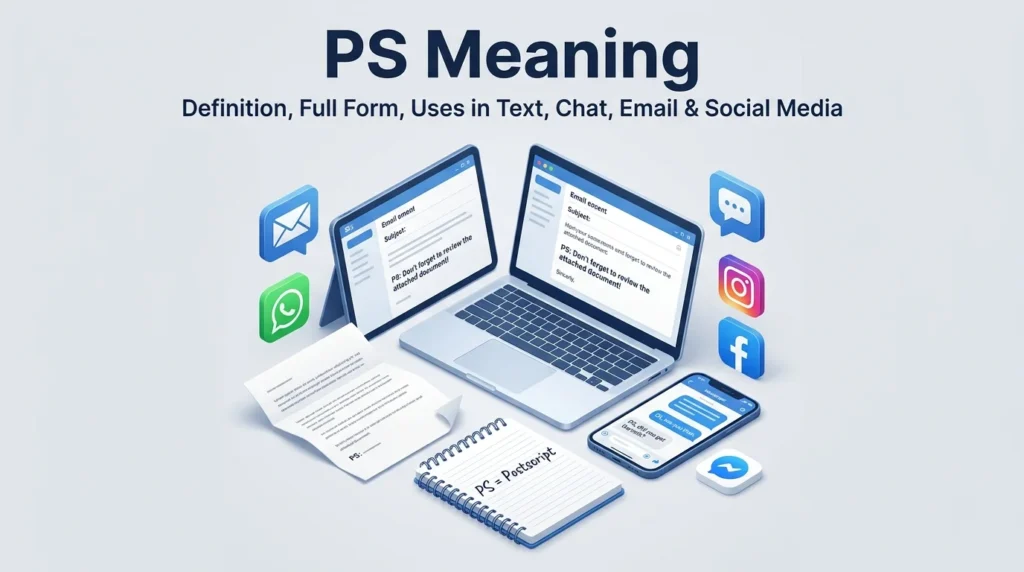

Have you ever finished reading a text message, email, or handwritten letter and noticed PS written at the end? If you’ve wondered what it means or why people still use it in today’s digital world, you’re not alone. Thousands of people search for PS meaning, what does PS mean, and PS meaning in text every month because this small abbreviation appears everywhere—from casual chats and social media posts to professional emails and formal letters.
Although PS has existed for centuries, it remains surprisingly relevant in modern communication. Writers, marketers, students, and professionals continue to use it to add important thoughts after a message has already been completed. Understanding how and when to use PS correctly can make your writing clearer, more engaging, and even more persuasive. In this guide, you’ll learn everything about PS meaning, its history, different uses, examples, grammar rules, and practical tips. If you’re ever curious about the meaning of other internet abbreviations or everyday terms, Trendy Meaning is a great place to explore detailed and easy-to-understand explanations.
Meaning & Definition
The PS meaning is Postscript, a word that comes from the Latin phrase post scriptum, which literally means written after. A PS is an additional note added after the main message has already been finished and signed. Instead of rewriting the entire letter or email, the writer simply adds a PS to include extra information that they forgot or want to emphasize.
Today, PS is no longer limited to handwritten letters. You’ll commonly find it in emails, text messages, newsletters, advertisements, and even social media posts. Sometimes it adds an important reminder, while other times it creates curiosity or highlights a special offer. Although technology has changed how we communicate, the purpose of a PS has remained the same: adding valuable information after the main message without interrupting its flow.
Background
The history of PS dates back hundreds of years, long before computers or smartphones existed. In the days of handwritten letters, making changes after completing a letter was difficult because rewriting an entire page took time and effort. Instead of starting over, writers simply added P.S. at the bottom to include anything they had forgotten.
As communication evolved, the use of PS expanded beyond personal letters. Businesses began using it in marketing campaigns because readers naturally notice the last part of a message. Research in communication and copywriting has shown that people often pay special attention to the beginning and ending of written content. This is one reason why many successful marketers, email writers, and advertisers still use PS today, even when editing a digital document would only take a few seconds.
Usage in Different Contexts
One of the reasons PS remains popular is its flexibility. It works in both formal and informal communication, making it useful for students, professionals, businesses, and everyday conversations. In formal writing, PS often adds an important reminder, clarification, or follow-up detail without changing the main body of the message.
In informal settings such as text messages or social media, PS is often used to add a funny comment, personal thought, or last-minute idea. Some people even use it to make a message feel more friendly and conversational. Whether you’re writing a business email, sending a birthday card, posting online, or chatting with friends, understanding the correct use of PS helps you communicate more naturally and effectively.
What Does PS Mean?
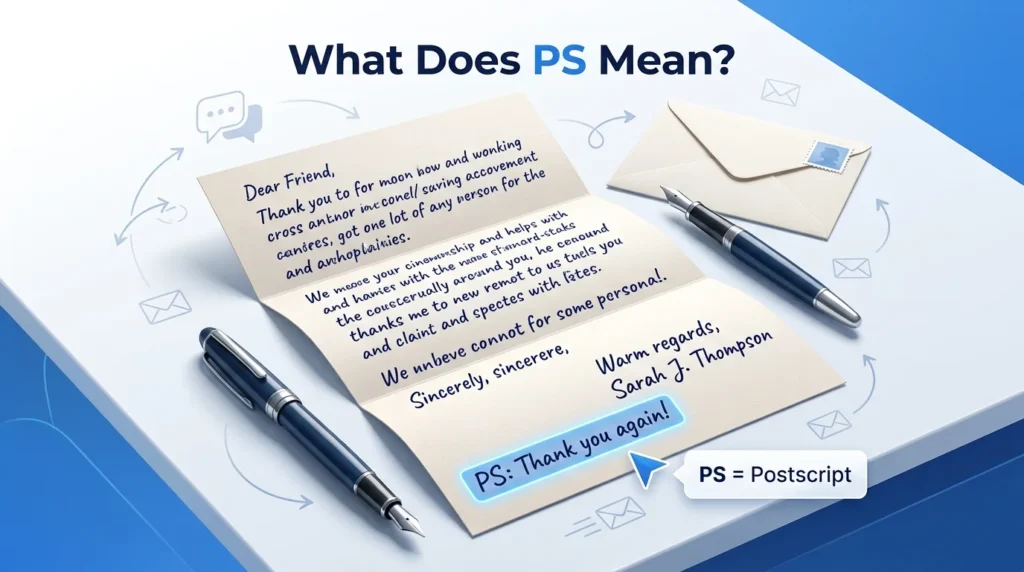
Many people search what does PS mean because they frequently see it at the end of messages but aren’t sure of its purpose. Simply put, PS stands for Postscript, which means an additional thought written after the main message has been completed. It gives the writer a chance to include something important without rewriting everything.
In modern communication, PS is often used to draw attention to a key point. For example, a company may include a PS reminding customers about a discount, while a friend may use it to add a humorous comment after finishing a text. Although small, a PS often becomes one of the most memorable parts of a message because readers naturally notice information placed at the end.
What Does PS Stand For?
If you’re asking what does PS stand for, the answer is straightforward: Postscript. The word originates from the Latin phrase post scriptum, meaning “written afterward.” It was originally created for handwritten correspondence, allowing writers to include extra information after signing their letters.
Today, the abbreviation is recognized worldwide and appears in personal messages, business emails, greeting cards, newsletters, and online communication. Even though editing digital text is easy, writers still use PS because it creates emphasis, captures attention, and gives additional context that feels separate from the main message.
PS Meaning in Text
The PS meaning in text messages is almost identical to its traditional meaning. It signals that the sender wants to add one final thought after completing the main conversation. This extra message may be important, humorous, emotional, or simply something they remembered at the last moment.
For example:
- Thanks for helping me today.
- PS: Don’t forget tomorrow’s meeting.
Or:
- Happy Birthday! Hope you have an amazing day.
- PS: Your gift is waiting for you.
Using PS in texting makes conversations feel natural because it resembles adding one last thought before ending the discussion. Unlike internet slang, PS is understood by people of all ages and remains one of the most common writing abbreviations.
PS Meaning in Chat
When discussing PS meaning in chat, the abbreviation works exactly as it does in text messages. Whether you’re chatting on WhatsApp, Messenger, Discord, Telegram, or another platform, PS introduces an additional comment after the main message has already been delivered.
Many users include PS when they suddenly remember something or want to highlight an important detail without sending a completely new message. It also creates a conversational tone that feels personal rather than formal. In online chats, PS helps organize thoughts while making the final remark stand out from the rest of the conversation.
PS Meaning in Email
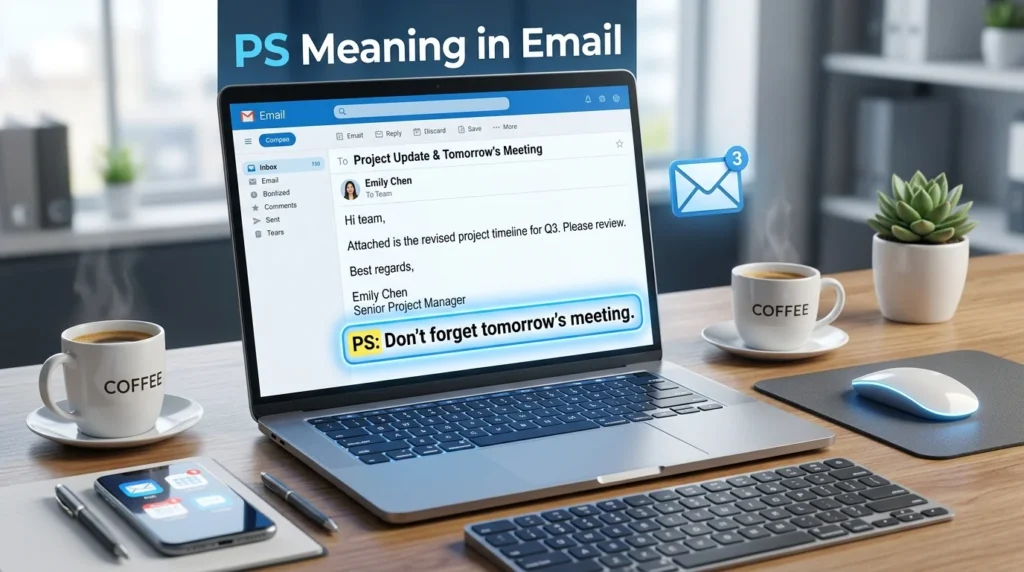
The PS meaning in email is especially important because marketers and professionals frequently use it. In business communication, a PS is commonly placed below the signature to emphasize information the sender wants readers to notice immediately.
For example, an email might end with:
PS: Registration closes this Friday.
Or:
PS: Reply today to receive your free consultation.
Marketing experts often use PS because readers tend to scan emails quickly. Even if someone doesn’t read the entire message, they often notice the opening sentence and the PS at the end. This makes it one of the most effective places to include reminders, deadlines, promotions, or calls to action.
Why Is PS Still Used Today?
Despite modern editing tools, PS continues to be widely used because it serves a psychological purpose beyond simply adding forgotten information. Readers naturally pay attention to content that appears separately from the main message, making PS an excellent way to emphasize important details.
Businesses, educators, writers, and everyday users all benefit from using PS strategically. Whether reminding customers about an offer, encouraging readers to take action, or ending a personal message with warmth, PS remains a simple yet powerful communication tool that has successfully adapted to the digital age.
PS Abbreviation Meaning
The PS abbreviation meaning is Postscript, a term used to introduce additional information after the main message has already ended. The abbreviation comes from the Latin phrase post scriptum, meaning “written afterward.” Originally, PS helped writers include forgotten details without rewriting an entire handwritten letter. Today, it remains a familiar abbreviation in emails, letters, text messages, newsletters, and online communication.
Although the purpose of PS has stayed the same, the way people use it has evolved. In modern writing, it is often used intentionally rather than accidentally. Businesses use PS to increase email engagement, teachers use it to highlight reminders, and individuals use it to add personal thoughts. Because readers naturally notice the end of a message, a well-written PS can become one of the most effective parts of your communication.
What Is PS in a Letter
If you’ve ever wondered what is PS in a letter, it simply refers to an extra note written after the main body of the letter and the writer’s signature. Before computers existed, changing a completed handwritten letter meant writing everything again. To save time, writers added a PS at the bottom whenever they remembered something important after finishing the letter.
Even today, PS remains common in personal and professional letters. It can be used to share an additional reminder, express a heartfelt message, or include information that deserves extra attention. For example, someone writing a thank-you letter might finish with, “PS: I can’t wait to see you next weekend.” This final note often feels more personal because it stands apart from the main message.
PS Full Form in English
The PS full form in English is Postscript. While many abbreviations have multiple meanings depending on the situation, PS almost always refers to Postscript in writing and communication. The word combines “post,” meaning after, and “script,” meaning written text. Together, they describe something written after the original message has been completed.
Many students confuse PS with internet slang, but it is actually a traditional writing term that has existed for centuries. Whether you are studying English, writing an email, or preparing a formal letter, understanding the full form of PS helps improve your communication skills. It is one of the most widely recognized writing abbreviations in the English language.
PS Meaning on Social Media
The PS meaning on social media is very similar to its use in emails and letters, but the tone is usually more casual and engaging. On platforms like Facebook, Instagram, X, Threads, LinkedIn, and TikTok, creators often use PS to add a bonus thought after the main caption. This extra message may include a reminder, a funny comment, or a call to action.
For example, a creator might write a travel caption and finish with, “PS: The sunset looked even better in real life.” Businesses may use PS to encourage users to comment, follow their page, or visit their website. Because social media users often skim content quickly, placing an interesting note after the main caption helps capture attention without making the original post feel crowded.
How to Use PS Correctly
Understanding how to use PS correctly can make your writing more effective. A PS should always appear after the main message and, in traditional letters or emails, after the signature. It should contain only one important idea instead of introducing a completely new topic. A short, clear, and relevant PS creates a stronger impact than a long paragraph.
For example:
- Thank you for your support.
- Best regards,
- Sarah
PS: Don’t forget to submit your feedback before Friday.
Avoid using multiple unrelated PS notes because they can confuse readers. If you have several important points to add, it is usually better to include them in the main body of the message instead of placing everything in the postscript.
PS in Professional Writing
Many people believe PS belongs only in personal letters, but it also plays an important role in professional writing. Business owners, marketers, and customer support teams often use PS to highlight deadlines, promotions, or important reminders. Since readers naturally remember the beginning and end of a message, the postscript becomes an excellent place to reinforce the main objective.
In workplace communication, however, PS should always remain professional and relevant. It should never replace essential information that belongs in the main message. Instead, think of it as a way to strengthen your communication by emphasizing one final point that readers should remember before they finish reading.
PS in Marketing and Business Emails
One topic many competitors overlook is the marketing value of PS. Copywriters have used postscripts for decades because they consistently attract attention. Even readers who skim an email often pause to read the PS before deciding whether to respond or click a link.
For example, a business might end an email with:
PS: This offer expires at midnight.
This simple sentence creates urgency and encourages action. Many successful email campaigns include a PS because it reinforces the primary message without making the email longer or more complicated. It is a small addition that can significantly improve reader engagement.
Common Examples of PS
Seeing real examples makes it easier to understand when to use PS naturally.
Personal Letter
PS: Thanks again for the wonderful birthday gift.
PS: Please attach the updated report before tomorrow’s meeting.
Text Message
PS: I almost forgot—happy anniversary!
Social Media Post
PS: Stay tuned because something exciting is coming next week.
Each example adds useful information without interrupting the main message. That is exactly what a good postscript is designed to do.
Common Mistakes People Make When Using PS
Although PS is simple, many people use it incorrectly. One common mistake is writing an entire paragraph after the postscript. A PS should be short and focused so that it stands out. Another mistake is adding information that should have been included in the main message instead.
Some writers also confuse PS with PPS. If you need to add another note after the first postscript, you should write PPS (Post-Postscript) instead of creating multiple PS sections. Using the correct format keeps your writing organized and professional, especially in formal communication.
When Should You Use PS?
There is no rule saying every email or letter needs a PS. It works best when you genuinely have one final point worth highlighting. You might use it to remind someone about an event, thank them again, emphasize an important deadline, or add a friendly closing remark that makes your message feel more personal.
In digital marketing, PS is often used to increase conversions because readers pay close attention to the last lines of a message. In personal communication, it adds warmth and personality. Knowing when to use PS—and when not to use it—is just as important as understanding what it means.
PS vs PPS: What Is the Difference?
Many people understand PS, but fewer know the meaning of PPS. The abbreviation PS stands for Postscript, while PPS stands for Post-Postscript. A PS is the first note you add after finishing your message. If you remember something else after writing the PS, you can add another note using PPS instead of writing a second PS.
For example:
PS: Thank you for joining today’s meeting.
PPS: I’ll send the presentation slides tomorrow.
Although PPS is grammatically correct, it is rarely used in modern communication. If you have several additional points, it is usually better to edit the main message instead of adding multiple postscripts.
Is PS Formal or Informal?
One of the most common questions people ask is whether PS is appropriate for formal communication. The answer depends on the context. In personal letters, greeting cards, and casual emails, using PS is completely natural. It adds personality and often makes the message feel warmer and more conversational.
In professional communication, PS is also acceptable when used carefully. Business emails often include a short PS to highlight an important reminder, deadline, or special offer. However, it should never replace essential information that belongs in the main body of the email. A professional PS should always be brief, relevant, and purposeful.
Should You Write PS or P.S.?
Both PS and P.S. are considered correct in modern English. Traditionally, writers used P.S. with periods because it was treated as an abbreviation. Today, many style guides and businesses simply write PS without periods, especially in digital communication.
The most important rule is consistency. If you choose PS, use the same style throughout your writing. If you prefer P.S., keep that format consistent as well. Readers understand both versions equally well, so either choice is acceptable.
PS Meaning on WhatsApp
The PS meaning on WhatsApp is the same as in other forms of writing. People use it to add one final thought after sending their main message. It often introduces something they forgot to mention or an extra detail they want the recipient to notice.
For example:
I’ll call you after work.
PS: Don’t forget to bring the tickets.
Because WhatsApp conversations are usually casual, PS helps make the message feel more personal without changing the main discussion.
PS Meaning on Instagram, Facebook, and Snapchat
On social media platforms like Instagram, Facebook, and Snapchat, PS is often used at the end of captions or posts. Instead of adding forgotten information, creators frequently use it to encourage engagement, share a funny thought, or highlight something important.
For example:
Had an amazing weekend with friends!
PS: More photos are coming tomorrow.
Influencers and brands also use PS to remind followers about giveaways, new products, or upcoming announcements. Since many users skim captions quickly, a short postscript naturally catches attention.
Grammar Rules for Using PS
Using PS correctly is simple when you follow a few basic grammar rules. Always place it after the main message and, in letters or emails, after your signature. Keep it short and focused on one idea. A PS should add value rather than introduce an entirely new topic.
You should also avoid overusing PS. If every email or message ends with a postscript, it loses its impact. Reserve it for situations where the additional information genuinely deserves extra attention. This makes your writing more effective and easier to read.
Best Practices for Writing an Effective PS
A good PS is short, meaningful, and relevant to the reader. Instead of repeating information already mentioned in the message, use the postscript to emphasize something memorable or helpful.
Here are a few simple tips:
- Keep it concise.
- Focus on one important point.
- Make it relevant to the main message.
- Use a friendly and natural tone.
- Avoid adding unnecessary details.
Whether you’re writing a personal email, business message, or social media caption, these practices help your PS feel intentional rather than like an afterthought.
Why Do People Still Use PS Today?
Even though digital tools allow us to edit messages instantly, PS continues to be popular because it attracts attention. Readers often remember the beginning and ending of a message more than the middle, making the postscript an ideal place to reinforce an important idea.
Businesses use PS to improve email engagement, teachers use it to remind students about deadlines, and friends use it to add a personal touch. Its continued popularity proves that clear communication is not only about technology but also about how information is presented.
Quick Summary
If you’re looking for a simple explanation, here’s what you need to remember:
- PS stands for Postscript.
- It comes from the Latin phrase post scriptum, meaning written afterward.
- It is used to add information after the main message has been completed.
- PS appears in letters, emails, text messages, and social media posts.
- Both PS and P.S. are correct.
- A PS should be short, relevant, and easy to understand.
Frequently Asked Questions
What does PS mean in text?
PS means Postscript. It adds an extra thought or reminder after the main text message.
What does PS stand for?
PS stands for Postscript, a Latin-based writing term meaning “written afterward.”
What is the full form of PS in English?
The full form of PS is Postscript.
What is PS in a letter?
It is an additional note written after the signature to include extra information or a forgotten thought.
Can I use PS in an email?
Yes. PS is commonly used in personal and professional emails to highlight reminders or important information.
Is PS still used today?
Yes. PS is widely used in emails, newsletters, social media posts, and text messages.
Is PS formal?
Yes, when used appropriately. It is acceptable in professional writing, business emails, and formal letters.
What is the difference between PS and PPS?
PS is the first postscript, while PPS is an additional note written after the first PS.
Should I write PS or P.S.?
Both forms are correct. Modern writing often prefers PS, while traditional writing may use P.S.
Can a message have more than one PS?
It can, but if you need another note after the first postscript, the correct abbreviation is PPS.
Why is PS used in marketing emails?
Marketers use PS because readers naturally notice the final lines of an email, making it a good place to emphasize important information or a call to action.
Does PS have different meanings on social media?
In most cases, no. On social media, PS still means Postscript and introduces an additional comment after the main post.
Conclusion
Understanding PS meaning helps you communicate more clearly in both personal and professional situations. Although the abbreviation has existed for centuries, it remains relevant in today’s digital world because it offers a simple way to add important information after your main message. Whether you’re writing a letter, sending an email, chatting with friends, or posting on social media, using PS correctly makes your writing more natural and engaging.
If you frequently search for the meanings of abbreviations, internet slang, chat terms, or everyday expressions, be sure to visit Trendy Meaning. Our guides are designed to explain complex terms in simple English with practical examples, helping you understand modern communication with confidence.
See Also:
Mamacita Meaning: English, Slang, Examples & Usage