
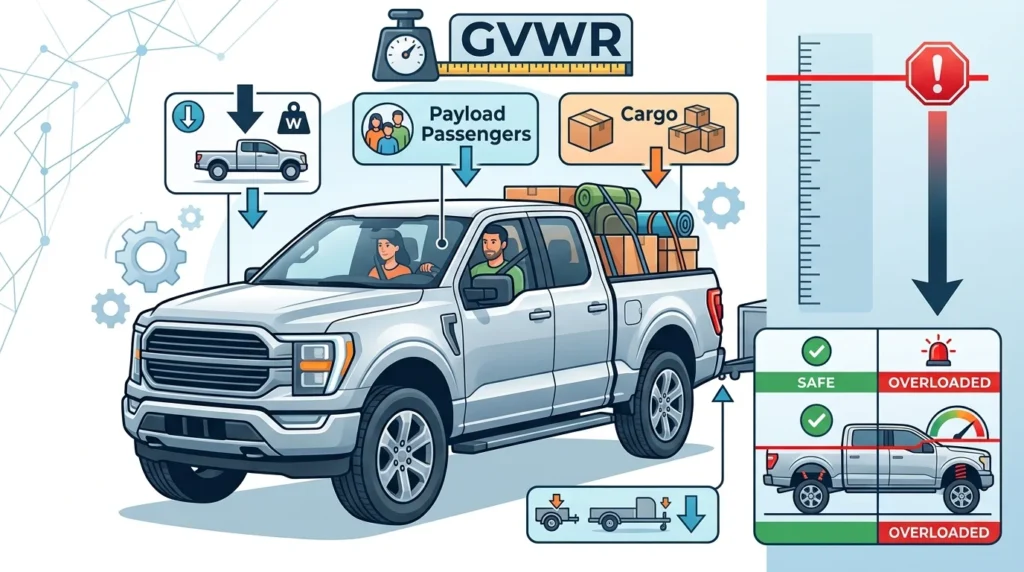

If you’ve searched for GVWR meaning, you’re probably trying to understand what this important vehicle specification means. GVWR is commonly found on trucks, SUVs, vans, trailers, and other vehicles, and it plays a major role in safety, towing, and legal weight limits.
In simple terms, GVWR stands for Gross Vehicle Weight Rating. It is the maximum safe operating weight of a vehicle as determined by the manufacturer. This limit includes the vehicle itself, passengers, cargo, fuel, and accessories.
In this guide, Trendy Meaning explains what does GVWR mean, its full form, how it is calculated, and why it is important for every driver.
Meaning & Definition
The GVWR meaning refers to the maximum amount a vehicle is designed to weigh when fully loaded.
This weight includes:
- The vehicle itself
- Driver and passengers
- Fuel
- Cargo
- Installed accessories
- Trailer tongue weight (when applicable)
The manufacturer determines the GVWR to ensure the vehicle operates safely.
GVWR Full Form
GVWR stands for:
Gross Vehicle Weight Rating
It is one of the most important specifications listed for any vehicle.
What Does GVWR Mean?
When people ask what does GVWR mean, they are referring to the maximum safe weight a vehicle can carry without exceeding its design limits.
For example:
If a truck has a GVWR of 7,000 pounds, the combined weight of the truck, passengers, cargo, fuel, and accessories should never exceed 7,000 pounds.
Exceeding this limit may reduce safety and increase wear on the vehicle.
Simple Explanation
Think of GVWR as:
- Maximum safe vehicle weight
- Manufacturer’s weight limit
- Safe operating capacity
- Fully loaded vehicle weight
- Legal loading guideline
It tells you how much weight your vehicle can safely handle.
GVWR Definition With Examples
The GVWR definition is the maximum allowable weight of a fully loaded vehicle established by its manufacturer.
Examples of GVWR
A pickup truck has a GVWR of 6,800 pounds.
A delivery van has a GVWR of 9,500 pounds.
A commercial truck has a GVWR of 26,000 pounds.
These numbers represent the highest safe operating weight for each vehicle.
Background
Vehicle manufacturers establish GVWR ratings after extensive engineering and safety testing. These ratings help ensure that brakes, suspension, tires, steering, and the vehicle frame can safely support the total load.
Government agencies and transportation authorities also use GVWR classifications for licensing, registration, and commercial vehicle regulations.
Origin and Purpose of GVWR
The concept of GVWR was introduced to improve road safety by preventing vehicle overloading.
Manufacturers determine this rating based on factors such as:
- Frame strength
- Suspension capacity
- Brake performance
- Tire load ratings
- Axle capacity
Following the GVWR helps reduce the risk of accidents and mechanical failures.
Usage in Different Contexts
GVWR is used in many areas of vehicle ownership and transportation.
Passenger Vehicles
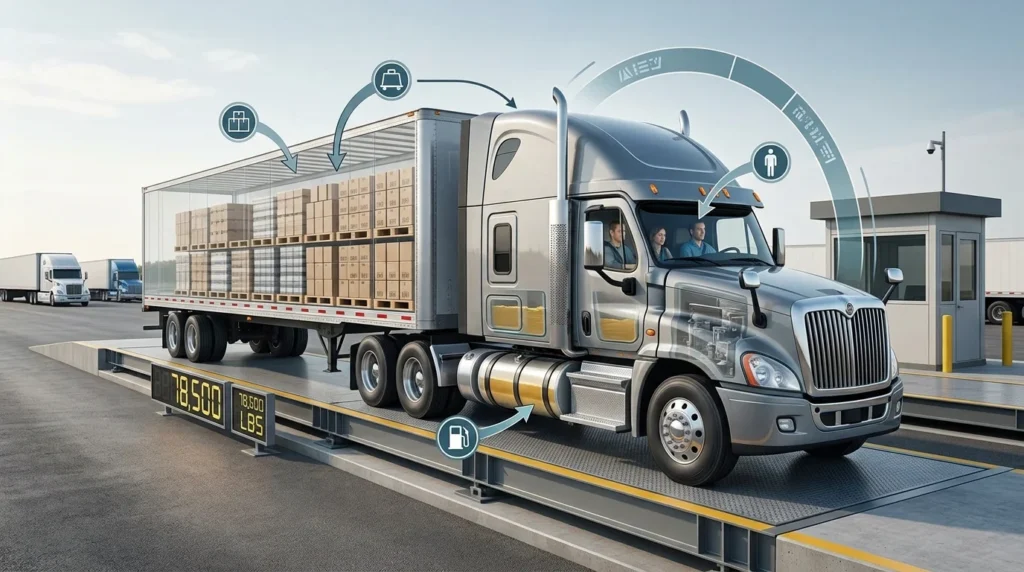
SUVs, pickups, and vans all have manufacturer-assigned GVWR ratings.
Example:
“Check the door sticker for the vehicle’s GVWR.”
Commercial Trucks
Commercial vehicles are often classified according to their GVWR.
Example:
“Commercial licensing requirements may depend on GVWR.”
Towing
Drivers should consider GVWR before loading cargo or attaching a trailer.
Example:
“Do not exceed the truck’s GVWR when towing.”
Vehicle Safety
Knowing your GVWR helps ensure safe handling, braking, and tire performance.
Example:
“Staying below the GVWR improves overall vehicle safety.”
GVWR vs GCWR Difference
Although both terms relate to vehicle weight, they measure different limits.
GVWR
Gross Vehicle Weight Rating (GVWR) is the maximum safe operating weight of a single vehicle, including:
- The vehicle itself
- Passengers
- Fuel
- Cargo
- Accessories
- Trailer tongue weight (if applicable)
Example:
“A pickup truck has a GVWR of 7,000 pounds.”
GCWR
Gross Combined Weight Rating (GCWR) is the maximum allowable weight of the vehicle and any trailer it is towing, including all passengers, cargo, and the trailer.
Example:
“A truck towing a trailer must remain below its GCWR.”
Simple difference:
GVWR = Maximum weight of one loaded vehicle.
GCWR = Maximum combined weight of the vehicle and trailer.
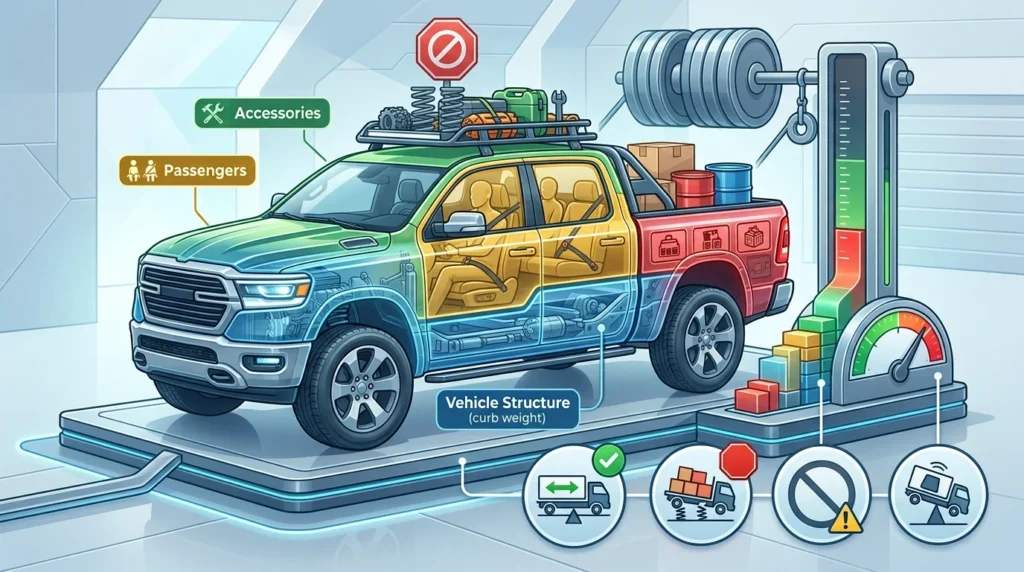
GVWR vs Curb Weight Difference
These two terms are often confused.
GVWR
The maximum safe loaded weight specified by the manufacturer.
Curb Weight
The weight of the empty vehicle with standard equipment and fluids, but without passengers or cargo.
Example:
A truck may have:
- Curb Weight: 5,000 lbs
- GVWR: 7,000 lbs
This means it can safely carry about 2,000 lbs of passengers, cargo, and other load.
Why Is GVWR Important?
Knowing your vehicle’s GVWR helps you:
- Avoid overloading
- Improve road safety
- Protect the suspension and brakes
- Reduce tire wear
- Stay within legal weight limits
- Maintain better vehicle performance
Driving above the GVWR can affect handling, braking, and overall safety.
How to Find Your Vehicle’s GVWR
You can usually locate the GVWR:
- On the driver’s side door jamb sticker
- In the owner’s manual
- On the manufacturer’s certification label
- In the vehicle specifications provided by the manufacturer
Always rely on the official GVWR listed by the manufacturer.
Frequently Asked Questions
What does GVWR stand for?
GVWR stands for Gross Vehicle Weight Rating.
What is GVWR meaning?
It is the maximum safe operating weight of a vehicle, including the vehicle itself, passengers, cargo, fuel, and accessories.
Is GVWR the same as actual vehicle weight?
No. Actual vehicle weight changes depending on the load, while GVWR is the maximum safe weight limit established by the manufacturer.
Where can I find my vehicle’s GVWR?
You can usually find it on the driver’s side door sticker, certification label, or in the owner’s manual.
Can I exceed my vehicle’s GVWR?
No. Exceeding the GVWR may reduce safety, damage vehicle components, and violate transportation regulations.
Conclusion
The GVWR meaning refers to Gross Vehicle Weight Rating, the maximum safe weight a vehicle can carry when fully loaded. Understanding what does GVWR mean, how it differs from curb weight and GCWR, and why it matters helps drivers operate their vehicles safely, protect important components, and comply with manufacturer recommendations.
At Trendy Meaning, we explain automotive terms, English words, internet slang, and modern vocabulary with simple definitions, practical examples, and real-world usage to make learning easier.
See Also:
TS Meaning in Text: Slang, Snapchat & Examples