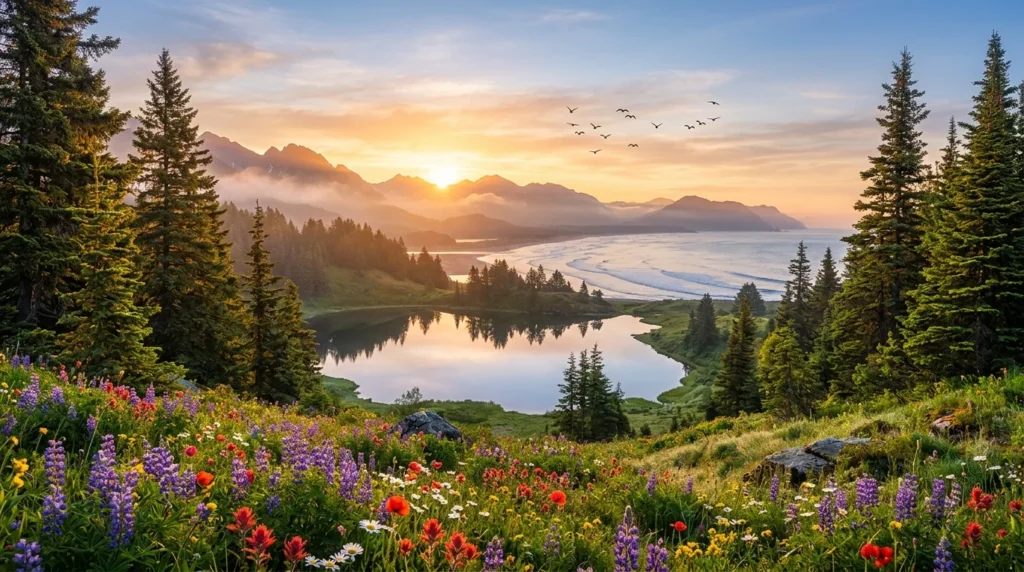

Nature similes are comparisons that use words such as like or as to describe people, places, feelings, objects, and experiences through images from the natural world. They can make writing more vivid by comparing something to the sun, moon, ocean, flowers, trees, animals, clouds, rain, or wind. For example, “Her smile was like sunshine after a storm” creates a stronger mental image than simply saying that she had a beautiful smile.
What Are Nature Similes?
A nature simile compares one thing with something found in nature, usually using like or as. The comparison does not mean that the two things are literally the same. Instead, it highlights a shared quality such as beauty, strength, speed, calmness, brightness, or movement.
For example, “The lake was as smooth as glass” compares the surface of a lake with glass because both can appear smooth and reflective. Nature similes are especially common in poetry, creative writing, descriptions, speeches, captions, and storytelling because they turn abstract ideas into visual images.
Why Are Nature Similes Important?
Nature is full of familiar sights, sounds, textures, and movements. Because readers already understand many natural experiences, writers can use them to communicate complicated ideas quickly.
A sentence such as “He was very calm” gives basic information. But “He was as calm as a still lake” creates a more memorable picture. The reader can imagine quiet water with almost no movement, making the description more powerful.
- They make descriptions more vivid.
- They help readers visualize an idea.
- They add emotion and atmosphere.
- They make creative writing more memorable.
- They help explain abstract qualities through familiar images.
- They can make poems and stories more expressive.
Nature Similes About the Sun
The sun is commonly associated with brightness, warmth, energy, hope, and beauty. Writers can use sunlight to describe people, emotions, landscapes, and positive experiences.
- Her smile was like sunshine after a storm.
- The morning was as bright as the rising sun.
- His face glowed like sunlight on fresh snow.
- The golden field shone like the afternoon sun.
- Her kindness was as warm as summer sunshine.
- The child’s laughter was like sunlight breaking through clouds.
Nature Similes About the Moon
The moon often represents beauty, mystery, calmness, loneliness, and quiet light. Moon-based similes work especially well in poetry and romantic or atmospheric writing.
- Her face was like the full moon.
- The lake shone like a mirror beneath the moon.
- His eyes were as bright as moonlight.
- The village looked like a painting under the moon.
- She moved as quietly as moonlight.
Nature Similes About the Sky
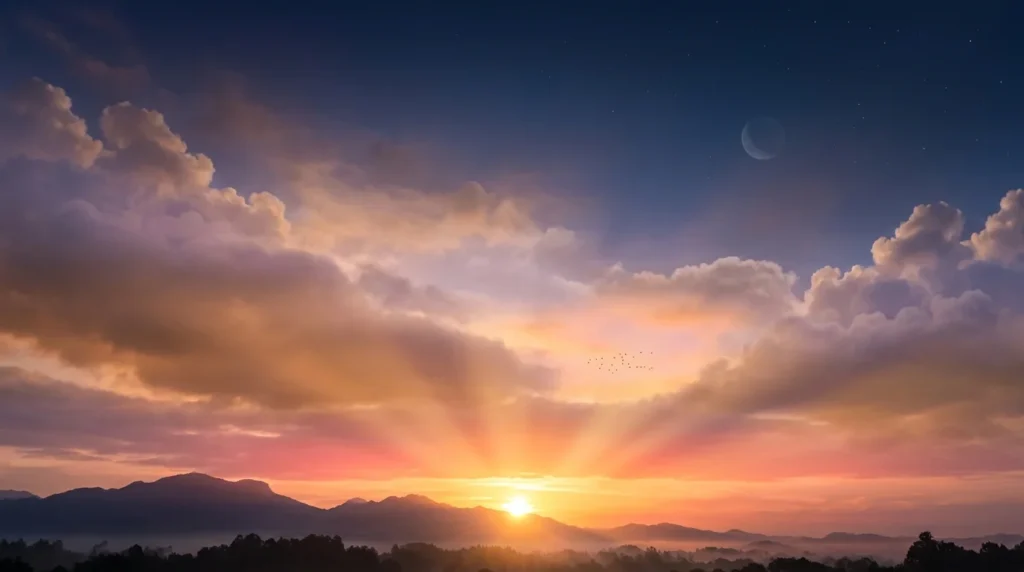
The sky provides endless possibilities for comparison. Blue skies, clouds, sunsets, stars, and storms can represent different moods and emotions.
See Also:
- The sky was as blue as the ocean.
- The clouds floated like soft cotton.
- The sunset spread across the sky like spilled gold.
- The stars glittered like diamonds in the darkness.
- The storm clouds were as dark as charcoal.
- The evening sky looked like a canvas painted with fire.
Nature Similes About Flowers
Flowers are useful comparisons for beauty, delicacy, color, growth, and freshness. They can describe people as well as emotions and surroundings.
- Her cheeks were like delicate roses.
- The garden was as colorful as a field of wildflowers.
- The baby’s skin was like a soft petal.
- His smile opened like a flower in spring.
- The girl’s dress was as bright as a sunflower.
- The young plants stood like tiny flowers reaching for sunlight.
Nature Similes About Trees and Forests
Trees and forests can represent strength, age, stillness, shelter, movement, and mystery. These comparisons are especially useful when describing people, buildings, landscapes, or large objects.
- The old man stood as strong as an ancient oak.
- The trees were like silent guardians.
- Her hair fell like branches reaching toward the ground.
- The forest was as quiet as a sleeping village.
- The tall trees rose like towers against the sky.
- His arms were as strong as tree trunks.
Nature Similes About Water and the Ocean
Water can suggest calmness, power, movement, depth, clarity, and unpredictability. Oceans, rivers, lakes, waterfalls, and streams provide strong imagery for creative descriptions.
- Her voice was as soothing as a quiet stream.
- The lake was as smooth as glass.
- The waves crashed like thunder against the shore.
- His emotions moved like waves in a stormy sea.
- The river flowed like a silver ribbon.
- The waterfall roared like a powerful drum.
- The ocean looked as endless as the sky.
Nature Similes About Rain
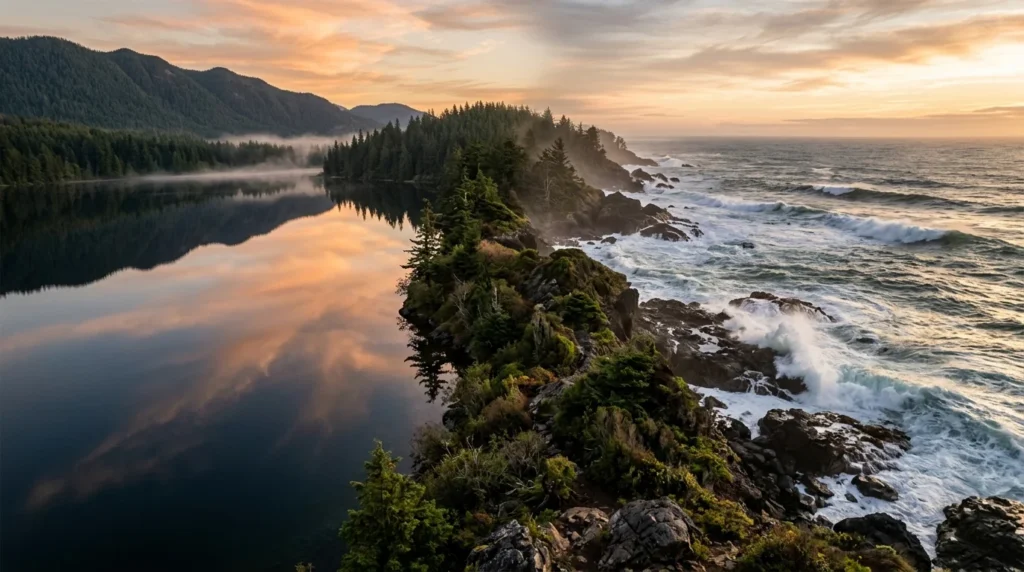
Rain can represent sadness, freshness, renewal, peace, or intensity. The same natural image can create very different moods depending on the comparison.
See Also:
- The rain fell like tiny silver threads.
- The drops were as light as feathers.
- The storm poured down like a waterfall from the sky.
- Her tears fell like rain on a window.
- The gentle rain sounded like a quiet lullaby.
Nature Similes About Wind
Wind is useful for describing speed, softness, movement, freedom, and sudden change. Gentle breezes can create peaceful imagery, while strong winds can create dramatic descriptions.
- The breeze was as gentle as a whisper.
- The wind moved through the trees like a restless spirit.
- He ran like the wind.
- The storm blew as fiercely as an angry beast.
- Her scarf danced like a leaf in the breeze.
- The cool air felt like a soft touch on my face.
Nature Similes About Animals
Animals are among the most familiar sources of similes in English. Their known characteristics make it easy to communicate qualities such as speed, courage, cleverness, strength, or gentleness.
- He was as fast as a cheetah.
- She was as graceful as a swan.
- He was as brave as a lion.
- The child was as quiet as a mouse.
- She was as busy as a bee.
- He was as free as a bird.
- The puppy followed him like a loyal dog.
- The boy moved like a rabbit startled by noise.
Nature Similes About Weather
Weather can express emotional atmosphere as well as physical conditions. Writers often connect storms, sunshine, fog, snow, and heat with human experiences.
- Her mood changed like weather before a storm.
- The morning was as fresh as spring rain.
- The snow covered the ground like a white blanket.
- The fog was as thick as a wall.
- The thunder sounded like an angry giant.
- The cold air was as sharp as ice.
Nature Similes About Mountains
Mountains are powerful symbols of strength, stability, size, endurance, and determination. They can help writers describe people, challenges, buildings, or emotions.
- He stood as firm as a mountain.
- The building rose like a mountain above the city.
- Her determination was as strong as a mountain.
- The challenge stood before him like an enormous mountain.
- The cliffs were as solid as stone mountains.
Nature Similes About Seasons
Each season has its own visual and emotional associations. Spring often suggests new beginnings, summer suggests warmth and energy, autumn suggests change, and winter suggests coldness or stillness.
- Her personality was as fresh as spring.
- The afternoon was as warm as summer.
- The leaves fell like golden rain in autumn.
- The winter morning was as cold as ice.
- The new beginning felt like spring after a long winter.
Nature Similes for Describing People
Nature similes are especially effective when describing personality and appearance. Instead of simply stating a quality, the writer connects it with a recognizable natural image.
| Quality | Nature Simile |
|---|---|
| Beautiful | She was as beautiful as a blooming flower. |
| Strong | He was as strong as an oak tree. |
| Fast | He ran like the wind. |
| Calm | She was as calm as a still lake. |
| Bright | Her smile was like sunshine. |
| Graceful | She moved like a swan. |
| Brave | He was as brave as a lion. |
| Gentle | Her touch was as gentle as a breeze. |
| Free | He felt as free as a bird. |
| Persistent | She was as persistent as a river carving through stone. |
Nature Similes for Creative Writing
Nature similes can transform ordinary descriptions into memorable scenes. They are particularly useful when you want the reader to experience an environment rather than simply receive factual information.
Instead of writing, “The forest was quiet,” you could write, “The forest was as quiet as a sleeping child.” The second version gives the silence a recognizable emotional quality.
Instead of saying, “The sunset was beautiful,” you might write, “The sunset spread across the horizon like fire across a dark canvas.” This creates stronger visual imagery and gives the scene more personality.
See Also:
Nature Similes for Poems
Poetry often depends on concise, memorable imagery. Nature provides a rich vocabulary of images that can communicate feelings without directly naming them.
- My heart was like a stormy sea.
- Your voice was as soft as evening rain.
- Hope rose like the morning sun.
- Loneliness stood beside me like a winter tree.
- Her laughter was like birdsong in spring.
- Memories drifted like autumn leaves.
- His words were as sharp as winter wind.
Nature Similes vs Metaphors
A simile makes a comparison using words such as like or as. A metaphor makes a direct comparison without using those comparison words.
| Type | Example |
|---|---|
| Simile | The lake was like a mirror. |
| Metaphor | The lake was a mirror. |
Both forms create imagery, but they do it differently. A simile openly signals the comparison, while a metaphor presents the comparison more directly.
How to Create Your Own Nature Similes
- Choose the quality you want to describe. Decide whether you want to show beauty, speed, strength, sadness, calmness, or another quality.
- Choose something from nature. Think about animals, plants, weather, water, landscapes, or celestial objects.
- Find a shared quality. Ask what the subject and natural object have in common.
- Use like or as. Build the comparison clearly.
- Make the image specific. Avoid comparisons that are too vague or predictable when a stronger image is available.
- Read the sentence aloud. Make sure the simile sounds natural and actually adds meaning.
Common Mistakes When Using Nature Similes
A simile should make a comparison clearer or more vivid. Adding a random nature reference does not automatically make writing better.
- Do not force a comparison that has no meaningful connection.
- Do not mix several unrelated comparisons in one sentence.
- Do not use nature imagery so frequently that it becomes repetitive.
- Make sure the reader can understand the shared quality.
- Choose an image that matches the mood of the writing.
- Avoid clichés when a fresh comparison would communicate the idea better.
Frequently Asked Questions
What is a nature simile?
A nature simile is a comparison between something and an element of nature, such as an animal, plant, ocean, mountain, cloud, flower, sun, moon, or weather condition. It normally uses “like” or “as.”
What is an example of a nature simile?
“Her smile was like sunshine after a storm” is a nature simile. It compares a smile with sunshine to communicate warmth, brightness, and happiness.
What are some beautiful nature similes?
Examples include “as calm as a still lake,” “like sunlight through the trees,” “as graceful as a swan,” “like a river flowing through a valley,” and “as bright as the morning sun.”
What are nature similes used for?
Nature similes are used to make writing more vivid and descriptive. They can help readers visualize a person, place, emotion, object, or experience by connecting it with something familiar from nature.
What is a simile about the sun?
“Her smile was like sunshine” is a simple example. It uses the sun’s brightness and warmth to describe the positive quality of someone’s smile.
What is a simile about the ocean?
“His emotions were like waves in a stormy sea” is a nature simile about the ocean. It uses waves to communicate movement, intensity, and emotional instability.
What is a simile about flowers?
“Her cheeks were like roses” compares someone’s cheeks with roses, emphasizing qualities such as color or beauty.
Are nature similes common in poetry?
Yes. Nature is one of the richest sources of imagery in poetry. Writers commonly use the sun, moon, stars, flowers, seasons, oceans, trees, birds, and weather to express emotions and create atmosphere.
What is the difference between a nature simile and a nature metaphor?
A nature simile explicitly compares two things using “like” or “as,” while a nature metaphor makes a direct comparison. For example, “The lake is like a mirror” is a simile, while “The lake is a mirror” is a metaphor.
How can I make a nature simile more creative?
Choose a specific natural image and focus on a meaningful shared quality. Instead of relying only on familiar comparisons, observe how light, water, weather, plants, animals, and landscapes behave and use those details to create a fresh comparison.
Quick Summary
Nature similes compare people, objects, emotions, places, or experiences with elements of the natural world using words such as like and as. They can make writing more vivid by connecting abstract ideas with familiar images such as sunshine, flowers, oceans, mountains, trees, animals, rain, wind, and stars. For example, “She was as calm as a still lake” creates a stronger mental picture than simply saying “She was calm.” Nature similes are common in poetry, storytelling, creative writing, speeches, and descriptive passages. To create an effective one, choose a quality, find a natural object that shares that quality, and make the comparison clear and meaningful. Strong nature similes should add imagery rather than simply decorate a sentence.
See Also:
Navery Meaning: Definition, Origin & Examples
Soliciting Meaning: Definition, Uses & Examples
Indefinitely Meaning: Definition, Examples & Does It Mean Forever?