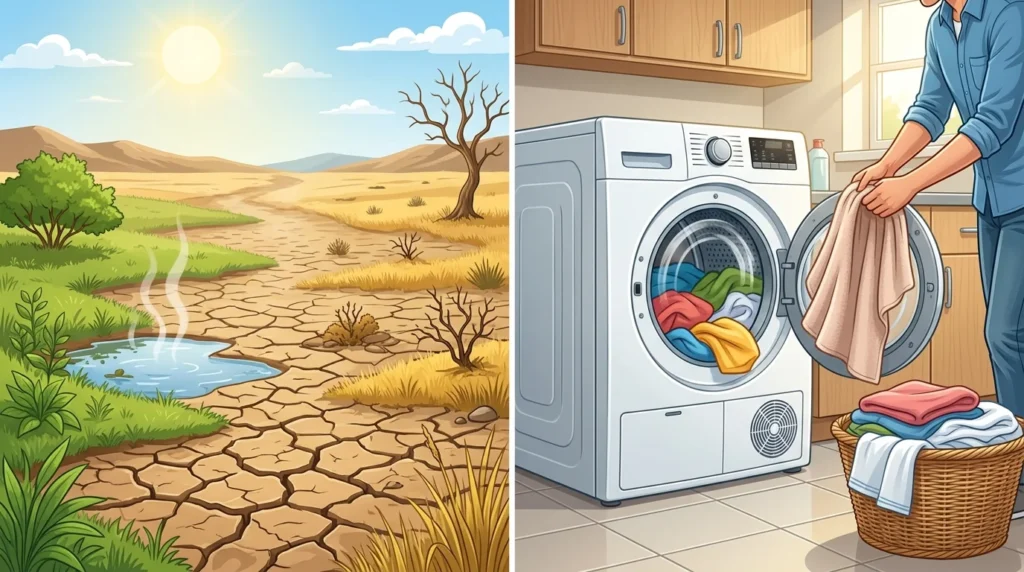

Drier and dryer are both correct English words, but they are commonly used in different ways. Drier is usually the comparative form of dry, meaning “more dry” or “less wet.” Dryer is commonly a noun for a machine or device that removes moisture, such as a clothes dryer or hair dryer. However, drier can also be used as a noun meaning a dryer, so the distinction is not completely absolute.
Quick Answer
Use drier when comparing how dry something is: “This towel is drier than that one.” Use dryer when referring to a machine or device that dries something: “Put the clothes in the dryer.” However, drier is also an accepted noun variant meaning a drying device. In general writing, drier is best understood as the comparative of dry, while dryer is the more familiar spelling for the machine.
What Does Drier Mean?
Drier is most commonly the comparative form of the adjective dry. It means that something contains less moisture or is more dry than another thing.
For example, if one towel has less moisture than another, you can say, “This towel is drier than that one.”
Examples of Drier
- The weather is drier this week.
- This towel feels drier than the other one.
- The soil becomes drier during summer.
- My clothes are drier now.
- The climate here is drier than in the coastal region.
- Her skin feels drier during winter.
What Does Dryer Mean?
Dryer is commonly used as a noun for a machine or device that dries something. A clothes dryer removes moisture from clothing, while a hair dryer uses warm or moving air to dry hair.
See Also:
Examples of Dryer
- The clothes are in the dryer.
- I need to buy a new hair dryer.
- The dryer stopped working this morning.
- Please take the towels out of the dryer.
- She used a hair dryer after washing her hair.
Drier vs Dryer: The Core Difference
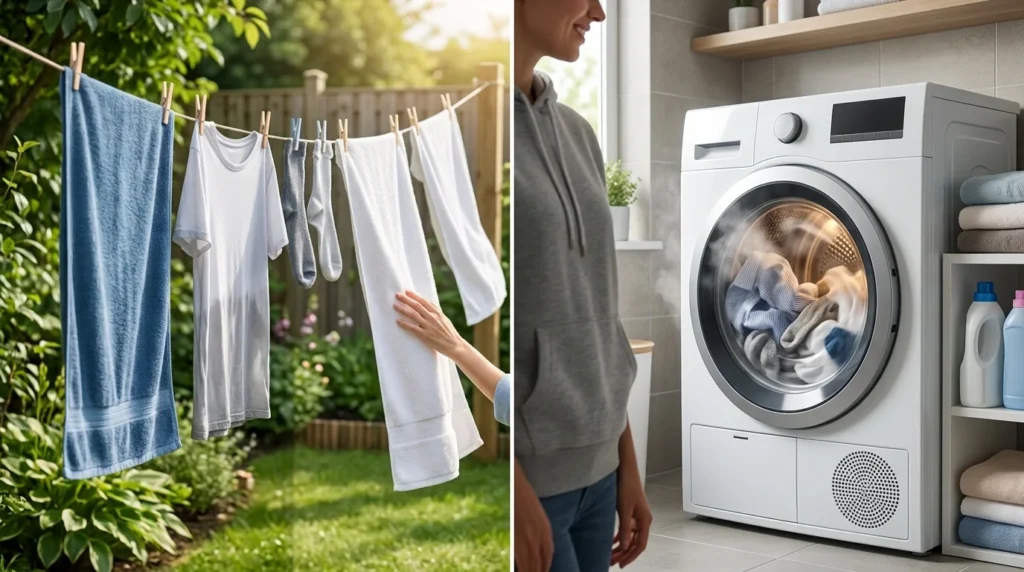
The easiest distinction is based on grammatical function and meaning.
| Word | Common Use | Meaning | Example |
|---|---|---|---|
| drier | Comparative adjective | More dry or less wet | This towel is drier. |
| dryer | Noun | A machine or device that dries something | The clothes are in the dryer. |
| drier | Noun, less common | A device that dries something | The manufacturer sells industrial driers. |
Therefore, drier and dryer should not always be treated as completely separate words. Their most common uses are different, but drier can also function as a noun.
Is Drier or Dryer Correct?
Both are correct. The right choice depends on what you mean.
Use drier when comparing dryness:
This room is drier than the other room.
Use dryer when referring to a drying machine or device:
The clothes are inside the dryer.
However, drier is also a legitimate noun meaning a device used for drying. This use is less familiar to many readers than dryer.
Why Do People Confuse Drier and Dryer?
The confusion comes from the fact that both words are related to dry and can be pronounced similarly. The spelling difference is only one letter, but their most common grammatical roles are different.
Another source of confusion is the comparative form of dry. Because many English words use -er to form a comparative adjective, learners may wonder whether drier or dryer is the correct form.
The standard comparative form is drier. The spelling follows the usual pattern of changing the final y to i before adding -er:
dry → drier
See Also:
How to Use Drier Correctly
Use drier when comparing two things, places, periods, conditions, or states of dryness.
- Use drier to mean more dry.
- Use drier to mean less wet.
- Use drier when comparing climates.
- Use drier when comparing clothes, surfaces, soil, or other materials.
- Use drier for figurative uses of dry, such as “drier humor,” when appropriate.
Correct Examples with Drier
- The air is drier today.
- This shirt is drier than the other one.
- The desert has a drier climate.
- The ground became drier after several sunny days.
- Winter makes my skin drier.
- This towel is much drier now.
- The northern region is drier than the south.
- His humor became drier as the conversation continued.
How to Use Dryer Correctly
Use dryer when referring to a machine or device designed to remove moisture.
Correct Examples with Dryer
- The clothes are in the dryer.
- My hair dryer is broken.
- We bought a new clothes dryer.
- Don’t leave the dryer running unattended.
- The hotel provides a hair dryer.
- The dryer needs to be cleaned.
- She put the wet towels in the dryer.
- The technician repaired our dryer.
Drier as a Noun
One important detail is that drier is not limited to its comparative adjective use. It can also be a noun meaning a substance, device, or machine that promotes drying.
For example, technical or industrial writing may use drier for a substance added to paints, varnishes, or oils to accelerate drying.
Some dictionaries also recognize drier as a noun variant of dryer. Therefore, saying that dryer is the only correct noun spelling would be too absolute.
See Also:
Incorrect vs Correct Examples
| Incorrect or Less Suitable | Correct | Why |
|---|---|---|
| This towel is dryer than mine. | This towel is drier than mine. | The comparative adjective is drier. |
| The clothes are in the drier. | The clothes are in the dryer. | Dryer is the more familiar general noun for the machine. |
| The desert is dryer than the coast. | The desert is drier than the coast. | Drier is the standard comparative of dry. |
| I need a new hair drier. | I need a new hair dryer. | Dryer is the usual modern spelling for the device. |
| The soil is dryer today. | The soil is drier today. | Drier means more dry. |
| Put the clothes in the drier. | Put the clothes in the dryer. | Dryer is the standard everyday noun for the appliance. |
| This climate is dryer than ours. | This climate is drier than ours. | The comparative form is drier. |
| My dryer is drier than yours. | My dryer works better than yours. | A machine itself is not normally described as “drier” in this comparison. |
Drier vs Dryer in Real English
In everyday English, drier is most often encountered as the comparative form of dry. You might talk about drier weather, drier skin, drier soil, or drier clothes.
Dryer is very common as the name of a household appliance or other drying device. Expressions such as clothes dryer and hair dryer are standard and widely understood.
Although drier can also be used as a noun, dryer is generally the clearest choice when you mean the everyday machine.
Drier vs Dryer: Comparison Table
| Feature | Drier | Dryer |
|---|---|---|
| Comparative of dry | Yes | No |
| Means “more dry” | Yes | No |
| Everyday appliance noun | Possible but less common | Yes |
| Hair device | Possible variant | Common |
| Clothes appliance | Possible variant | Common |
| American English | Standard comparative | Common appliance spelling |
| British English | Standard comparative | Common for devices, with “tumble dryer” especially common for clothes |
American vs British English
There is no major American-versus-British difference in the comparative adjective: both varieties use drier for the comparative of dry.
For drying machines, dryer is common in American English. British English commonly uses dryer as well, particularly in terms such as hair dryer, while tumble dryer is a very common term for a clothes-drying appliance.
The important spelling rule remains the same: dry → drier when forming the comparative.
Formal vs Informal Usage
Both drier and dryer can appear in formal and informal English. The choice depends on meaning rather than formality.
For example, “The region has become drier” is suitable for a scientific report, while “Put the clothes in the dryer” is completely natural in everyday conversation.
How to Remember Drier vs Dryer
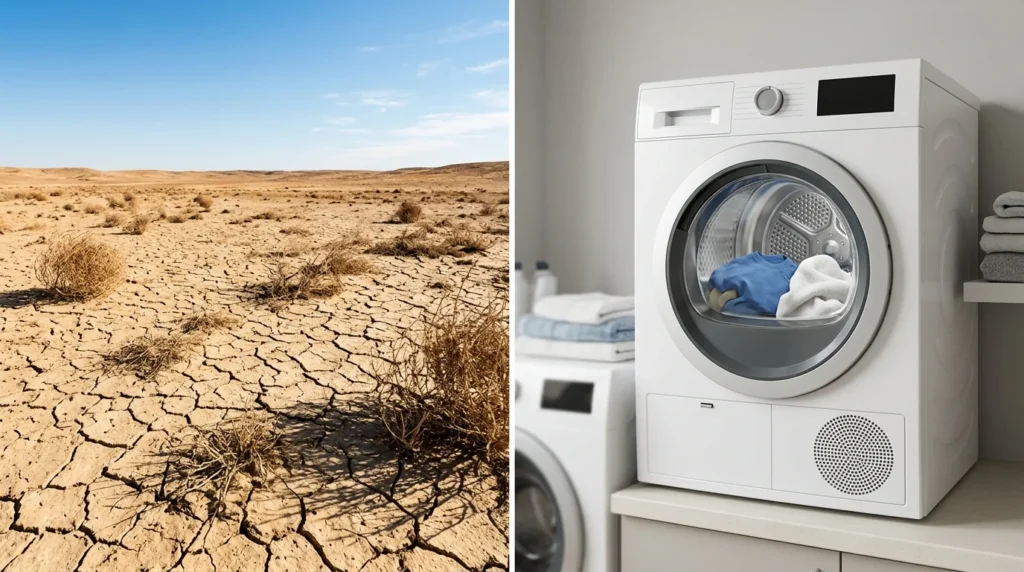
A simple memory trick is:
If you are comparing dryness, use drier.
Dry → drier
If you are talking about a machine that dries something, dryer is usually the best everyday choice.
- Drier = more dry
- Dryer = a machine or device that dries
Real-Life Situations
Weather
“The weather is drier this month than it was last month.”
Laundry
“Please put the wet clothes in the dryer.”
Hair Care
“I bought a new hair dryer.”
Science and Climate
“The region is becoming drier because of changing rainfall patterns.”
Home Conversation
“These towels are drier than the ones in the bathroom.”
Common Mistakes to Avoid
- Do not use dryer when you mean “more dry.”
- Do not assume drier can never be a noun.
- Remember that dry → drier.
- Use dryer as the usual everyday spelling for a drying machine.
- Remember that context determines which word is appropriate.
Frequently Asked Questions
Is drier or dryer correct?
Both are correct, but they commonly serve different purposes. Drier is normally the comparative form of dry, while dryer is commonly a noun for a machine or device that dries something.
Is drier the comparative of dry?
Yes. The standard comparative form is drier. For example, “Today is drier than yesterday.”
Is dryer a correct spelling for a machine?
Yes. Dryer is the common modern spelling for a machine or device that dries something, such as a clothes dryer or hair dryer.
Can drier also mean a drying machine?
Yes. Drier is also recognized as a noun meaning a drying device or, in some technical contexts, a substance that promotes drying. However, dryer is generally more familiar for everyday appliances.
Is “more dry” or “drier” correct?
Drier is the normal comparative form. “More dry” can occur in some contexts, but drier is the standard concise comparative form in ordinary English.
Is it hair drier or hair dryer?
Hair dryer is the common modern spelling. Hair drier is also recognized as a variant, but it is less common.
Is it clothes drier or clothes dryer?
Clothes dryer is the more common everyday spelling for the appliance. Clothes drier can occur as a variant.
Is drier American or British English?
Drier is used in both American and British English as the comparative of dry. It is not a regional spelling.
Why is dry changed to drier?
When the adjective dry takes the comparative ending -er, the final y changes to i: dry → drier.
What is the difference between dry, drier, and dryer?
Dry describes something without much moisture. Drier means more dry or less wet. Dryer commonly refers to a device that removes moisture.
Quick Summary
Drier and dryer are both legitimate English words, but their most common uses are different. Drier is normally the comparative form of dry, meaning “more dry” or “less wet.” For example, “The air is drier today.” Dryer is commonly a noun for a machine or device that dries something, such as a clothes dryer or hair dryer. However, drier can also function as a noun meaning a drying device, so it is not always incorrect in that role. For general modern writing, use drier for comparisons and dryer for the everyday appliance.
See Also:
Gist Meaning: Definition, Uses & Examples