
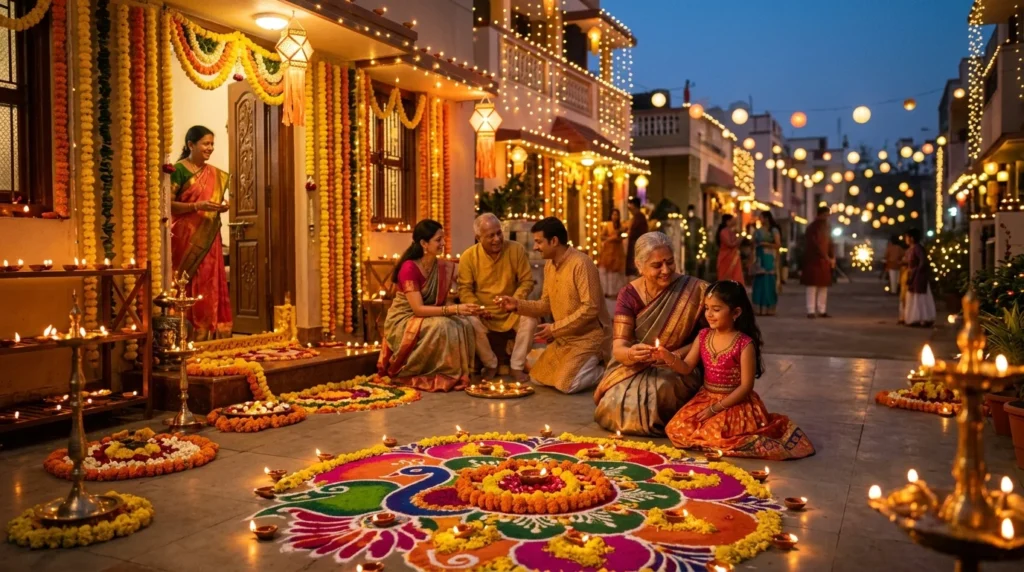

Diwali is one of the most celebrated festivals in the world, known for its beautiful lights, joyful gatherings, traditional rituals, and powerful message of hope and positivity. Many people search for Diwali meaning because this festival is not only about decorations and celebrations but also carries deep cultural, spiritual, and historical importance. The word Diwali represents the victory of light over darkness, knowledge over ignorance, and good over evil.
For beginners who want to understand what is Diwali meaning, this festival can be explained as a celebration of happiness, prosperity, renewal, and the triumph of positive values. Diwali, also known as Deepavali, is celebrated by millions of people across India and around the world, including Hindu, Jain, Sikh, and some Buddhist communities, with different traditions and beliefs connected to it.
At Trendy Meaning, we help users understand meanings of different words, concepts, festivals, and trending topics in a simple and detailed way. If you want to know the meaning of any confusing term, cultural concept, or popular phrase, you can visit Trendy Meaning for clear explanations.
In this complete guide, we will explore Diwali meaning in English, what does Diwali mean, why Diwali is celebrated, its history, religious significance, cultural importance, traditions, and everything you need to know about the Festival of Lights.
Meaning & Definition
The word Diwali comes from the Sanskrit word “Deepavali,” which means a “row of lamps” or “series of lights.” The term is created from two words: “Deepa,” meaning lamp or light, and “Avali,” meaning a row or collection. Therefore, the basic Diwali meaning refers to a celebration where people light many lamps to symbolize brightness, hope, and positivity.
In simple words, Diwali is known as the Festival of Lights, a celebration that represents the removal of darkness and the arrival of happiness, peace, and prosperity. People celebrate this festival by lighting diyas, decorating homes, sharing sweets, performing prayers, and spending time with family and friends.
The meaning of Diwali goes beyond physical lights. It represents inner transformation, spiritual growth, and the importance of choosing goodness over negativity. The festival encourages people to leave behind bad experiences and welcome new beginnings with positive energy.
The Diwali festival meaning can also change slightly depending on cultural and religious traditions. For many Hindus, Diwali is connected with the return of Lord Rama to Ayodhya after defeating Ravana, representing the victory of good over evil. For others, it is associated with Goddess Lakshmi, the deity of wealth and prosperity, and people perform Lakshmi Puja to invite happiness and success.
In Jain traditions, Diwali marks the spiritual liberation of Lord Mahavira, while some Sikh communities associate the day with historical events related to their gurus. These different perspectives show that Diwali is a festival with diverse meanings but a common message of light, hope, and positivity.
Background
The history and background of Diwali go back thousands of years and are connected with ancient Indian traditions, religious stories, and cultural practices. Although the exact origin of the festival is difficult to determine, Diwali has developed through generations and has become an important part of Indian heritage.
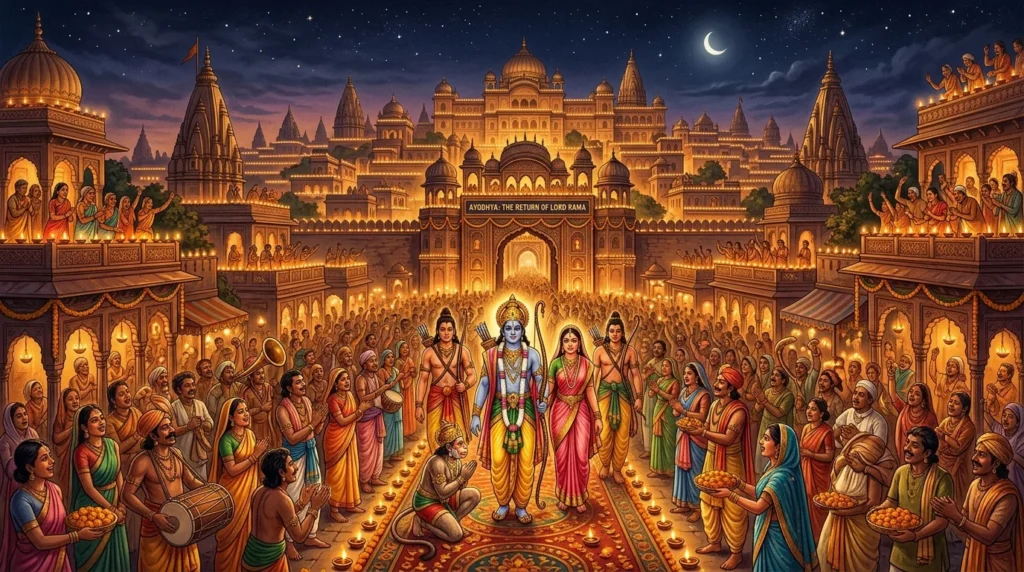
One of the most popular stories behind Diwali comes from the ancient epic Ramayana. According to tradition, Lord Rama returned to Ayodhya after fourteen years of exile and defeating the demon king Ravana. The people of Ayodhya welcomed him by lighting rows of oil lamps, which is believed to be the origin of the Diwali lights tradition.
Apart from the story of Lord Rama, Diwali has several other historical and spiritual connections. Many communities celebrate it as a time of prosperity, spiritual awakening, and new beginnings. The festival is often linked with Goddess Lakshmi, who represents wealth, fortune, and abundance.
Over time, Diwali has transformed from a regional religious celebration into a global cultural festival. Today, people celebrate Diwali in many countries, including India, Nepal, Singapore, the United Kingdom, the United States, Canada, and other parts of the world. Modern celebrations may include traditional prayers as well as community events, cultural programs, and environmentally friendly activities.
Usage in Different Contexts
The meaning of Diwali changes depending on the context in which people use the word. In a religious context, Diwali represents devotion, prayers, and spiritual connection. Many people perform rituals such as Lakshmi Puja and Ganesh Puja during the festival to seek blessings for wealth, wisdom, and happiness.
In a cultural context, Diwali represents family relationships, traditions, celebrations, and unity. People clean and decorate their homes, wear new clothes, prepare traditional sweets, exchange gifts, and meet relatives. These activities represent happiness, togetherness, and the importance of maintaining cultural values.
In a modern global context, Diwali has become a symbol of diversity, peace, and cultural appreciation. Many people who are not part of Indian communities also participate in Diwali celebrations to learn about Indian traditions and experience the message of positivity behind the festival.
The festival is also used in business and social contexts. Many companies celebrate Diwali by organizing events, giving gifts, and connecting with customers. The celebration has become associated with prosperity, success, and fresh opportunities, making it meaningful beyond just religious practices.
What Is Diwali Meaning?
The question what is Diwali meaning is commonly searched by people who want a simple explanation of this famous festival. Diwali means the celebration of light, happiness, and victory. It symbolizes the idea that positivity can overcome negativity and that knowledge can remove ignorance.
The easiest way to understand Diwali is to think of it as a festival that encourages people to bring light into their lives. The lamps, decorations, and celebrations are not only external activities but also represent the hope of creating a better and brighter future.
The deeper meaning of Diwali focuses on personal growth and emotional renewal. Lighting a diya is considered a reminder to remove darkness from the mind and replace it with wisdom, kindness, and compassion.
For beginners searching for Diwali meaning explained for beginners, the festival can be understood as a celebration of positive changes, family connections, spiritual awareness, and cultural traditions. It is a time when people appreciate happiness, express gratitude, and welcome prosperity into their lives.
Diwali Meaning in English
The Diwali meaning in English is commonly translated as the “Festival of Lights.” This translation explains the most visible part of the celebration, where millions of people light lamps called diyas to decorate homes, temples, and public spaces.
The English meaning of Diwali represents brightness, hope, and happiness. The lights used during the festival symbolize the victory of good over evil and the movement from darkness toward knowledge and understanding.
When explaining Diwali in English for someone unfamiliar with the festival, it is important to describe both the literal and symbolic meanings. Literally, Diwali means a row of lamps. Symbolically, it represents new beginnings, prosperity, spiritual awakening, and the celebration of positive energy.
Many educational resources explain Diwali as an Indian festival that brings families together and promotes values such as kindness, generosity, and unity. This broader explanation helps people from different cultures understand why Diwali is important around the world.
What Does Diwali Mean?
The question what does Diwali mean focuses on understanding the deeper message behind the festival rather than only its name. Diwali means celebrating the power of light, hope, and goodness. It reminds people that positive actions and knowledge can overcome difficulties and challenges.
For many people, Diwali is a symbol of starting fresh. Homes are cleaned, decorations are added, and families gather together as a way of welcoming happiness and prosperity into their lives.
The meaning of Diwali is also connected with gratitude and appreciation. People use this festival as an opportunity to thank their families, respect traditions, help others, and strengthen relationships.
In modern times, Diwali has become a universal message of positivity. Even beyond religious boundaries, people recognize it as a celebration of light, peace, cultural heritage, and human connection.
Why Is Diwali Celebrated?
The question why is Diwali celebrated is one of the most searched queries because people want to understand the real purpose behind this famous festival. Diwali is celebrated to represent the victory of light over darkness, good over evil, and knowledge over ignorance. The festival encourages people to remove negativity from their lives and welcome happiness, success, and positive energy.
For many Hindu communities, Diwali is celebrated to remember the return of Lord Rama to Ayodhya after defeating Ravana. According to the Ramayana, people welcomed Lord Rama by lighting thousands of oil lamps, creating a bright path for his return. This story became one of the most important reasons behind the tradition of lighting diyas during Diwali.
Apart from the story of Lord Rama, Diwali is celebrated for different religious and cultural reasons. Many people worship Goddess Lakshmi, the goddess of wealth and prosperity, during Lakshmi Puja. They believe that cleaning homes, lighting lamps, and performing prayers invite good fortune and success.
Diwali is also a time for families to come together, share sweets, exchange gifts, and strengthen relationships. In modern times, the festival represents happiness, unity, cultural identity, and the importance of creating positive changes in life.
Diwali Meaning and Significance
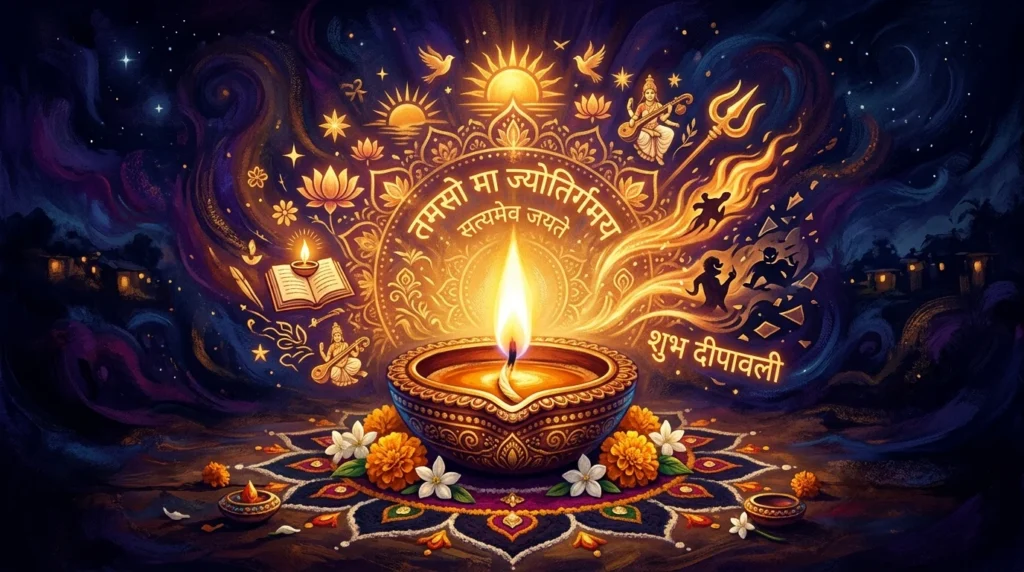
The Diwali meaning and significance goes much deeper than simply being a festival with lights and decorations. Diwali carries spiritual, cultural, emotional, and historical importance. The central idea behind Diwali is that light always has the power to overcome darkness, whether that darkness represents fear, ignorance, negativity, or difficulties.
The lighting of diyas during Diwali has a symbolic meaning. A small lamp spreading light represents hope, wisdom, and the ability of positivity to influence the world. Many people use Diwali as a reminder to improve themselves, forgive others, and start new journeys with a fresh mindset.
The significance of Diwali also comes from its ability to bring people together. Families who may live far away often gather during this festival, creating moments of connection and happiness. The celebration strengthens cultural traditions and passes values from one generation to another.
From a broader perspective, Diwali represents universal values such as kindness, generosity, peace, and harmony. This is why the festival has gained recognition worldwide, even among people who do not personally celebrate it as a religious occasion.
See Also: Preamp Meaning: What Is a Preamp and How Does It Work?
What Is the Story Behind Diwali?
The question what is the story behind Diwali is mainly connected with ancient Indian traditions and religious stories. The most famous story associated with Diwali comes from the Ramayana, one of India’s oldest and most respected epics.
According to this story, Lord Rama, along with his wife Sita and brother Lakshmana, spent fourteen years in exile. During this period, Sita was kidnapped by Ravana, the king of Lanka. Lord Rama fought against Ravana and defeated him, representing the victory of good over evil.
After completing his exile and returning to Ayodhya, Lord Rama was welcomed by the people with thousands of oil lamps. The citizens decorated the city and created a path of lights to celebrate the return of their beloved king.
This story became one of the main explanations for why people light diyas during Diwali. However, different regions and communities have their own stories connected with the festival, including traditions related to Goddess Lakshmi, Lord Krishna, and spiritual achievements in Jainism.
Diwali Festival Meaning
The Diwali festival meaning represents celebration, renewal, prosperity, and spiritual brightness. As the Festival of Lights, Diwali is not only about physical illumination but also about creating inner happiness and removing negative thoughts.
The festival encourages people to focus on positive qualities such as compassion, honesty, gratitude, and kindness. The lights used during Diwali represent the idea that even a small amount of positivity can remove darkness from difficult situations.
During Diwali, people decorate their homes, prepare traditional foods, wear new clothes, and participate in religious ceremonies. These activities have symbolic meanings. Cleaning homes represents removing old negativity, while new clothes and decorations represent fresh beginnings.
The Diwali festival meaning also includes community connection. People visit relatives, exchange gifts, and share sweets as a way of spreading happiness. This combination of spiritual values and social traditions makes Diwali one of the most meaningful celebrations worldwide.
Diwali Meaning in Hinduism
The Diwali meaning in Hinduism is connected with several important beliefs, stories, and spiritual practices. For many Hindus, Diwali is one of the most sacred festivals of the year. It represents the victory of righteousness, devotion, and divine blessings.
One of the strongest Hindu connections with Diwali is the story of Lord Rama’s return to Ayodhya. His victory over Ravana symbolizes the triumph of dharma, which means moral duty and righteousness, over negative forces.
Another important aspect of Diwali in Hinduism is the worship of Goddess Lakshmi. Many Hindus perform Lakshmi Puja during Diwali night because they believe Goddess Lakshmi brings wealth, prosperity, and good fortune.
Lord Ganesha is also worshipped during some Diwali celebrations because he represents wisdom and the removal of obstacles. These religious practices show that Diwali is not only a celebration but also a time for prayer, reflection, and spiritual connection.
Why Do People Celebrate Diwali Festival?
The question why do people celebrate Diwali festival can have different answers depending on culture and tradition. Generally, people celebrate Diwali to honor the victory of good over evil, welcome prosperity, and spend meaningful time with family and loved ones.
The festival provides an opportunity for people to express gratitude and create positive energy in their homes. Many families consider Diwali a time for new beginnings, where they start fresh goals and leave behind negative experiences.
People celebrate Diwali through various customs such as lighting diyas, decorating houses with rangoli designs, preparing sweets, exchanging gifts, and attending prayer ceremonies. These traditions create a sense of happiness and community.
In addition, Diwali celebrations help preserve cultural heritage. Parents often teach children about the history, values, and traditions connected with the festival, ensuring that these customs continue for future generations.
Diwali Meaning Explained for Beginners
For beginners searching for Diwali meaning explained for beginners, the easiest explanation is that Diwali is a festival that celebrates light, happiness, and positive transformation. It is called the Festival of Lights because people decorate their surroundings with lamps and candles.
The basic idea behind Diwali is simple: light represents goodness, wisdom, and hope, while darkness represents challenges, negativity, and ignorance. The festival reminds people that positivity can overcome difficulties.
A beginner-friendly understanding of Diwali does not require deep knowledge of every religious tradition. At its core, Diwali is about celebrating togetherness, showing kindness, appreciating blessings, and welcoming new opportunities.
People from different backgrounds may celebrate Diwali differently, but the common message remains the same: spreading happiness, creating unity, and bringing more light into life.
Deepavali Meaning and Origin
The Deepavali meaning and origin are closely connected with the Sanskrit language and ancient Indian traditions. The word Deepavali comes from two Sanskrit words: “Deepa,” meaning lamp or light, and “Avali,” meaning a row or series. Together, Deepavali means a row of lights.
The original name Deepavali highlights the importance of lighting lamps during the festival. Over time, the word evolved into “Diwali,” which is the commonly used name today.
The origin of Deepavali is connected with multiple historical and religious traditions. While the story of Lord Rama’s return to Ayodhya is one of the most popular explanations, different communities have developed their own meanings and celebrations.
In some regions, Deepavali is associated with Goddess Lakshmi, while others connect it with Lord Krishna’s victory over evil forces. Jain communities observe it as a day connected with Lord Mahavira’s spiritual liberation.
This diverse origin shows that Deepavali is a festival with many layers of meaning, making it culturally significant across different communities.
Importance of Diwali Festival
The importance of Diwali festival can be understood through its religious, cultural, social, and emotional impact. Diwali is important because it brings people together and encourages values such as kindness, generosity, and positivity.
From a cultural perspective, Diwali helps preserve traditional practices such as diya lighting, rangoli decoration, prayers, and family gatherings. These traditions connect modern generations with their history and heritage.
The festival also has economic importance because it creates opportunities for businesses, artists, craftsmen, and local markets. During Diwali season, people purchase clothes, decorations, gifts, sweets, and other items, supporting many industries.
Beyond culture and economy, the importance of Diwali lies in its universal message. The festival reminds people that hope, compassion, and goodness can create positive change. This message is one reason Diwali continues to be celebrated across the world.
Meaning of Diyas During Diwali
One of the most important symbols connected with Diwali is the diya, a small oil lamp made from clay. Understanding the meaning of diyas in Diwali celebration helps explain why millions of people light lamps during this festival. A diya represents light, hope, wisdom, and the removal of darkness from life. The tradition of lighting diyas is not only a decorative activity but also carries a deep spiritual message.
When people light diyas during Diwali, they believe they are welcoming positivity, happiness, and prosperity into their homes. The small flame of a diya represents the idea that even a small source of light can remove darkness and create a brighter environment.
The diya also represents inner transformation. It reminds people to remove negative thoughts, ignorance, and harmful emotions while developing qualities such as kindness, knowledge, and compassion. Many families place diyas near entrances, windows, temples, and important areas of their homes as a symbol of welcoming good energy.
From a cultural perspective, diya lighting has become one of the most recognizable traditions of Diwali. Whether celebrated traditionally or in a modern way, the diya remains a powerful symbol of the festival’s main message: spreading light, hope, and positivity.
Meaning of Rangoli in Diwali Celebration
Rangoli is another important tradition associated with Diwali. These colorful designs are created on floors using materials such as colored powder, rice, flowers, and sand. The meaning of Rangoli in Diwali celebration is connected with beauty, creativity, welcoming guests, and creating a positive atmosphere.
Many people believe that making Rangoli at the entrance of a home welcomes Goddess Lakshmi and invites prosperity and good fortune. The designs often include flowers, geometric patterns, lamps, and traditional symbols that represent happiness and harmony.
Beyond religious beliefs, Rangoli represents artistic expression and cultural identity. Families often create Rangoli designs together, making it a social activity that strengthens relationships. It also allows people to showcase creativity and preserve traditional art forms.
In modern Diwali celebrations, Rangoli has become popular worldwide. Many communities organize Rangoli competitions and cultural events, showing how this traditional practice has expanded beyond its original regional boundaries.
Five Days of Diwali Celebration
The five days of Diwali celebration are an important part of understanding the complete meaning of the festival. Although traditions may differ in different regions, Diwali is generally celebrated over five days, with each day having its own significance and customs.
The five days are:
- Dhanteras
- Naraka Chaturdashi or Choti Diwali
- Lakshmi Puja or Main Diwali
- Govardhan Puja or Annakut
- Bhai Dooj
Each day represents different values, including prosperity, protection, devotion, gratitude, and family relationships.
The first day, Dhanteras, is associated with wealth and prosperity. Many people buy new items, especially metal goods, as a symbol of good fortune. The second day, Choti Diwali, is often connected with removing negativity and preparing for the main celebration.
The third day is the main Diwali celebration when families perform Lakshmi Puja, light diyas, decorate homes, and exchange gifts. The fourth day celebrates Govardhan Puja in many regions, while the fifth day, Bhai Dooj, celebrates the special bond between brothers and sisters.
Diwali Traditions and Customs
The traditions and customs of Diwali make the festival unique and meaningful. People celebrate Diwali through various activities that represent happiness, prosperity, and togetherness. Some of the most common traditions include cleaning homes, decorating spaces, lighting lamps, preparing sweets, wearing new clothes, and performing prayers.
Cleaning the house before Diwali has symbolic importance. It represents removing old negativity and making space for new opportunities. Many people decorate their homes with lights, flowers, and colorful designs to create a welcoming environment.
Another major tradition is exchanging sweets and gifts. Sharing sweets represents spreading happiness and strengthening relationships. Families and friends visit each other during Diwali to celebrate together and create memorable moments.
Prayer ceremonies, especially Lakshmi Puja, are also an important part of Diwali customs. People pray for wealth, success, peace, and happiness. These traditions show that Diwali is not only about celebration but also about gratitude, connection, and spiritual reflection.
Diwali Celebration Around the World
Although Diwali originated in India, the festival is now celebrated globally. Countries with Indian communities, such as the United States, United Kingdom, Canada, Singapore, Australia, and many others, organize Diwali celebrations that include cultural programs, prayers, and community events.
The global celebration of Diwali shows how cultural traditions can connect people from different backgrounds. Many non-Indian communities also participate in Diwali events to learn about Indian culture and experience the festival’s message of positivity.
International Diwali celebrations often include traditional music, dance performances, food festivals, and public lighting events. In many cities, famous landmarks and public spaces are decorated to recognize the importance of the festival.
The worldwide popularity of Diwali reflects its universal message of hope, unity, and happiness. The festival is no longer limited to one region or community; it has become a celebration of cultural diversity.
Modern Meaning of Diwali
The modern meaning of Diwali goes beyond traditional religious practices. Today, many people understand Diwali as a celebration of positivity, relationships, personal growth, and new beginnings.
While traditional elements like diyas, prayers, and family gatherings remain important, modern Diwali celebrations also focus on social responsibility, environmental awareness, and community connection.
Many people now celebrate an eco-friendly Diwali by reducing pollution, using fewer fireworks, and choosing sustainable decorations. This modern approach reflects the changing values of society while keeping the original message of the festival alive.
For many people around the world, Diwali represents a reminder to spread kindness, appreciate loved ones, and bring more positivity into everyday life.
Diwali Meaning Beyond Religion
Although Diwali has strong religious connections, its meaning extends beyond religion. The festival represents universal ideas that many people can relate to, such as hope, renewal, happiness, and overcoming challenges.
The message of light defeating darkness can be understood by people from different cultural backgrounds. It represents the human desire for improvement, peace, and positive change.
In today’s world, Diwali is also seen as a celebration of diversity and cultural understanding. Schools, workplaces, and communities often recognize Diwali to promote inclusion and respect for different traditions.
This broader meaning is one reason why Diwali has gained global recognition. Its values of kindness, unity, and positivity make it meaningful for people across different cultures.
Frequently Asked Questions
What is the real meaning of Diwali?
The real meaning of Diwali is the celebration of light, hope, and positivity. It represents the victory of good over evil, knowledge over ignorance, and happiness over negativity. The festival encourages people to create positive changes in their lives.
Why is Diwali called the Festival of Lights?
Diwali is called the Festival of Lights because people light thousands of diyas and lamps during the celebration. These lights symbolize the removal of darkness and the arrival of happiness, prosperity, and spiritual brightness.
What does Diwali symbolize?
Diwali symbolizes the victory of good over evil, light over darkness, and wisdom over ignorance. It represents new beginnings, prosperity, family unity, and spiritual growth.
What is the story behind Diwali?
The most popular story behind Diwali is connected with Lord Rama’s return to Ayodhya after defeating Ravana. People welcomed him by lighting rows of lamps, which became a major tradition of the festival.
Why do people light diyas on Diwali?
People light diyas on Diwali because they symbolize hope, positivity, wisdom, and the removal of darkness. The diya represents the inner light that helps overcome negativity and ignorance.
What is the difference between Diwali and Deepavali?
Diwali and Deepavali refer to the same festival. Deepavali is the original Sanskrit name meaning “row of lights,” while Diwali is the commonly used shorter form of the word.
What religion celebrates Diwali?
Diwali is mainly celebrated by Hindus, but it is also observed by Jains, Sikhs, and some Buddhist communities. Each tradition connects the festival with different historical and spiritual meanings.
What are the five days of Diwali?
The five days of Diwali are Dhanteras, Choti Diwali, Lakshmi Puja, Govardhan Puja, and Bhai Dooj. Each day has its own cultural and religious significance.
How is Diwali celebrated around the world?
Diwali is celebrated worldwide through lighting lamps, decorating homes, performing prayers, sharing food, exchanging gifts, and organizing cultural events. Many countries recognize it as an important cultural celebration.
Conclusion
The Diwali meaning represents much more than a festival of lights. It is a celebration of hope, happiness, prosperity, and the victory of positive values over negativity. From ancient stories of Lord Rama to modern global celebrations, Diwali continues to carry a powerful message that light can overcome darkness.
The festival brings together families, communities, and cultures through traditions such as diya lighting, Rangoli designs, prayers, sweets, and gatherings. Its meaning changes slightly across different communities, but the central message remains the same: spreading kindness, welcoming new beginnings, and creating a brighter future.
For anyone searching for simple and accurate explanations of meanings, festivals, and trending topics, Trendy Meaning provides easy-to-understand guides that explain concepts from every angle.