
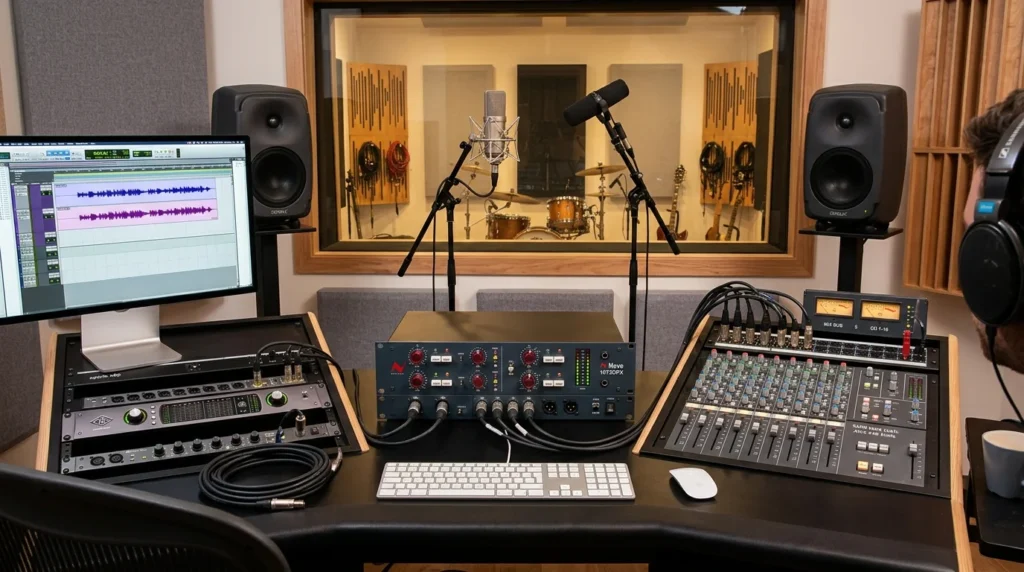

Have you ever wondered why some microphones, guitars, or audio devices need an extra piece of equipment before producing clear and powerful sound? The answer often lies in a small but extremely important device called a preamp or preamplifier. Many beginners in music production, recording, and audio systems hear the word “preamp” but do not fully understand what it means, how it works, or why professionals use it.
A preamp meaning is not just about increasing volume; it is about improving and preparing weak audio signals so they can be processed, recorded, or amplified properly. Whether you are using a microphone in a studio, connecting a guitar, setting up a home theater, or working with professional audio equipment, understanding preamps can help you achieve better sound quality.
At Trendy Meaning, we explain meanings in a simple and detailed way so users can understand any confusing term easily. If you want to know the meaning of technical words, internet terms, slang, or other concepts, you can visit Trendy Meaning to get clear explanations.
In this complete guide, we will explain what is a preamp meaning, what does a preamp mean, how a preamp works, different types of preamps, its role in audio systems, the difference between a preamp and amplifier, and why preamps are important in music production and recording.
Meaning & Definition
What Is a Preamp Meaning?
A preamp, short for preamplifier, is an electronic device that increases the strength of a weak audio signal before it reaches another audio component such as a power amplifier, speaker system, mixer, or recording device. The main purpose of a preamp is to bring low-level signals up to a stronger and usable level while maintaining clarity and reducing unwanted noise.
In simple words, a preamp acts like a signal booster that prepares audio for the next stage. Many audio sources, including microphones, electric guitars, and turntables, produce very weak signals that cannot directly power speakers or recording systems. A preamp increases this signal strength so the sound can be processed correctly.
The term preamp meaning in audio refers specifically to the process of boosting low-level audio signals into a standard line-level signal. Unlike a normal amplifier that mainly increases power to drive speakers, a preamp focuses on improving signal quality, controlling gain, and creating a cleaner audio output.
What Does Preamp Mean?
The phrase what does preamp mean is commonly searched by beginners who are exploring audio equipment. A preamp means a device that comes before the main amplifier in an audio signal chain. It receives a weak input signal and increases its voltage level so other audio equipment can work efficiently.
For example, when you speak into a microphone, the microphone creates a very small electrical signal. This signal is usually too weak for a mixer, audio interface, or amplifier to use effectively. A microphone preamp boosts that signal and prepares it for recording or playback.
The word “pre” means before, and “amp” comes from amplifier. Therefore, a preamp literally means a device that amplifies a signal before the main amplification stage. This simple explanation helps users understand why preamps are commonly found in studios, live performances, and professional sound systems.
Background of Preamp
History and Evolution of Preamplifiers
The development of preamps is closely connected with the history of audio recording and electronic communication. Early audio systems required ways to increase weak electrical signals because microphones and early recording devices produced very low outputs.
During the early days of radio and recording technology, engineers developed vacuum tube-based preamplifiers to strengthen audio signals. These early preamps played an important role in improving voice transmission and music recording quality.
Over time, technology advanced, and preamps evolved from large tube-based systems into smaller transistor-based and digital designs. Modern preamps are now available in different forms, including analog preamps, tube preamps, microphone preamps, guitar preamps, and digital preamps.
Today, preamps are an essential part of professional recording studios, home studios, live sound setups, and consumer audio equipment. They continue to play a major role in shaping sound quality and maintaining a clean audio signal chain.
Preamp Meaning in Audio
Understanding Preamp Meaning in Audio Systems
The preamp meaning in audio refers to the device responsible for increasing the level of weak audio signals before they are sent to other components. In an audio setup, signals usually pass through multiple stages, and the preamp is one of the earliest and most important stages.
Audio sources like microphones, guitars, and turntables generate signals that are too weak for direct processing. A preamp increases these signals to line level, allowing mixers, audio interfaces, and amplifiers to handle them properly.
A good preamp does more than simply increase volume. It also helps maintain tone, improve clarity, control gain, and reduce unwanted noise. Professional audio engineers often choose specific preamps because different designs can affect the character and warmth of recorded sound.
Why Is a Preamp Important in Audio?
A preamp is important because weak audio signals can lose quality if they are not properly strengthened. Without a suitable preamp, recordings may sound quiet, noisy, or unclear.
For example, a studio microphone connected directly to an amplifier may not produce enough volume because microphone signals are extremely low. A microphone preamp solves this problem by increasing the signal strength while preserving the original sound.
In professional recording environments, preamps are often considered one of the most important parts of the signal chain because they influence the overall recording quality. Many producers and sound engineers carefully select preamps based on the sound characteristics they want to achieve.
What Is a Preamp Used For?
A common question among beginners is what is a preamp used for? A preamp is used to strengthen weak audio signals and prepare them for further processing. It is mainly used with microphones, musical instruments, turntables, and other audio sources that produce low-level signals.
In recording studios, microphone preamps are used to increase microphone output before the signal enters an audio interface or recording software. This allows musicians and producers to capture cleaner and more detailed recordings.
Preamps are also used in home audio systems, live concerts, guitar rigs, and vinyl playback systems. For example, a phono preamp boosts the very small signal produced by a turntable cartridge so it can be played through a modern audio system.
How Does a Preamp Work?
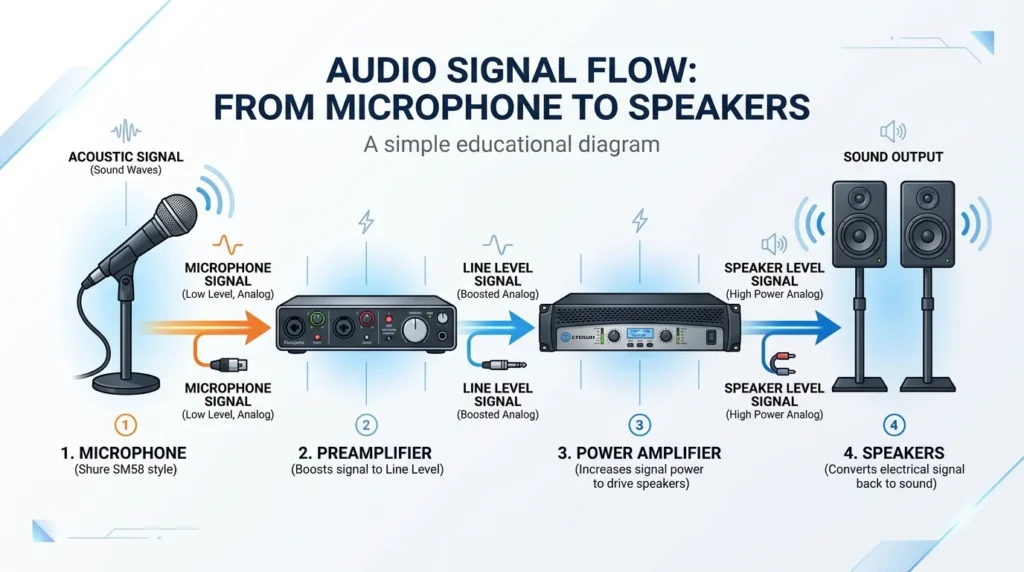
Understanding how does a preamp work is important for anyone who wants to learn about audio systems, recording equipment, or music production. A preamp works by receiving a weak electrical audio signal and increasing its voltage level so that the signal becomes strong enough for further processing. It does not create more power like a power amplifier; instead, it prepares the signal for the next stage of the audio chain.
When a microphone captures sound, it converts sound waves into a very small electrical signal. This signal is known as a microphone-level signal, and it is usually too weak to be used directly by mixers, recording devices, or speakers. The preamp increases this low-level signal to a stronger line-level signal while maintaining sound quality.
The process mainly involves gain control, which determines how much the signal is boosted. A well-designed preamp increases the signal strength without adding unnecessary noise or distortion. Professional preamps also provide features like impedance matching, phantom power for condenser microphones, and tone shaping options.
In a typical audio signal chain, the process looks like this:
Sound Source → Microphone/Instrument → Preamp → Audio Interface/Mixer → Amplifier → Speakers
This explains why a preamp is placed early in the signal path. It ensures that the audio signal has enough strength before it reaches other components.
What Is a Microphone Preamp?
A microphone preamp is a specific type of preamplifier designed to increase the very low-level signals produced by microphones. Since microphones generate extremely weak electrical signals, they require a dedicated preamp before the audio can be recorded or amplified.
When a singer speaks or sings into a microphone, the microphone captures vibrations and converts them into an electrical signal. However, this signal is usually too quiet for professional recording equipment. A microphone preamp boosts this signal and makes it suitable for audio interfaces, mixers, and digital recording systems.
Most modern audio interfaces include built-in microphone preamps, but professional studios often use separate external microphone preamps because they can provide better sound characteristics. Some microphone preamps create a warm analog tone, while others focus on clean and transparent sound reproduction.
A microphone preamp is commonly used in:
- Recording studios
- Podcast setups
- Live performances
- Voice-over production
- Broadcasting systems
- Home recording environments
Choosing the right microphone preamp can affect the clarity, warmth, detail, and overall quality of a recording.
Why Do You Need a Preamp?
Many beginners ask why do you need a preamp when modern audio equipment already includes amplifiers and audio interfaces. The reason is that different audio devices produce different signal levels, and weak signals need proper boosting before they can be processed.
A microphone, guitar pickup, or turntable cartridge produces a low-level signal that cannot directly drive speakers or recording equipment. Without a preamp, the sound may be too quiet and may contain unwanted background noise when increased later.
A preamp helps by increasing the signal strength at the beginning of the audio chain. This creates a cleaner recording because the original signal is amplified before noise becomes a major problem.
You may need a preamp if you:
- Record vocals or instruments
- Use professional microphones
- Connect a guitar directly to recording equipment
- Use a vinyl turntable
- Want better control over sound quality
However, not everyone needs a separate external preamp because many audio interfaces, mixers, and receivers already include built-in preamp circuits.
Preamp Meaning in Music Production
The preamp meaning in music production is related to the role of preamplifiers in capturing and shaping recorded sound. In professional music production, preamps are considered a critical part of the recording process because they influence how audio enters the system.
When recording vocals, guitars, drums, or other instruments, producers use preamps to increase signal strength before sending audio into a digital audio workstation (DAW). The quality of this first amplification stage can have a significant impact on the final recording.
Different preamps can create different sound characteristics. Some tube preamps add warmth and smoothness, while clean solid-state preamps provide accurate and detailed sound reproduction.
Music producers often choose preamps based on:
- The instrument being recorded
- Desired tone
- Recording style
- Budget
- Studio requirements
For example, a vocalist may prefer a warm tube preamp for a rich vocal tone, while a studio engineer recording drums may prefer a clean and transparent preamp to capture natural details.
Types of Preamps
There are several types of preamps designed for different audio applications. Understanding these types helps users choose the right equipment for their needs.
Microphone Preamps
Microphone preamps are designed specifically for boosting microphone signals. They are commonly found in recording studios and audio interfaces.
They provide features such as:
- Gain adjustment
- Phantom power
- Low-noise amplification
- Signal monitoring
They are essential for recording vocals, podcasts, instruments, and professional audio content.
Tube Preamps
Tube preamps use vacuum tube technology to amplify signals. They are popular because they add a warm, natural, and slightly compressed sound character.
Many musicians prefer tube preamps for vocals, guitars, and instruments where they want a vintage or rich tone.
The unique sound of tube preamps comes from the way vacuum tubes handle audio signals, creating harmonic characteristics that many producers find desirable.
Solid-State Preamps
Solid-state preamps use transistor-based technology instead of vacuum tubes. They are known for reliability, accuracy, and clean sound reproduction.
These preamps are commonly used in professional studios because they provide consistent performance and low noise levels.
They are ideal for situations where engineers want the original sound source to remain natural and unchanged.
Guitar Preamps
A guitar preamp is designed to process and strengthen signals from electric guitars before they reach an amplifier.
Many guitarists use preamps to shape their tone by adjusting:
- Gain
- Equalization
- Distortion
- Sound character
Some guitar preamps include built-in effects and are used for both live performances and studio recordings.
Preamp vs Amplifier Difference
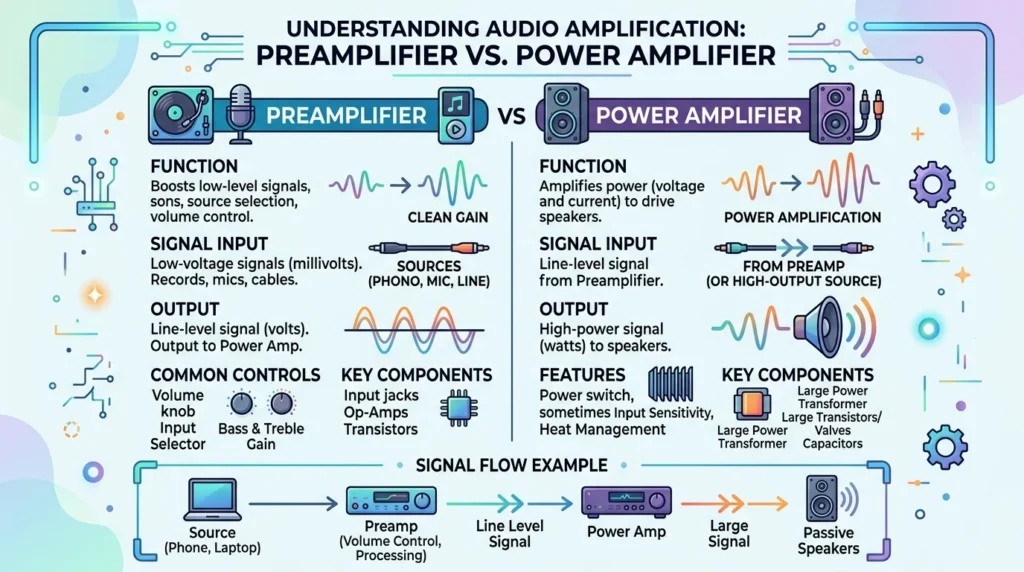
The preamp vs amplifier difference is one of the most searched topics because many people confuse these two devices. Although both increase signals, they perform different jobs in an audio system.
A preamp increases a weak audio signal to a usable level, while an amplifier increases power so the signal can drive speakers.
The main differences are:
| Feature | Preamp | Amplifier |
|---|---|---|
| Main Purpose | Boosts weak signals | Provides power to speakers |
| Signal Type | Low-level audio signal | High-power signal |
| Location | Early in signal chain | Usually near speakers |
| Main Function | Gain and signal preparation | Speaker power delivery |
A simple example:
A microphone produces a weak signal → Preamp increases it → Amplifier provides enough power → Speakers produce sound.
Both devices work together, but they have completely different responsibilities.
Difference Between Preamp and Amp
The difference between preamp and amp is another common question among audio beginners. The word “amp” usually refers to an amplifier, while “preamp” refers specifically to a preamplifier.
An amp increases electrical power to operate speakers, headphones, or other output devices. A preamp focuses on improving and preparing the audio signal before amplification.
For example:
- A microphone needs a preamp because its signal is too weak.
- A speaker needs an amplifier because it requires electrical power to create sound.
In some devices, both functions may exist together. For example, an integrated amplifier may contain a built-in preamp and power amplifier in one unit.
Preamp in Home Audio Systems
A preamp is not only used in professional recording studios; it also plays an important role in many home audio systems. In home entertainment setups, a preamp manages audio sources such as televisions, music players, streaming devices, turntables, and other equipment before sending the signal to a power amplifier or speakers.
In traditional home audio systems, a preamp allows users to control different functions such as volume adjustment, source selection, and tone control. For example, if you connect multiple devices like a CD player, turntable, and streaming device, the preamp helps organize and process these signals before they reach the amplifier.
Modern home theater receivers often combine preamp and amplifier functions into one device. However, high-end audio systems may use separate preamps because they provide better control, cleaner signal processing, and improved sound quality.
Analog Preamp vs Digital Preamp
Understanding the difference between analog preamp and digital preamp helps users choose the right equipment for their audio needs. Both types perform the same basic purpose of preparing audio signals, but they process sound differently.
An analog preamp works with continuous electrical signals and processes audio in its original analog form. Many audio professionals prefer analog preamps because they can add unique characteristics such as warmth, depth, and natural tone.
A digital preamp, on the other hand, processes audio signals using digital technology. These preamps are commonly found in modern audio interfaces, software-based recording systems, and digital mixing environments.
The main differences include:
| Analog Preamp | Digital Preamp |
|---|---|
| Processes continuous signals | Processes converted digital signals |
| Often creates warmer tones | Provides precise digital control |
| Popular in studios | Common in modern recording systems |
| Uses physical electronic components | Uses digital processing technology |
The choice between analog and digital preamps depends on the user’s goals, recording style, and desired sound character.
Understanding Preamp Signal Chain
The preamp signal chain explains how audio moves through different devices from the original sound source to the final output. Understanding this process helps beginners understand where a preamp fits into an audio setup.
A typical signal chain looks like:
Sound Source → Microphone/Instrument → Preamp → Mixer/Audio Interface → Amplifier → Speakers
The preamp is usually one of the first stages because it handles weak signals before they become difficult to process.
For example, when recording a singer:
- The singer creates sound waves.
- The microphone captures those waves.
- The microphone produces a weak electrical signal.
- The preamp increases the signal strength.
- The audio interface converts it into digital audio.
- Recording software stores and processes the sound.
This early signal improvement is important because any noise or poor-quality amplification at the beginning can affect the final recording.
Does Every Audio Setup Need a Preamp?
A common question related to preamp meaning is whether every audio setup requires a separate preamp. The answer depends on the equipment being used.
Many modern devices already include built-in preamps. For example, most audio interfaces used for home recording have microphone preamps inside them. Similarly, many receivers and mixers include preamp sections.
However, some situations may require a dedicated external preamp:
- Professional studio recording
- High-end microphones
- Vintage audio equipment
- Specialized instruments
- Audiophile sound systems
A separate preamp can provide better control, lower noise, improved gain handling, and unique sound characteristics. But for beginners, a quality audio interface with a built-in preamp is often enough.
Common Mistakes When Using a Preamp
Many beginners misunderstand how preamps work and make mistakes that affect their audio quality. Knowing these mistakes can help users achieve cleaner recordings.
Setting Too Much Gain
One common mistake is increasing gain too much. While a preamp boosts weak signals, excessive gain can create distortion and unwanted noise.
The goal is to achieve a strong signal without causing clipping.
Confusing Preamp With Amplifier
Many people believe a preamp and amplifier perform the same job. However, a preamp prepares the signal, while an amplifier provides power for speakers.
Using the wrong equipment can lead to poor audio performance.
Ignoring Signal Quality
A preamp cannot fix a poor-quality microphone or bad recording environment. It improves the signal, but the original source quality still matters.
A good microphone combined with a suitable preamp can produce much better results.
See Also: Conviction Meaning: Definition, Examples & Uses Explained
Real-Life Examples of Preamp Usage
Understanding real-life examples makes the concept of a preamp easier.
Example 1: Recording Vocals
A singer records vocals using a condenser microphone. The microphone output is too weak, so the signal passes through a microphone preamp. The preamp increases the signal strength before it reaches recording software.
Example 2: Electric Guitar Setup
A guitarist connects an electric guitar to a preamp before sending the signal to an amplifier. The preamp helps shape the guitar tone and controls the gain level.
Example 3: Vinyl Turntable
A vinyl record player produces a very low signal that cannot directly connect to most speakers. A phono preamp boosts the signal so the music system can reproduce sound correctly.
How to Choose the Right Preamp
Choosing the right preamp depends on the user’s purpose, equipment, and budget. Different users have different requirements, so there is no single best preamp for everyone.
Before buying a preamp, consider these factors:
Purpose
First decide why you need a preamp.
Are you recording vocals?
Are you playing guitar?
Are you improving a home audio system?
Different uses require different types of preamps.
Sound Character
Some preamps provide a clean and transparent sound, while others add warmth and character.
Music producers often select preamps based on the tone they want to achieve.
Noise Level
A quality preamp should provide strong amplification without adding unwanted background noise.
Low-noise performance is especially important for professional recordings.
Compatibility
Always check whether the preamp works correctly with your microphone, instrument, mixer, or audio interface.
Compatibility issues can reduce performance.
Preamp Meaning Explained in Simple Words
If we explain preamp meaning in simple terms, a preamp is like a helper that prepares a weak audio signal before it enters the main audio system.
Imagine a microphone whispering. The preamp listens to that quiet signal and makes it strong enough for other devices to understand. It does not make the speakers louder directly; instead, it prepares the audio so the amplifier can do its job properly.
This simple explanation helps beginners understand why preamps are important in almost every professional audio environment.
Why Are Preamps Important in Professional Recording?
Professional recording studios depend heavily on high-quality preamps because the first stage of recording affects the final result.
A poor-quality preamp can introduce unwanted noise, distortion, or loss of detail. A high-quality preamp can preserve the natural characteristics of vocals and instruments.
Sound engineers often consider preamps an important creative tool because different models can influence the personality of a recording.
For example:
- A warm preamp may make vocals sound smoother.
- A clean preamp may capture instruments naturally.
- A colored preamp may add a vintage feel.
Frequently Asked Questions
What is a preamp meaning in audio?
A preamp meaning in audio refers to a device that boosts weak audio signals into a stronger level suitable for recording, mixing, or amplification. It improves signal strength before the audio reaches other equipment.
What does a preamp do?
A preamp increases the strength of low-level signals from microphones, guitars, and other audio sources. It prepares the signal for processing and helps maintain better sound quality.
Is a preamp the same as an amplifier?
No, a preamp and amplifier have different functions. A preamp increases weak signals, while an amplifier increases power to drive speakers.
Do I need a preamp for my microphone?
Most microphones need a preamp because their signals are very weak. Many audio interfaces already include built-in microphone preamps, but professional setups may use separate preamps.
Can a preamp improve sound quality?
Yes, a good preamp can improve sound quality by providing cleaner gain, reducing noise, and adding desirable tonal characteristics.
What is the difference between a preamp and an audio interface?
A preamp boosts audio signals, while an audio interface converts analog audio into digital audio for computer recording. Many audio interfaces include built-in preamps.
What is a microphone preamp used for?
A microphone preamp boosts the low-level signal from a microphone so it can be recorded, processed, or sent through an audio system.
Conclusion
Understanding preamp meaning helps anyone working with audio equipment, music production, or sound systems make better decisions. A preamp is a small but powerful part of the audio signal chain that increases weak signals, improves clarity, and prepares sound for further processing.
From microphone recording and music production to home audio systems and live performances, preamps are used everywhere. While many beginners confuse preamps with amplifiers, their roles are completely different. A preamp focuses on signal preparation, while an amplifier provides power for speakers.
Whether you are a musician, content creator, audio engineer, or simply someone curious about technical terms, understanding preamps gives you a stronger foundation in audio technology.
For simple explanations of meanings, technical terms, and trending concepts, you can always visit Trendy Meaning where complex words are explained in an easy and understandable way.
See Also: Clingy Meaning: Definition, Relationship & Text Explained