

If you have heard the phrase “Hakuna Matata” in a song, movie, conversation, or social media post, you may wonder what it means. Hakuna Matata is a Swahili phrase that is commonly translated as “no worries” or “there are no problems.” It expresses a relaxed attitude toward life and encourages someone not to worry too much about difficulties.
The phrase became internationally famous through Disney’s The Lion King, where it is used as a memorable philosophy about letting go of worries and enjoying life. However, “Hakuna Matata” existed as a Swahili expression before the movie made it famous around the world.
Hakuna Matata Meaning & Definition
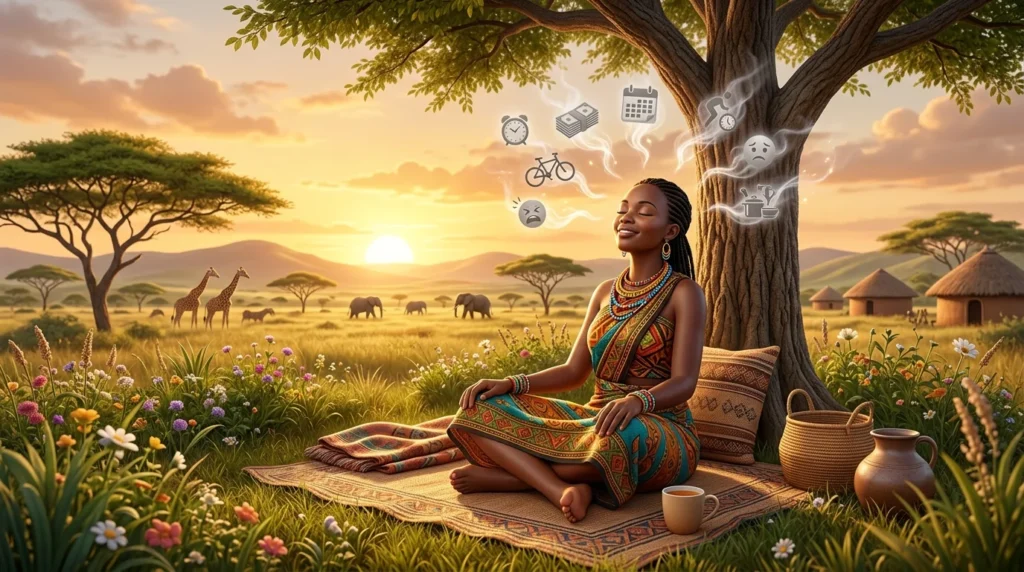
The basic Hakuna Matata meaning is “no worries” or “no problems.” It comes from Swahili, a widely spoken language in parts of East Africa. The phrase is commonly understood as an expression of reassurance, calmness, or a carefree attitude.
Hakuna can be understood as “there is no” or “there are no,” while matata refers to troubles, problems, or difficulties. Together, the phrase conveys the idea that there is nothing to worry about.
What Does Hakuna Matata Mean?
When someone asks what does Hakuna Matata mean, the simplest answer is “no worries” or “no problem.” It can be used to reassure someone who is worried or to express a laid-back approach to a difficult situation.
For example, if someone apologizes for making a small mistake, another person might respond with the idea of “Hakuna Matata,” meaning that there is no need to worry about it.
Hakuna Matata Meaning in English
The most common English translations of Hakuna Matata are “no worries,” “no problem,” and “there are no troubles.” The exact translation can vary slightly depending on the context.
In everyday English, the phrase can be used to communicate a relaxed or reassuring attitude. It is often associated with staying calm, accepting small problems, and not allowing unnecessary worries to take over.
Hakuna Matata Meaning in Simple Words
In simple words, Hakuna Matata means “don’t worry” or “no worries.” It represents the idea of staying positive and not becoming overly stressed about problems.
A simple example would be: “Don’t worry about being late—Hakuna Matata!” The speaker is using the phrase to say that everything is okay and there is no need to stress.
Hakuna Matata Meaning in Swahili
Hakuna Matata is a Swahili expression. Swahili, also called Kiswahili, is spoken across several countries in East Africa. The phrase is made up of two main parts: hakuna and matata.
“Hakuna” expresses the absence of something, while “matata” refers to troubles or problems. This gives the phrase its general sense of “there are no problems” or “there are no worries.”
Hakuna Meaning
The Swahili word hakuna is commonly used to express that something does not exist or is not present. Depending on the sentence, it can communicate meanings such as “there is no,” “there are no,” or “there isn’t.”
In “Hakuna Matata,” the word combines with “matata” to communicate the idea that there are no troubles or problems.
Matata Meaning
Matata refers to troubles, problems, difficulties, or complications. When combined with “hakuna,” the expression communicates that such problems are absent.
Therefore, the phrase can literally be understood as something close to “there are no troubles.” In natural English, “no worries” is the more familiar translation.
Hakuna Matata Origin
The phrase Hakuna Matata comes from the Swahili language and was used as an expression before it became internationally famous through popular entertainment. It is associated with Swahili-speaking communities in East Africa.
The phrase became especially well known internationally after Disney used it in The Lion King. The movie transformed it into a globally recognized expression associated with positivity, relaxation, and a carefree outlook.
Hakuna Matata Meaning in The Lion King
In The Lion King, “Hakuna Matata” is presented as a philosophy of living without unnecessary worries. The characters use it to encourage Simba to leave his painful past behind and enjoy the present.
The phrase became one of the movie’s most recognizable expressions. Through the film and its song, millions of people around the world became familiar with the Swahili phrase.
Hakuna Matata Meaning in The Lion King Song
The “Hakuna Matata” song from The Lion King centers on the idea of living a carefree life and not allowing worries to control you. The song uses the phrase as a simple philosophy that the characters share with Simba.
Because of the song’s popularity, “Hakuna Matata” became much more than an unfamiliar foreign phrase for many English-speaking audiences. It became a widely recognized expression of positivity and relaxation.
Hakuna Matata Meaning in Text
The Hakuna Matata meaning in text is usually “no worries” or “don’t worry.” Someone may use the phrase in a message to reassure another person or to show that a small problem is not important.
Example: “Sorry I couldn’t call earlier.” “Hakuna Matata!” In this context, the response means there is no problem and the person does not need to worry.
Hakuna Matata Meaning in Chat
In online chats, people often use Hakuna Matata casually to communicate that everything is fine. It can be especially common among people who enjoy The Lion King, Disney references, or positive expressions.
Example: “I forgot to send the file, sorry!” “Hakuna Matata, just send it now.” Here, the phrase means there is no need to worry about the mistake.
Hakuna Matata Meaning on Social Media

On social media, Hakuna Matata is often used as a positive or motivational phrase. People may include it in captions, comments, memes, or posts about travel, relaxation, happiness, and enjoying life.
Someone might use “Hakuna Matata” with a photo from a vacation to communicate a carefree mood. Others may use it simply as a reminder to stay calm and not overthink everyday problems.
Hakuna Matata Meaning on Instagram
On Instagram, “Hakuna Matata” is commonly associated with carefree lifestyles, travel, friendship, positivity, and relaxing moments. It can appear in captions alongside photographs of beaches, vacations, sunsets, nature, or happy experiences.
For example, a person might caption a vacation photo “Hakuna Matata” to express the feeling of taking a break from stress and enjoying the moment.
Hakuna Matata Meaning on TikTok
On TikTok, Hakuna Matata may appear in videos, captions, memes, and comments. Users often use it to express a carefree attitude or reference The Lion King.
The phrase can therefore carry either its straightforward “no worries” meaning or a playful pop-culture reference, depending on the video and surrounding content.
Hakuna Matata Meaning in a Relationship
In a relationship, Hakuna Matata can be used to reassure a partner that a small mistake or problem is not worth worrying about. It can communicate forgiveness, patience, and a relaxed attitude.
Example: “I’m sorry I forgot our plans.” “Hakuna Matata, we’ll figure it out.” In this context, the phrase means there is no need to worry and the problem can be handled calmly.
Hakuna Matata Meaning in Life
When people use Hakuna Matata as a life philosophy, they generally mean trying not to become overwhelmed by worries. It encourages a more relaxed approach to everyday difficulties.
This does not necessarily mean ignoring serious problems. Instead, it can express the idea of staying calm, dealing with problems when necessary, and avoiding unnecessary stress over things that cannot be changed.
Is Hakuna Matata a Real Phrase?
Yes. Hakuna Matata is a real Swahili phrase that existed before its famous use in The Lion King. The movie helped make the expression internationally recognizable.
Its global popularity means many people now associate the phrase primarily with Disney, but its linguistic roots are in Swahili and East African language and culture.
Is Hakuna Matata a Swahili Phrase?
Yes, Hakuna Matata is a Swahili phrase. Swahili is widely spoken in East Africa, and the expression can be understood as referring to the absence of problems or troubles.
Its international popularity grew dramatically after The Lion King introduced it to a worldwide audience, especially among English-speaking viewers.
How to Use Hakuna Matata
Hakuna Matata can be used casually when you want to express a carefree or reassuring attitude. In English conversations, people often use it to mean “no worries,” “don’t worry,” or “it’s okay.” It can be used after a small mistake, an apology, or an unexpected situation.
For example, if a friend says, “Sorry I’m a few minutes late,” you could respond with “Hakuna Matata!” to communicate that their lateness is not a big deal. The phrase is generally informal and friendly.
Hakuna Matata Examples
Example 1
“Don’t worry about the mistake. Hakuna Matata!”
Here, the phrase means there is no need to worry and the problem is not serious.
Example 2
“We missed the bus, but Hakuna Matata. Another one will come.”
This expresses a relaxed attitude toward an inconvenience.
Example 3
“Hakuna Matata, everything will work out.”
In this sentence, the phrase is being used as encouragement and reassurance.
Hakuna Matata Meaning in a Sentence
The phrase can be included in a sentence when someone wants to express that a problem is not worth worrying about. For example, “I forgot my umbrella, but Hakuna Matata—I can buy one later.”
It can also stand alone as a short response. Someone saying “Hakuna Matata!” is generally communicating that everything is okay or that there is no need to stress.
Hakuna Matata as a Life Philosophy
Many people use Hakuna Matata as a simple philosophy of staying relaxed and not allowing unnecessary worries to dominate their lives. The expression became particularly associated with this idea because of The Lion King.
As a personal motto, it can encourage people to focus on what they can control rather than constantly worrying about things they cannot change. However, a carefree attitude does not mean ignoring serious responsibilities or real problems.
Hakuna Matata and Positivity
Hakuna Matata is often connected with positivity because it encourages a person to approach everyday problems calmly. Instead of becoming overwhelmed by a small setback, the phrase suggests moving forward and enjoying the present.
This is one reason the expression appears frequently in motivational posts, travel captions, friendship messages, and content about enjoying life.
Hakuna Matata and The Lion King
The Lion King played a major role in making “Hakuna Matata” famous worldwide. In the story, Timon and Pumbaa introduce Simba to their carefree approach to life, encouraging him to leave his worries behind.
The phrase became closely associated with the characters and the movie’s memorable song. For many English-speaking audiences, their first exposure to the expression came from The Lion King.
Hakuna Matata Characters
The phrase is strongly associated with three characters in The Lion King: Simba, Timon, and Pumbaa. Timon and Pumbaa teach Simba their carefree philosophy, which becomes an important part of his life for a period of the story.
The expression is therefore not only a linguistic phrase in popular culture but also an important part of the movie’s story and character development.
Hakuna Matata Meaning for Kids
For children, Hakuna Matata can be explained simply as “don’t worry” or “no worries.” The phrase became particularly familiar to children through The Lion King and its characters.
It can be used as a friendly reminder that small mistakes and everyday problems do not always need to cause stress. Children may also recognize it from the movie’s song and characters.
Hakuna Matata Meaning for Adults
Adults may use Hakuna Matata humorously or positively when talking about everyday stress. Someone might say it after making a small mistake or when deciding not to overthink an insignificant problem.
For example, a person who spills a little coffee might laugh and say, “Hakuna Matata!” to show that they are not going to let the small accident ruin their mood.
Hakuna Matata Meaning in Friendship
Among friends, Hakuna Matata can be a playful way to say that everything is okay. It can help make a conversation feel relaxed, especially when someone is apologizing for a small mistake.
Example: “Sorry I forgot to bring the snacks.” “Hakuna Matata!” The response communicates that the friend is not upset about the mistake.
Hakuna Matata Meaning in Love
In romantic conversations, Hakuna Matata can be used as a sweet or playful way of reassuring a partner. It may communicate that a small disagreement or mistake does not need to become a major problem.
For example, “Hakuna Matata, don’t stress about it ❤️” can express reassurance and affection. The phrase itself does not specifically mean “I love you”; its basic meaning remains related to having no worries or problems.
Hakuna Matata Meaning in a Text Message
In text messages, people often use Hakuna Matata as a casual response to an apology or minor problem. It can also be used simply to express a relaxed mood.
Example: “Sorry for replying late!” “Hakuna Matata 😊.” The response means that the late reply is not a problem.
Hakuna Matata Meaning in Captions
“Hakuna Matata” is popular in captions because it communicates a carefree mood in just two words. People may use it with photos showing vacations, beaches, nature, friends, sunsets, or other enjoyable moments.
A caption such as “Hakuna Matata 🌴” can suggest that the person is relaxing, enjoying life, and temporarily leaving stress behind.
Hakuna Matata Meaning in Travel
Travelers sometimes use Hakuna Matata to describe a relaxed vacation mood. The phrase has a strong association with East Africa and is also widely recognized internationally through The Lion King.
Someone might use it as a travel caption to communicate that they are taking a break from their normal routine and simply enjoying their surroundings.
Hakuna Matata Meaning in Culture
Hakuna Matata has become a globally recognizable phrase because of the combination of its Swahili origins and its enormous popularity through The Lion King. It is now familiar to people who may not speak Swahili.
At the same time, it is useful to remember that the phrase comes from a real language and cultural context rather than being a word invented by Disney.
Hakuna Matata vs No Worries
“No worries” is one of the closest natural English equivalents of “Hakuna Matata.” Both can be used to reassure someone that a problem is not serious or that they do not need to stress.
| Phrase | General Meaning |
|---|---|
| Hakuna Matata | No worries / no problems |
| No worries | It’s okay / don’t worry |
| No problem | There is nothing to worry about |
| Don’t stress | Stay calm / don’t worry |
Hakuna Matata vs Hakuna Matata Meaning
There is no difference between “Hakuna Matata” and its meaning. The phrase itself is Swahili, while “no worries” or “no problems” explains the idea in English.
The translation is not always word-for-word in every situation, but “no worries” is the familiar English expression used to communicate its general sense.
Is Hakuna Matata a Positive Phrase?
Yes, Hakuna Matata is generally used positively. It can express reassurance, relaxation, optimism, and a carefree attitude.
However, the phrase can be used humorously as well. Someone might say it after a small disaster to lighten the mood rather than literally claiming that there are no problems.
Is Hakuna Matata Still Used Today?
Yes. Hakuna Matata continues to appear in everyday informal speech, social media captions, memes, travel content, merchandise, and references to The Lion King.
Its meaning remains recognizable to many people around the world, even among those who do not speak Swahili.
Frequently Asked Question
What does Hakuna Matata mean?
Hakuna Matata is a Swahili phrase commonly translated as “no worries” or “no problems.”
Is Hakuna Matata a real Swahili phrase?
Yes. Hakuna Matata is a real Swahili expression. It became internationally famous after being featured in Disney’s The Lion King.
What does Hakuna Matata mean in The Lion King?
In The Lion King, Hakuna Matata represents a carefree philosophy of leaving unnecessary worries behind and enjoying life.
Can I use Hakuna Matata in a text?
Yes. People commonly use it informally in texts to mean “no worries,” “it’s okay,” or “don’t stress.”
What language is Hakuna Matata?
Hakuna Matata comes from Swahili, a widely spoken language in East Africa.
Conclusion
The Hakuna Matata meaning is generally “no worries,” “no problems,” or “don’t worry.” It is a Swahili phrase that expresses a relaxed attitude toward problems and became globally famous through The Lion King.
Today, people use Hakuna Matata in conversations, texts, captions, memes, and motivational messages to express positivity and a carefree mood. Whether you discovered it through the movie or encountered it online, the central idea remains simple: don’t let unnecessary worries take over your life.
See Also:
Exhibitionist Meaning: Definition, Examples & Uses