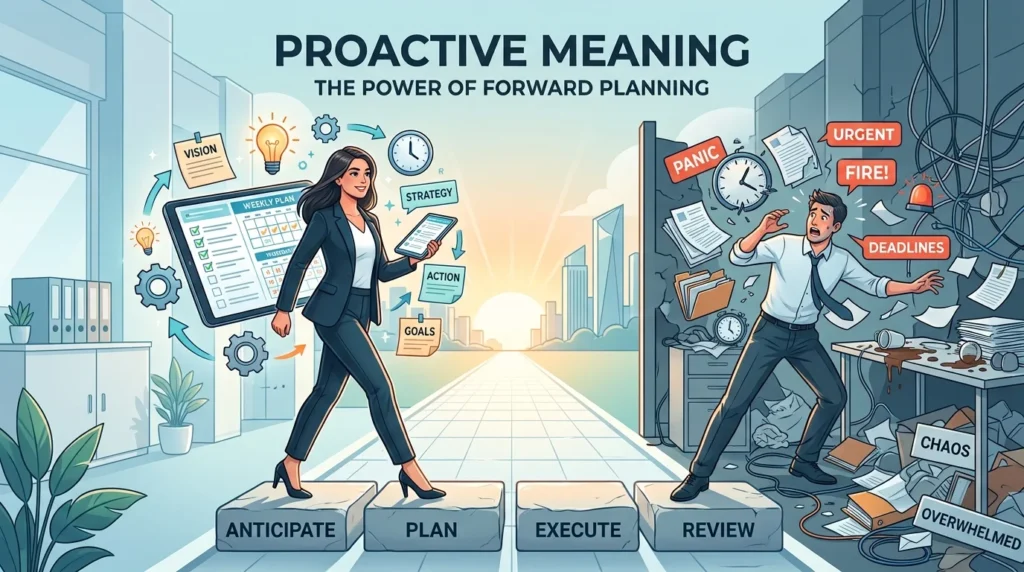

“Proactive” is one of those words that people hear everywhere—in school, workplaces, self-development books, and even daily conversations—but still struggle to fully understand. At its core, the proactive meaning is about taking control before problems happen instead of reacting after they occur. In simple terms, a proactive person prepares in advance, thinks ahead, and takes action early to avoid future issues. This mindset is highly valued in modern life because it shows responsibility, leadership, and smart decision-making. Whether in personal growth, education, or business, being proactive helps you stay ahead of challenges instead of being controlled by them.
Meaning & Definition
The proactive meaning definition refers to the behavior of acting in advance to control or influence a situation rather than responding after it has happened. A proactive person does not wait for problems; they anticipate them and take early action. In psychology and communication, it is often linked with self-initiative and forward-thinking behavior. For example, if a student starts preparing for exams months before instead of waiting for last-minute study, that is proactive behavior. In simple English, proactive means “thinking ahead and acting early.”
Background
The concept of being proactive became widely known through self-development and management theories, especially in leadership and productivity studies. It is often contrasted with reactive behavior, where individuals respond only after events occur. The idea gained popularity in modern psychology and workplace training because organizations realized that proactive employees reduce risks and improve efficiency. Over time, proactive meaning in management and leadership has become a key principle in corporate success, decision-making, and problem-solving strategies. Today, it is considered a core soft skill in both education and professional environments.
Usage in Different Contexts
The term proactive is used in many areas such as education, workplace communication, leadership, and personal development. In daily life, what does proactive mean in simple English can be understood as “doing things before they are needed.” In schools, students who revise regularly instead of cramming are proactive learners. In offices, employees who suggest solutions before issues arise are considered proactive thinkers. In relationships, proactive communication means addressing misunderstandings early. Overall, it reflects a mindset of awareness, preparation, and responsibility across all life situations.
Proactive Meaning Definition
The proactive meaning definition focuses on taking initiative and responsibility for outcomes. It is not just about action, but about timing—acting before a situation becomes a problem. A proactive person identifies risks early and takes preventive steps. For example, checking weather forecasts before traveling is a proactive habit. In psychology, it is linked with self-control and planning skills. This definition highlights that proactive behavior is intentional, thoughtful, and future-oriented, making it a key trait for success in life, work, and education.
What Does Proactive Mean in Simple English
In simple English, proactive meaning is very easy: it means “doing something before it is required or before a problem happens.” Instead of waiting for things to go wrong, a proactive person prepares early. For example, if you charge your phone before it dies, that is proactive behavior. If a worker finishes tasks ahead of deadlines, that is also proactive. This simple explanation helps beginners understand that proactive thinking is all about being prepared and taking action early rather than reacting late.
Proactive Meaning with Examples in Daily Life
The proactive meaning with examples in daily life can be seen in many situations. A student organizing notes before exams is proactive. A driver checking fuel before a long trip is proactive. A person saving money for emergencies is also showing proactive behavior. Even small actions like setting reminders, planning meals, or preparing clothes the night before are proactive habits. These examples show that proactive thinking is not limited to big decisions—it is part of everyday life that helps reduce stress and improve efficiency.
Difference Between Proactive and Reactive Behavior
The difference between proactive and reactive behavior is based on timing and mindset. Proactive behavior means acting before a problem occurs, while reactive behavior means responding after a problem has already happened. For example, fixing weak study habits early is proactive, but failing exams and then studying harder is reactive. Proactive people plan ahead, while reactive people often deal with consequences. In life, proactive thinking leads to better control and fewer surprises, whereas reactive behavior often leads to stress and last-minute solutions.
Proactive Meaning in Workplace Communication Skills

In the workplace, proactive meaning in communication skills refers to speaking and acting in a way that prevents misunderstandings and improves teamwork. A proactive employee shares updates early, asks questions before confusion arises, and suggests solutions instead of waiting for instructions. This improves productivity and reduces errors. For example, informing a manager about a potential delay before it becomes a problem is proactive communication. It is highly valued in corporate environments because it builds trust, responsibility, and leadership qualities.
See Also: Sine Meaning: Definition, Formula & Examples Explained
Proactive Personality Traits Examples and Meaning
A proactive personality is someone who naturally takes initiative and thinks ahead. The proactive personality traits examples and meaning include responsibility, awareness, planning, and problem-solving ability. Such individuals do not wait for instructions; they create opportunities. For example, a proactive employee may suggest improving a process even before being asked. These people are self-motivated and often become leaders. Their mindset helps them adapt quickly and handle challenges effectively in both personal and professional life.
How to Be Proactive in Life and Studies
Learning how to be proactive in life and studies involves developing habits like planning, organizing, and setting goals. Students can be proactive by revising daily instead of waiting for exams. In life, setting priorities and managing time effectively are key steps. Another important habit is identifying potential problems early and solving them before they grow. For example, preparing for interviews in advance shows proactive thinking. This approach reduces stress, improves performance, and builds confidence over time.
Proactive Meaning in Management and Leadership
In business, proactive meaning in management and leadership is about making decisions before problems arise and guiding teams effectively. A proactive manager anticipates risks, plans strategies, and motivates employees to stay ahead. Leaders who are proactive do not wait for crises; they prepare solutions in advance. For example, a company planning for market changes before competitors is acting proactively. This approach leads to better efficiency, innovation, and long-term success in organizations.
Proactive vs Reactive Thinking Difference Explained

The proactive vs reactive thinking difference explained shows two opposite mindsets. Proactive thinking focuses on prevention, planning, and control. Reactive thinking focuses on response, correction, and adaptation after events occur. For example, maintaining health through exercise is proactive, while treating illness after it happens is reactive. Proactive thinkers are usually more successful because they reduce risks before they appear. Reactive thinkers may struggle with repeated problems because they act only after issues arise.
See Also: SAHM Meaning: Definition, Text, Parenting & Social Media
Synonyms of Proactive with Meanings and Usage
The synonyms of proactive with meanings and usage include words like “initiative-taking,” “forward-thinking,” “preventive,” “preemptive,” and “self-starting.” All these words describe actions taken before problems occur. For example, a “forward-thinking” person plans ahead, while a “preventive” approach avoids future issues. These synonyms are often used in business, education, and personal development contexts. Understanding these terms helps improve vocabulary and gives a deeper understanding of proactive behavior in different situations.
Frequently Asked Questions
What is the simple meaning of proactive?
It means taking action before a problem happens instead of reacting afterward.
Is proactive a good skill?
Yes, it is a very important skill for success in life, education, and career.
What is the opposite of proactive?
The opposite is reactive, which means responding after something happens.
Can proactive behavior be learned?
Yes, it can be developed through planning, practice, and awareness.
Why is proactive important in life?
Because it helps reduce stress, prevent problems, and improve decision-making.
Conclusion
Understanding the proactive meaning is essential for personal growth, academic success, and professional development. It is not just a word but a mindset that focuses on preparation, responsibility, and forward-thinking. Whether in daily life, workplace communication, leadership, or education, being proactive helps individuals stay ahead of challenges instead of struggling with consequences. Developing proactive habits leads to better control over life, improved confidence, and long-term success.
See Also: Razzmatazz Meaning Explained | Definition & Examples