


Smooth is the standard spelling in modern English. It can be used as an adjective and a verb, as in “The surface is smooth” and “Please smooth the paper.” Smoothe has appeared as an older or alternative form, especially as a verb, but it is uncommon in contemporary standard English. For everyday, academic, professional, and edited writing, use smooth.
What Is the Difference Between Smoothe and Smooth?
The main difference is not meaning but modern usage and spelling. Smooth is the normal modern English form. It can describe something that is even, soft, polished, flowing, or free from difficulty, and it can also function as a verb meaning “to make something smooth” or “to make something more even or orderly.”
Smoothe is a much less common form that has historical evidence as an alternative spelling of smooth, particularly as a verb. It may appear in older texts or unusual sources, but it is not the form modern writers normally choose.
So, if you are writing an email, essay, article, report, school assignment, or social media post, the practical choice is simple: write smooth, not smoothe.
Why It Matters
A single extra letter can make a familiar word look incorrect. Writing smoothe in a modern sentence may cause readers to pause because the spelling does not match the standard form they expect.
This matters particularly in professional and academic writing. Compare these sentences:
- Correct and standard: We need to smooth the transition.
- Unusual in modern standard writing: We need to smoothe the transition.
The meaning is understandable in the second sentence, but smooth is the established modern choice. Using the standard form removes unnecessary doubt and keeps the writing clear.
The Core Rule
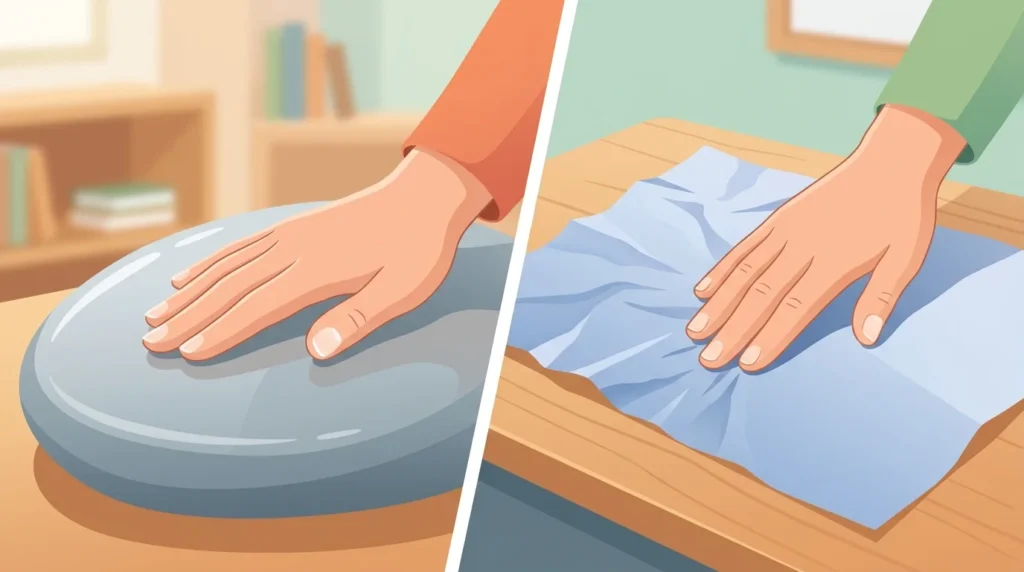
Use “smooth” as the standard modern spelling.
Do not assume that smoothe is the verb form and smooth is only the adjective. Modern English does not require that distinction.
Use:
smooth → adjective
The table has a smooth surface.
smooth → verb
Please smooth the paper.
smoothly → adverb
The meeting went smoothly.
smoothed → past tense/past participle
She smoothed the fabric.
The easiest rule is: keep the base word as “smooth.”
How to Use Smooth
Smooth is a flexible word with several common meanings. It can describe physical texture, movement, sound, behavior, writing, processes, or experiences.
Smooth as an Adjective
As an adjective, smooth describes something that is even, not rough, or free from noticeable bumps or irregularities.
For example:
- The stone feels smooth.
- The cream leaves your skin smooth.
- The table has a smooth surface.
- She has smooth hair.
It can also describe something that happens easily or without problems:
The hiring process was smooth.
Smooth as a Verb
Smooth can also be a verb. It means to make something smooth, even, flat, or more orderly.
- Smooth the paper before folding it.
- She smoothed her dress.
- He smoothed the surface with his hand.
- We need to smooth the transition between the two sections.
Notice that the verb is still spelled smooth. You do not need to add an extra e.
Smoothly as an Adverb
When you want to describe how an action happens, the usual adverb is smoothly.
For example:
- The machine is running smoothly.
- The presentation went smoothly.
- The project moved smoothly from one stage to another.
Do not create the spelling smoothely by adding an extra e. The standard adverb is smoothly.
Correct Examples of Smooth
In Conversation
“The trip was surprisingly smooth, even though we expected delays.”
In an Email
“I made a few changes to smooth the transition between the two sections.”
At Work
“We need a clear plan to make sure the launch goes smoothly.”
At School
“The teacher asked us to smooth the edges of the model before painting it.”
In Academic Writing
“The revised paragraph creates a smoother transition between the two arguments.”
On Social Media
“Everything looked stressful at first, but the event ended up going smoothly.”
In Product Descriptions
“The bottle has a smooth surface that is comfortable to hold.”
In Everyday Writing
“Run your hand over the wood to check whether the surface feels smooth.”
In Business Communication
“The updated procedure should make the approval process smoother.”
In Creative Writing
“The boat moved smoothly across the quiet water.”
See Also: Assume vs Presume vs Infer: Meanings and Differences
Incorrect vs. Correct
| ❌ Incorrect or Nonstandard in Modern Writing | ✅ Standard Choice | Why |
|---|---|---|
| The surface is smoothe. | The surface is smooth. | Smooth is the standard modern adjective. |
| Please smoothe the paper. | Please smooth the paper. | Smooth is the standard modern verb. |
| She tried to smoothe her dress. | She tried to smooth her dress. | The verb does not need an extra e. |
| The meeting went smoothely. | The meeting went smoothly. | The standard adverb is smoothly. |
| The process was smoothe. | The process was smooth. | Smooth is the normal modern adjective for an easy process. |
| We need to smoothe the transition. | We need to smooth the transition. | Smooth is the standard verb in contemporary writing. |
| He smoothed the fabric. | He smoothed the fabric. | The correct past-tense spelling keeps the base word smooth. |
| The machine is working smoothe. | The machine is working smoothly. | An adverb is needed to describe how the machine works. |
| It was a smoothe journey. | It was a smooth journey. | Smooth is the standard adjective. |
| She spoke smoothely during the presentation. | She spoke smoothly during the presentation. | The standard adverb is smoothly. |
Why Do People Write Smoothe?
The Extra “e” Looks Plausible
One major reason is that English contains many words ending in a silent e, such as breathe, bathe, clothe, and soothe. Because smooth has a similar sound pattern, writers may assume that smoothe follows the same spelling pattern.
Confusion With Soothe
Smooth and soothe look similar, and both contain oo. However, they are different words with different meanings.
Smooth can mean to make something even or to make a process easier.
Soothe means to calm, comfort, or reduce irritation or pain.
For example:
- She used a cloth to smooth the surface.
- The music helped soothe the baby.
Overgeneralizing English Spelling Patterns
English spelling contains many patterns, but they do not always apply to every similar-looking word. A writer may think that adding e turns an adjective into a verb, but that is not a reliable general rule in English.
Seeing Smoothe in Older Texts
The confusion is also understandable because smoothe is not entirely invented. Historical sources record it as an alternative form of smooth, and it can still appear in older or unusual texts. That does not make it the normal modern spelling.
Spellcheck and Online Usage
Seeing a spelling repeatedly online does not necessarily mean it is the standard form. User-generated content, old quotations, names, product branding, and individual spelling mistakes can all expose readers to uncommon forms.
Common Mistakes Checklist
- Adding an extra e: Write smooth, not smoothe, in ordinary modern writing.
- Using smoothe as the verb: The standard verb is smooth.
- Writing smoothely: The standard adverb is smoothly.
- Confusing smooth and soothe: Smooth relates to evenness or ease; soothe relates to calming or comforting.
- Assuming historical use means modern standard use: Older spellings can survive in historical sources without being the normal choice today.
- Changing the base spelling unnecessarily: Keep the word family centered on smooth: smooth, smoother, smoothest, smoothly, smoothed, smoothing.
Smoothe vs Smooth in Real English
Smooth — Standard and Natural
Smooth is the normal word used in contemporary English. It works naturally as an adjective and verb and appears across everyday conversation, business writing, academic work, product descriptions, and creative writing. Sentences such as “The surface is smooth,” “Smooth the paper,” and “The process went smoothly” are ordinary modern English.
Smoothe — Historically Attested but Unusual Today
Smoothe has existed as an alternative form, particularly as a verb, so calling it a completely invented spelling would be too absolute. However, it is not the normal modern form. In contemporary standard writing, using smooth avoids an archaic, unusual, or potentially mistaken appearance.
Smoothly — The Natural Adverb
When smooth describes how an action happens, smoothly is the standard adverb. For example, “The presentation went smoothly” means that it happened without significant problems or interruptions. Using smoothely adds an unnecessary letter and does not follow the standard spelling of the word family.
American vs. British English
There is no meaningful American-versus-British spelling difference for the ordinary modern use of smooth. American and British English both use smooth as the standard spelling.
The practical rule is therefore the same for both varieties: use smooth in modern standard writing rather than smoothe.
Formal vs. Informal Usage
Smooth is appropriate in both formal and informal English. There is no special formal spelling that requires smoothe.
Examples include:
- Informal: “The whole thing went smooth.”
- Standard written English: “The whole thing went smoothly.”
- Formal: “The revised procedure should ensure a smooth transition.”
The first example can occur in casual speech, but smoothly is the conventional adverb in careful standard writing. The spelling smoothe is not a formal alternative to smooth.
See Also: Red Herring Meaning: Definition, Examples & Fallacy
Smooth vs. Smoothe Comparison Table

| Feature | Smooth | Smoothe |
|---|---|---|
| Modern standard spelling | Yes | No, not normally |
| Common today | Yes | No |
| Adjective | Yes | Historical/rare |
| Verb | Yes | Historically attested as an alternative |
| Adverb form | Smoothly | Not standard |
| Suitable for modern academic writing | Yes | Generally avoid |
| Suitable for professional writing | Yes | Generally avoid |
| Meaning in ordinary use | Even, flowing, easy, or to make smooth | Historically an alternative form of smooth |
| Recommended for learners | Yes | No |
Real-Life Situations
In an Interview
“I helped make the onboarding process smoother for new employees.”
Here, smoother is the comparative form of smooth.
In a Meeting
“We need a smoother handoff between the sales and support teams.”
The adjective smoother describes the handoff.
In an Email
“I made a few changes to smooth the transition between the two sections.”
Here, smooth is correctly used as a verb.
In a Text Message
“Glad everything went smoothly!”
Smoothly is the natural standard adverb in this sentence.
In an Exam
If you need an adjective, use smooth: “The surface is smooth.” If you need a verb, you can also use smooth: “Smooth the surface.” Do not assume that the verb requires the spelling smoothe.
How to Remember Smooth vs. Smoothe
The easiest memory trick is to learn the entire modern word family rather than memorizing one spelling in isolation:
- Smooth — base word
- Smoother — comparative
- Smoothest — superlative
- Smoothly — adverb
- Smoothed — past tense and past participle
- Smoothing — present participle
The extra e in smoothe is not needed for the standard modern word family.
A second memory trick is even simpler:
“Smooth already does the job.”
You can use smooth for the adjective and verb without adding another letter.
Practice Quiz
Choose the standard form for each sentence.
- The surface feels very ______. (smooth / smoothe)
- Please ______ the paper before you fold it. (smooth / smoothe)
- The presentation went ______. (smoothly / smoothely)
- She ______ the wrinkles from the fabric. (smoothed / smootheded)
- We need a ______ transition between the two sections. (smooth / smoothe)
- The machine is running ______. (smoothly / smoothely)
- He used his hand to ______ the surface. (smooth / smoothe)
- The revised process should make the work ______. (smoother / smoothe)
Answers: 1. smooth, 2. smooth, 3. smoothly, 4. smoothed, 5. smooth, 6. smoothly, 7. smooth, 8. smoother.
Frequently Asked Questions
Is “smoothe” a correct word?
“Smoothe” has historical and alternative usage, particularly as a verb, but it is not the normal modern spelling. For contemporary standard English, use smooth.
Is smooth or smoothe correct?
Smooth is the standard modern choice. Use it for both the adjective and the verb in ordinary contemporary writing.
What does smoothe mean?
When encountered as an English form, smoothe generally represents an older or alternative spelling of smooth, especially the verb. It does not normally represent a separate modern meaning.
Can smooth be used as a verb?
Yes. “Smooth” is a standard verb meaning to make something even, flat, less rough, or more orderly. For example, “She smoothed the fabric with her hand.”
Is “smoothe” the verb form of smooth?
No modern grammar rule requires that distinction. The standard verb is smooth. The idea that “smooth” is only an adjective while “smoothe” is the verb is not the normal modern usage.
What is the past tense of smooth?
The past tense is smoothed. For example: “She smoothed her hair.” The past participle is also smoothed.
Is “smoothely” correct?
No. The standard adverb is smoothly. For example: “The meeting went smoothly.”
What is the difference between smooth and smoothly?
Smooth is commonly an adjective or verb, while smoothly is the standard adverb. Compare “The process was smooth” with “The process went smoothly.”
Is “smooth” used in both American and British English?
Yes. Smooth is the standard spelling in both American and British English. There is no normal regional spelling change to smoothe.
Why does “smoothe” look correct?
English has many words ending in silent e, such as “soothe,” “breathe,” and “clothe.” That can make “smoothe” look plausible. However, spelling patterns do not always transfer from one word to another.
Should I use “smoothe” in an essay?
Generally, no. Use smooth in essays, academic assignments, professional documents, websites, and other contemporary standard writing.
Is “smooth” the same as “soothe”?
No. Smooth relates to evenness, ease, or making something less rough or irregular. Soothe means to calm, comfort, or reduce pain or irritation. They are different words.
Quick Summary
Smooth is the standard modern spelling, while smoothe is an older or alternative form that is not normally used in contemporary standard English. Smooth works as both an adjective and a verb: “The surface is smooth” and “Please smooth the paper.” The standard adverb is smoothly, not “smoothely.” Although historical sources record smoothe, modern writers should generally choose smooth in academic, professional, and everyday writing. The easiest way to remember the distinction is to keep the standard word family together: smooth, smoother, smoothest, smoothly, smoothed, smoothing. You do not need to add an extra e to the base word.