

Altar and alter are two different English words with different meanings and grammatical roles. An altar is a noun referring to a sacred table, structure, or place used in religious ceremonies. Alter is a verb meaning to change, modify, or make something different.
For example, “The couple stood before the altar” refers to a religious or ceremonial structure. In contrast, “We need to alter the plan” means that the plan needs to be changed.
Quick Answer
Use altar when you mean a sacred or ceremonial structure or place. Use alter when you mean to change or modify something.
- Altar = a sacred or ceremonial table, structure, or place.
- Alter = to change or modify something.
Both words are pronounced the same or very similarly in many varieties of English, which is why they are commonly confused. The spelling and meaning, however, are different.
What Does Altar Mean?
Altar is a noun. It refers to a raised table, platform, or structure used in religious ceremonies. Depending on the religious tradition, an altar may be used for prayer, offerings, sacrifices, worship, or other sacred practices.
Examples include:
- The priest stood near the altar.
- Flowers were placed on the altar.
- The couple stood before the altar.
- The church has a beautiful stone altar.
The word altar can also be used in broader ceremonial or figurative contexts, but its central meaning is connected with a sacred or ceremonial place or structure.
What Does Alter Mean?
Alter is a verb meaning to change something, modify it, or make it different without necessarily replacing it completely.
Examples include:
- We need to alter the design.
- She decided to alter her plans.
- The tailor will alter the dress.
- Changing the schedule may alter the results.
Alter can describe physical changes, changes to plans, changes in behavior, or changes to an idea or situation.
The Core Rule: Altar Is a Place, Alter Is a Change
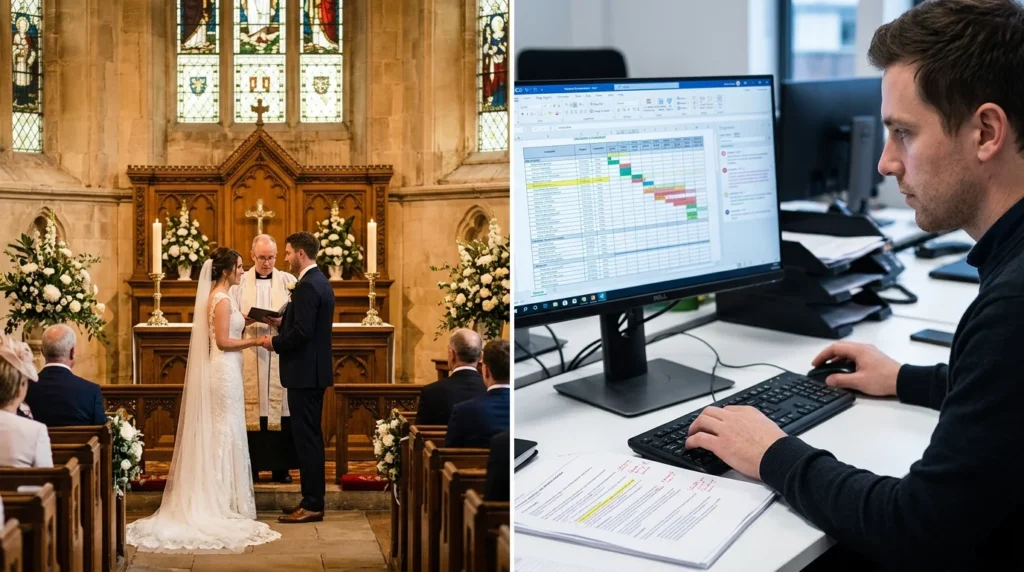
The easiest way to remember these words is to connect each one with its meaning:
Altar → religion or ceremony
Alter → change
If you are talking about a sacred table or ceremonial structure, use altar.
If you are talking about changing or modifying something, use alter.
Compare these sentences:
The flowers were placed on the altar.
This sentence refers to a sacred or ceremonial structure.
We need to alter the design.
This sentence refers to changing something.
Altar vs Alter Comparison Table
| Word | Part of Speech | Meaning | Example |
|---|---|---|---|
| Altar | Noun | A sacred or ceremonial table, structure, or place | The flowers were placed on the altar. |
| Alter | Verb | To change or modify something | We need to alter the design. |
How to Use Altar Correctly
Altar in Religious Ceremonies
The most common use of altar is for a sacred structure used during religious worship or ceremonies.
Examples:
- The priest approached the altar.
- Candles were placed around the altar.
- The church’s main altar was decorated with flowers.
Altar in Weddings
The word altar is often associated with weddings, especially religious wedding ceremonies.
For example:
“The couple exchanged vows at the altar.”
In everyday language, people may say someone is “walking down the aisle to the altar” when describing a wedding ceremony.
See Also:
Altar in Figurative Language
Altar can also appear in figurative expressions. In such cases, it may represent devotion, sacrifice, or something treated as extremely important.
For example:
“He sacrificed his free time on the altar of ambition.”
Here, altar is being used figuratively rather than referring to a physical religious structure.
How to Use Alter Correctly
Alter a Plan
Use alter when changing a plan, schedule, strategy, or arrangement.
Examples:
- We may need to alter the schedule.
- The weather forced us to alter our plans.
- They decided to alter the strategy.
Alter Clothing
Alter is also commonly used when changing clothing so that it fits differently.
For example:
“The tailor will alter the jacket to fit you better.”
See Also:
Alter a Design
You can use alter for changing the design, appearance, or structure of something.
Examples:
- The architect decided to alter the design.
- We need to alter the layout slightly.
- The company may alter the product’s appearance.
10 Correct Examples With Altar
- The priest stood beside the altar.
- The couple exchanged vows at the altar.
- Flowers were placed on the altar.
- The church has a beautiful marble altar.
- Candles were arranged around the altar.
- The ceremony took place in front of the altar.
- The worshippers gathered near the altar.
- The artist painted a scene showing an ancient altar.
- The priest prepared the altar for the ceremony.
- The historic altar was carefully preserved.
10 Correct Examples With Alter
- We need to alter the schedule.
- She asked the tailor to alter her dress.
- The company decided to alter its strategy.
- We may have to alter our plans.
- The designer wants to alter the layout.
- Changing the temperature can alter the results.
- He refused to alter his decision.
- The architect had to alter the original design.
- Small changes can alter the appearance of the room.
- The doctor advised him not to alter the dosage without guidance.
Incorrect vs Correct Examples
| Incorrect | Correct | Why |
|---|---|---|
| The priest stood beside the alter. | The priest stood beside the altar. | The sentence refers to a religious structure. |
| We need to altar the plan. | We need to alter the plan. | The sentence means to change the plan. |
| Flowers were placed on the alter. | Flowers were placed on the altar. | Altar is the noun for the ceremonial structure. |
| She wants to altar her dress. | She wants to alter her dress. | Alter is the verb meaning change. |
| The couple stood before the alter. | The couple stood before the altar. | The wedding context refers to an altar. |
| We should altar the design. | We should alter the design. | The sentence describes modifying a design. |
| The church’s alter was decorated. | The church’s altar was decorated. | Altar is the correct noun. |
| They had to altar their plans. | They had to alter their plans. | The verb alter means change. |
| The candles were placed near the alter. | The candles were placed near the altar. | The sentence refers to a ceremonial structure. |
| Weather may altar the schedule. | Weather may alter the schedule. | Alter means change or modify. |
Why Do People Confuse Altar and Alter?
The main reason people confuse altar and alter is pronunciation. In many varieties of English, the two words are pronounced the same or very similarly. They are therefore commonly treated as homophones.
Because they sound alike, listeners cannot always determine the spelling from pronunciation alone. Context is essential.
For example, if you hear someone say, “We need to alter the plan,” you must use the meaning of the sentence to know that alter is the correct spelling.
Likewise, “The flowers are on the altar” clearly refers to a ceremonial or religious structure.
See Also:
Common Mistakes With Altar and Alter
- Using alter when referring to a religious altar.
- Using altar when you mean “change.”
- Choosing the spelling based only on pronunciation.
- Writing “alter the church” when referring to the physical altar.
- Writing “altar the plan” instead of “alter the plan.”
Altar and Alter in Real English
Both words are common, but they appear in very different contexts. Altar is mostly used when discussing religion, ceremonies, weddings, historical sites, or figurative expressions involving devotion and sacrifice.
Alter is much broader. It can be used in everyday conversation, business, science, medicine, clothing, design, education, and many other contexts whenever something is changed or modified.
Compare:
The flowers are on the altar.
We need to alter the schedule.
Their similar pronunciation does not make them interchangeable.
Altar vs Alter in Formal and Informal English
Both altar and alter are standard English words and can be used in both formal and informal contexts.
The correct choice depends entirely on meaning. A formal document may refer to an altar, while an informal conversation may use alter to describe changing a plan.
American vs British English
There is no significant American-versus-British spelling difference between altar and alter. Both words are spelled the same way in standard American and British English.
The main challenge is distinguishing their meanings and spellings because they sound alike or very similar.
How to Remember Altar vs Alter

Use this simple memory trick:
Altar = a place for worship.
Alter = change.
You can also connect the extra a in altar with an altar in a church.
For alter, think of the phrase:
Alter = adjust or change.
When you need to modify something, you alter it.
Real-Life Situations
At a Wedding
“The couple stood together at the altar.”
The word refers to the ceremonial structure or place.
At a Tailor
“The tailor will alter the suit.”
The word means to modify the clothing.
In a Workplace
“We may need to alter the project schedule.”
The word means to change the schedule.
In a Church
“Candles were arranged around the altar.”
The word refers to the religious structure.
In Everyday Conversation
“Can we alter the plan?”
The word means to change or modify the plan.
Frequently Asked Questions
What is the difference between altar and alter?
Altar is a noun referring to a sacred or ceremonial table, structure, or place. Alter is a verb meaning to change or modify something.
Is altar or alter correct?
Both are correct words, but they have different meanings. Use altar for a sacred or ceremonial structure and alter for the verb meaning “change.”
Is an altar a religious word?
Primarily, yes. An altar is traditionally associated with religious or sacred ceremonies, although the word can also be used figuratively.
Does alter mean change?
Yes. Alter is a verb meaning to change, modify, or adjust something.
Are altar and alter pronounced the same?
In many varieties of English, altar and alter are pronounced the same or very similarly. This is why they are often confused in writing.
How can I remember altar vs alter?
Remember altar = religious or ceremonial place and alter = change. If you are modifying something, you alter it.
Is “alter the plan” correct?
Yes. Alter the plan means to change or modify the plan.
Is “stand at the alter” correct?
No, if you mean a wedding or religious ceremony. The correct phrase is “stand at the altar.”
Is “altar” a noun or a verb?
Altar is a noun. It refers to a sacred or ceremonial structure or place.
Is “alter” a noun or a verb?
Alter is primarily a verb meaning to change or modify something.
Quick Summary
Altar and alter are different words with different meanings, even though they sound the same or very similar in many varieties of English. Altar is a noun that refers to a sacred or ceremonial table, structure, or place, often associated with religious worship or weddings. Alter is a verb meaning to change, modify, or adjust something. A simple memory rule is altar = religious or ceremonial place and alter = change. For example, “The couple stood at the altar” is correct, while “We need to alter the schedule” uses the verb correctly. There is no major American-versus-British spelling difference between these two words.
See Also:
Occasion or Ocassion: Which Spelling Is Correct?