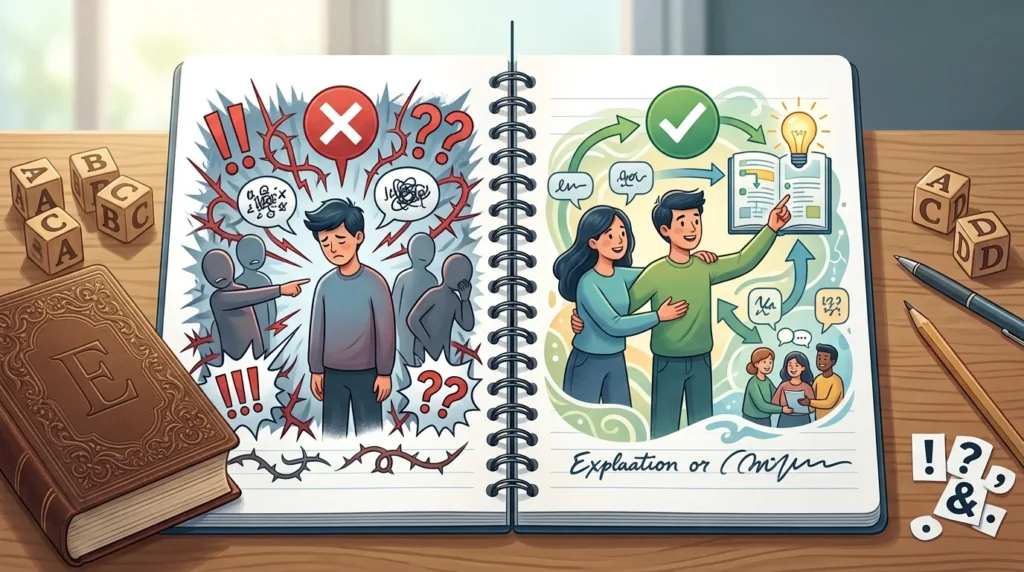

“That’s mean” means “that is unkind, hurtful, or unfair,” while “that means” is used to explain what something indicates, signifies, or leads to. For example, “You laughed at her mistake. That’s mean” judges the behavior, while “The store is closed. That means we have to leave” explains a consequence. The phrases look similar, but they have different grammar and meanings.
What Is the Difference Between “That’s Mean” and “That Means”?
The difference comes from both grammar and meaning.
That’s mean is short for “that is mean.” Here, mean is an adjective describing something as unkind or hurtful.
“You ignored her after she apologized. That’s mean.”
That means uses means as a verb. It explains what something signifies, indicates, implies, or results in.
“The meeting was canceled. That means we can go home early.”
The easiest distinction is:
- That’s mean = that is unkind.
- That means = that indicates or implies something.
There is also a third form that learners sometimes confuse with both:
Thats mean ❌
When that’s means that is, it needs an apostrophe.
Why Does the Difference Matter?
Choosing the wrong expression can completely change the meaning of a sentence.
Consider:
“You laughed at him. That’s mean.”
The speaker is criticizing the behavior.
Now compare:
“You laughed at him. That means you found the joke funny.”
The second sentence interprets the action rather than judging it.
This distinction matters especially in writing because the missing apostrophe or extra s can change the grammatical structure of the sentence.
The error can also make a sentence confusing:
❌ “The train is late. That’s mean we’ll miss the meeting.”
The intended meaning is probably:
✅ “The train is late. That means we’ll miss the meeting.”
See Also: Usage vs Useage Differences: Which Spelling Is Correct?
The Core Rule
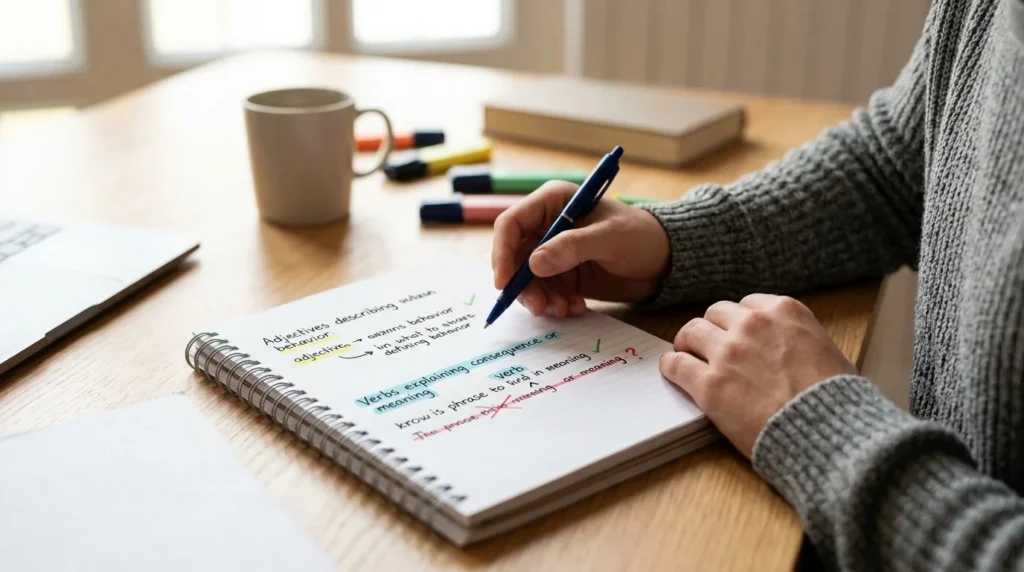
Use “that’s mean” when you are describing something as unkind. Use “that means” when you are explaining what something signifies, indicates, or causes.
Remember:
Unkind behavior → That’s mean.
Meaning, result, or consequence → That means.
The apostrophe is important because that’s is a contraction of that is.
How to Use “That’s Mean”
When You Are Calling Something Unkind
Use that’s mean when you are reacting to an action, comment, decision, or behavior that seems unkind or hurtful.
“You made fun of his accent. That’s mean.”
Here, the speaker is not explaining what the action means. The speaker is judging the action.
When You Are Reacting to a Hurtful Comment
“She told him nobody wanted him on the team. That’s mean.”
The phrase expresses disapproval.
You can also make the statement stronger or softer:
- That’s mean.
- That’s really mean.
- That’s so mean.
- That’s pretty mean.
- That’s kind of mean.
When You Want to Say “That Is Mean”
A simple test is to expand that’s.
That’s mean.
becomes:
That is mean.
The sentence still works, so that’s mean is appropriate.
You can use the same test with:
That’s rude.
That is rude.
That’s unfair.
That is unfair.
That’s unkind.
That is unkind.
The structure is:
That + is + adjective
How to Use “That Means”
When You Explain What Something Indicates
Use that means when you want to explain the significance of something.
“The light is red. That means we have to stop.”
The second sentence explains what the red light indicates.
When You Explain a Consequence
“The deadline has passed. That means we can’t submit the application today.”
Here, that means introduces the consequence of the previous fact.
When You Clarify Information
“She said she is leaving early. That means she won’t be at the meeting.”
The phrase connects information with its logical result.
When You Explain What Something Signifies
“The word has a different spelling in British English. That means you may see two forms in different texts.”
Here, that means introduces an explanation.
The basic structure is:
That + means + explanation
Correct Examples
In Conversation
“You took the last slice without asking. That’s mean.”
“The restaurant closes at nine. That means we should order now.”
In an Email
“The client has approved the proposal. That means we can begin the next stage.”
“Leaving someone out of the discussion like that was mean.”
At School
“Laughing at someone for getting an answer wrong is mean.”
“The teacher moved the exam to Friday. That means we have another week to study.”
In the Workplace
“The meeting has been moved to Monday. That means we have more time to prepare.”
“Making that comment about your coworker was mean.”
On Social Media
“That comment was unnecessary. That’s mean.”
“The post has been deleted. That means the original link won’t work anymore.”
In Academic Writing
“The results were significantly different. That means the original assumption requires further examination.”
“Mocking a participant’s response would be considered mean rather than constructive.”
In Everyday Situations
“You promised to help and then disappeared. That’s mean.”
“The parking lot is full. That means we need to find another place to park.”
Incorrect vs. Correct
| ❌ Incorrect | ✅ Correct | Why |
|---|---|---|
| The bus is late. That’s mean we’ll miss class. | The bus is late. That means we’ll miss class. | The phrase explains a consequence, so means is the verb needed. |
| You laughed at her mistake. That means. | You laughed at her mistake. That’s mean. | The speaker is judging the behavior as unkind. |
| That’s means we have to wait. | That means we have to wait. | That’s already contains is; it cannot be combined with means here. |
| Thats mean of you. | That’s mean of you. | The contraction that’s requires an apostrophe. |
| That mean we should leave. | That means we should leave. | That is singular here, so the verb is means. |
| The comment was cruel. That’s mean it was offensive. | The comment was cruel. That means it was offensive. | The second sentence explains the implication. |
| You ignored her completely. That means. | You ignored her completely. That’s mean. | The intended meaning is a judgment about behavior. |
| The sign is red. That’s mean stop. | The sign is red. That means stop. | Means expresses what the sign indicates. |
| You told everyone his secret. That means. | You told everyone his secret. That’s mean. | The speaker is criticizing the action. |
| The store is closed. That’s mean we have to return tomorrow. | The store is closed. That means we have to return tomorrow. | The second clause expresses a consequence. |
Why People Make This Mistake
The Phrases Sound Similar
In fast speech, that’s mean and that means can sound very similar.
This makes listening especially difficult for English learners.
Writing makes the distinction clearer:
that’s mean
versus
that means
The apostrophe and the final s have different grammatical roles.
“Mean” Has Several Meanings
The word mean can work as both a verb and an adjective.
As an adjective:
“That was mean.”
Here, mean describes something as unkind.
As a verb:
“What does this word mean?”
Here, mean relates to meaning or significance.
Another verb use is:
“I didn’t mean to hurt you.”
Here, mean refers to intention.
Because the same word has several meanings and grammatical roles, learners can easily confuse the structures.
Texting Often Removes Apostrophes
Informal texting frequently drops punctuation.
Someone may type:
“thats mean”
instead of:
“that’s mean”
Although this is common in casual digital writing, it does not make the apostrophe optional in standard writing.
“That’s” Looks Like a Regular Word
Some learners memorize that’s as one complete word rather than recognizing that it is a contraction.
Knowing that:
that’s = that is
makes the distinction much easier.
Subject-Verb Agreement Causes Another Problem
Learners sometimes write:
“That mean…”
instead of:
“That means…”
The reason is simple: that is singular in this construction, so the present-tense verb is means.
Compare:
That means a lot.
but:
Those things mean a lot.
Common Mistakes Checklist
Mistake 1: Writing “thats”
Wrong:
“Thats mean.”
Correct:
“That’s mean.”
When that’s means that is, the apostrophe represents the missing letters.
Mistake 2: Writing “that’s means”
Wrong:
“That’s means we are late.”
Correct:
“That means we are late.”
You cannot combine that is with the verb means in this structure.
Mistake 3: Using “that mean”
Wrong:
“That mean we need to leave.”
Correct:
“That means we need to leave.”
The singular subject that takes means in the present tense.
Mistake 4: Using “that’s mean” for a consequence
Wrong:
“The store is closed. That’s mean we have to wait.”
Correct:
“The store is closed. That means we have to wait.”
The second sentence explains a consequence rather than judging something as unkind.
Mistake 5: Assuming “mean” Always Means Unkind
“Mean” does not always describe someone’s behavior.
It can also refer to meaning:
“What does this phrase mean?”
Or intention:
“I didn’t mean to interrupt.”
Always look at the sentence around the word.
See Also: No Cap Meaning: Definition, Slang, Texting & Social Media Explained
That’s Mean vs. That Means in Real English
“That’s Mean” in Everyday English
That’s mean is natural when someone reacts to behavior, words, or treatment that they consider unkind.
For example:
“You invited everyone except her. That’s mean.”
The phrase can be serious, but among friends it can also be playful or exaggerated.
“You ate the last cookie? That’s mean!”
The speaker may be genuinely upset or simply teasing. Context and tone determine the strength of the reaction.
“That Means” in Everyday English
That means is a very natural way to connect information with a conclusion.
“The bus has already left. That means we have to walk.”
It is common in conversation, emails, explanations, meetings, and educational writing.
It does not sound incorrect or overly formal. It is simply a useful way to explain what one fact means for another situation.
Grammatically Correct Does Not Always Mean Interchangeable
Both phrases are grammatically correct, but they cannot normally replace each other.
“That’s mean.”
describes something.
“That means we are late.”
explains something.
The difference is not simply punctuation. It is a difference in grammatical function and intended meaning.
American vs. British English
There is no meaningful American-versus-British spelling difference between these expressions.
Both varieties use:
- That’s mean.
- That means.
The grammar is also the same.
You do not need to change the expression depending on whether you are writing for an American or British audience.
Formal vs. Informal Usage
“That’s Mean”
That’s mean is grammatically correct but is more common in conversational situations because it expresses a personal reaction or judgment.
For formal writing, you may choose a more precise description when appropriate:
- The comment was inappropriate.
- The remark was insensitive.
- The behavior was unkind.
- The action was inconsiderate.
This does not make that’s mean incorrect. It simply means that another expression may better match a formal context.
“That Means”
That means works comfortably in both informal and formal communication.
Informal:
“The shop is closed. That means we have to come back tomorrow.”
Professional:
“The contract has expired. That means the agreement is no longer active.”
More formal alternatives such as this indicates or this implies may be useful when the writing requires a more technical tone, but that means remains grammatically correct.
Comparison Table
| Feature | That’s Mean | That Means |
|---|---|---|
| Full form | That is mean | That means |
| Grammar | That + linking verb + adjective | That + verb |
| Main word | Mean = adjective | Means = verb |
| Main meaning | Unkind or hurtful | Indicates, signifies, or implies |
| Main purpose | Judgment or reaction | Explanation or conclusion |
| Apostrophe | Yes | No |
| Example | “That’s mean of you.” | “That means we are late.” |
| Common setting | Conversation | Conversation, work, school, writing |
| Can it mean “unkind”? | Yes | No |
| Can it explain a consequence? | No | Yes |
The “That Is” Test
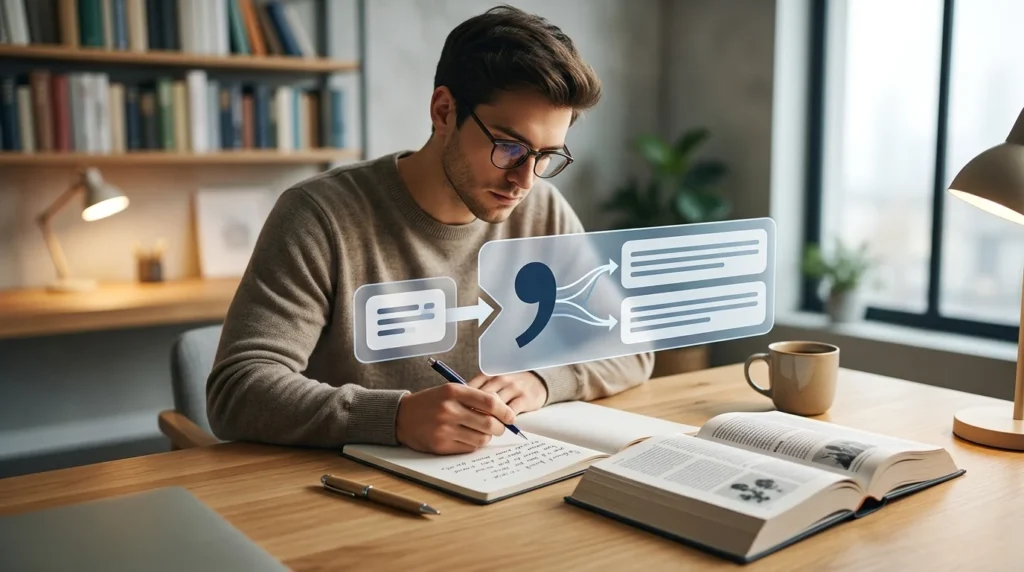
The easiest grammar test is to expand that’s.
Take:
“That’s mean.”
Expand it:
“That is mean.”
It works.
Now take:
“That’s mean we need to leave.”
Expand it:
“That is mean we need to leave.”
That structure does not express the intended meaning.
The correct sentence is:
“That means we need to leave.”
So if that is mean makes sense, that’s mean may be correct.
If you are explaining an implication or consequence, use that means.
The “Indicates” Test
You can also replace means with indicates.
“The road is closed. That means we need another route.”
becomes:
“The road is closed. That indicates we need another route.”
The basic relationship remains.
Now try the same test with:
“You laughed at her. That’s mean.”
You cannot naturally replace the phrase with that indicates because the speaker is making a judgment about the behavior.
This makes the test useful for separating the two expressions.
A Simple Way to Remember the Difference
Use this two-line memory trick:
That’s mean → That is unkind.
That means → That indicates something.
Or remember:
- Judging behavior? → That’s mean.
- Explaining information? → That means.
- Explaining a result? → That means.
- Calling something unkind? → That’s mean.
Real-Life Situations
Interview
An interviewer explains:
“The position requires weekend availability. That means you may occasionally work Saturdays.”
The phrase explains an implication of the job requirement.
See Also: Vendetta Meaning: Definition, Origin, Examples & History Explained
Workplace Meeting
A manager says:
“The client has rejected the first proposal. That means we need to revise our approach.”
The phrase introduces a consequence.
“The deadline has been extended until Friday. That means you have two additional days to complete the report.”
This is appropriate in professional communication.
Text Message
“You ate my fries without asking? That’s mean 😂”
Here, that’s mean expresses a playful or genuine reaction to behavior. The exact tone depends on context.
School
“He laughed when she gave the wrong answer. That’s mean.”
The speaker judges the student’s behavior.
Exam
“The results were statistically significant. That means the observed difference is unlikely to be explained by random variation alone.”
Here, that means introduces an interpretation of information.
Related Forms You Should Know
That Is Mean
This is the expanded form of:
“That’s mean.”
The meaning stays the same.
It Means
“It means the same thing.”
Here, means is a verb explaining significance.
This Means
“This means we need more time.”
This has the same basic explanatory function as that means.
What That Means Is
“What that means is that we need to change the plan.”
This construction is often used when explaining a conclusion in more detail.
That Doesn’t Mean
“Being quiet doesn’t mean she is angry.”
Notice that the verb is mean, not means, because doesn’t already carries the grammatical marking.
That Meant
For the past tense:
“That meant we had to start again.”
The present form is:
“That means we have to start again.”
Quick Practice Quiz
Choose that’s mean or that means.
- “You laughed when he fell. ______.”
- “The store is closed. ______ we need to come back tomorrow.”
- “You told everyone my private message. ______.”
- “The meeting starts at eight. ______ we need to leave early.”
- “You deliberately ignored her. ______.”
- “The road is blocked. ______ we need another route.”
- “He made fun of her accent. ______.”
- “The deadline has changed. ______ we have more time.”
Answers
- That’s mean
- That means
- That’s mean
- That means
- That’s mean
- That means
- That’s mean
- That means
Frequently Asked Questions
Is “that’s mean” correct English?
Yes. “That’s mean” is correct when mean is an adjective describing something as unkind, hurtful, harsh, or inconsiderate.
Is “that means” correct English?
Yes. “That means” is used when means is a verb that explains what something signifies, indicates, implies, or leads to.
Is “thats mean” correct?
In standard writing, no. If you mean that is mean, write that’s mean with an apostrophe.
Is “that’s means” correct?
No. The standard expression is that means. “That’s” already represents “that is,” so combining it with “means” creates the wrong grammatical structure.
Can “that’s mean” mean “that means”?
No. The expressions normally have different meanings. That’s mean judges something as unkind, while that means explains significance or consequence.
Why does “that mean” sometimes look correct?
Because mean is the base form of the verb, but after the singular subject that in the present tense, the correct form is generally means: “That means we should leave.”
How do I know whether to use “that’s” or “that”?
Try expanding that’s to that is. If “that is mean” makes sense, use that’s mean. If you are explaining a meaning or consequence, use that means.
Is “that’s mean of you” correct?
Yes. “That’s mean of you” is a common way to describe someone’s behavior as unkind or inconsiderate.
Can “that means” be used in formal writing?
Yes. “That means” is grammatically neutral and can appear in professional, academic, and explanatory writing. A more formal alternative may sometimes be “this indicates” or “this implies.”
Is the difference between these phrases only punctuation?
No. The apostrophe is part of the distinction, but the bigger difference is grammatical. In that’s mean, mean is an adjective. In that means, means is a verb.
What is the easiest way to remember “that’s mean” vs. “that means”?
Remember: That’s mean = that is unkind. That means = that indicates something.
Quick Summary
That’s mean and that means look similar, but they perform different jobs. That’s mean is short for “that is mean,” with mean acting as an adjective that describes something as unkind or hurtful. That means uses means as a verb to explain what something signifies, indicates, implies, or causes. Use that’s mean when judging behavior and that means when explaining information or a consequence. Also avoid “thats mean” in standard writing because the contraction needs an apostrophe, and avoid “that’s means,” which combines two incompatible structures. The simplest memory rule is: unkind behavior = that’s mean; explanation or consequence = that means.
See Also: PS Meaning: Definition, Full Form & Uses in Text, Email